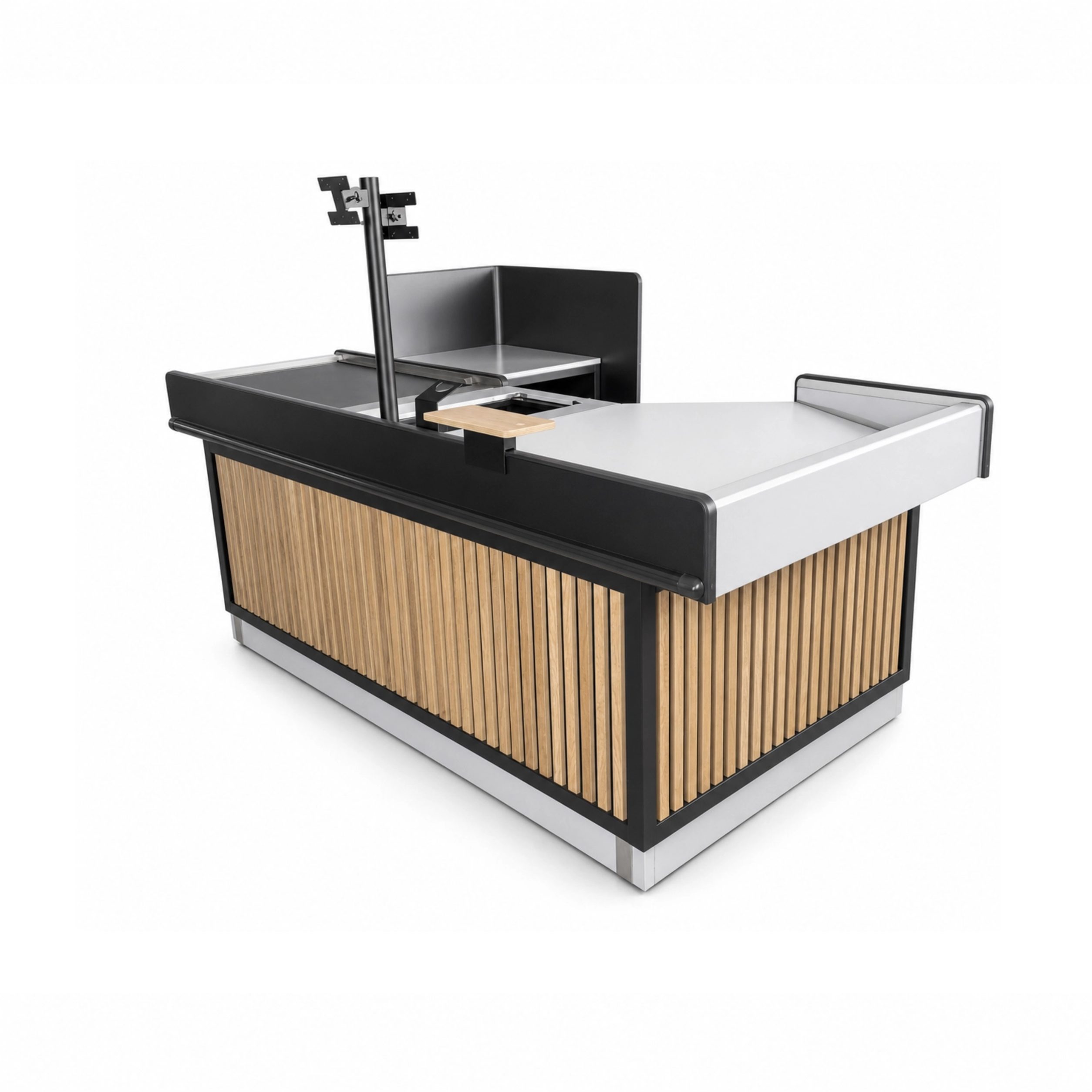
Supermarket Checkout Counters
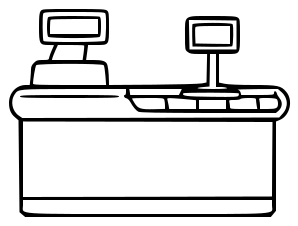
Complete retail checkout counters with worktop and packing area, with optional conveyor‑belt setup, fully customisable for different store concepts.
42 models · per lane
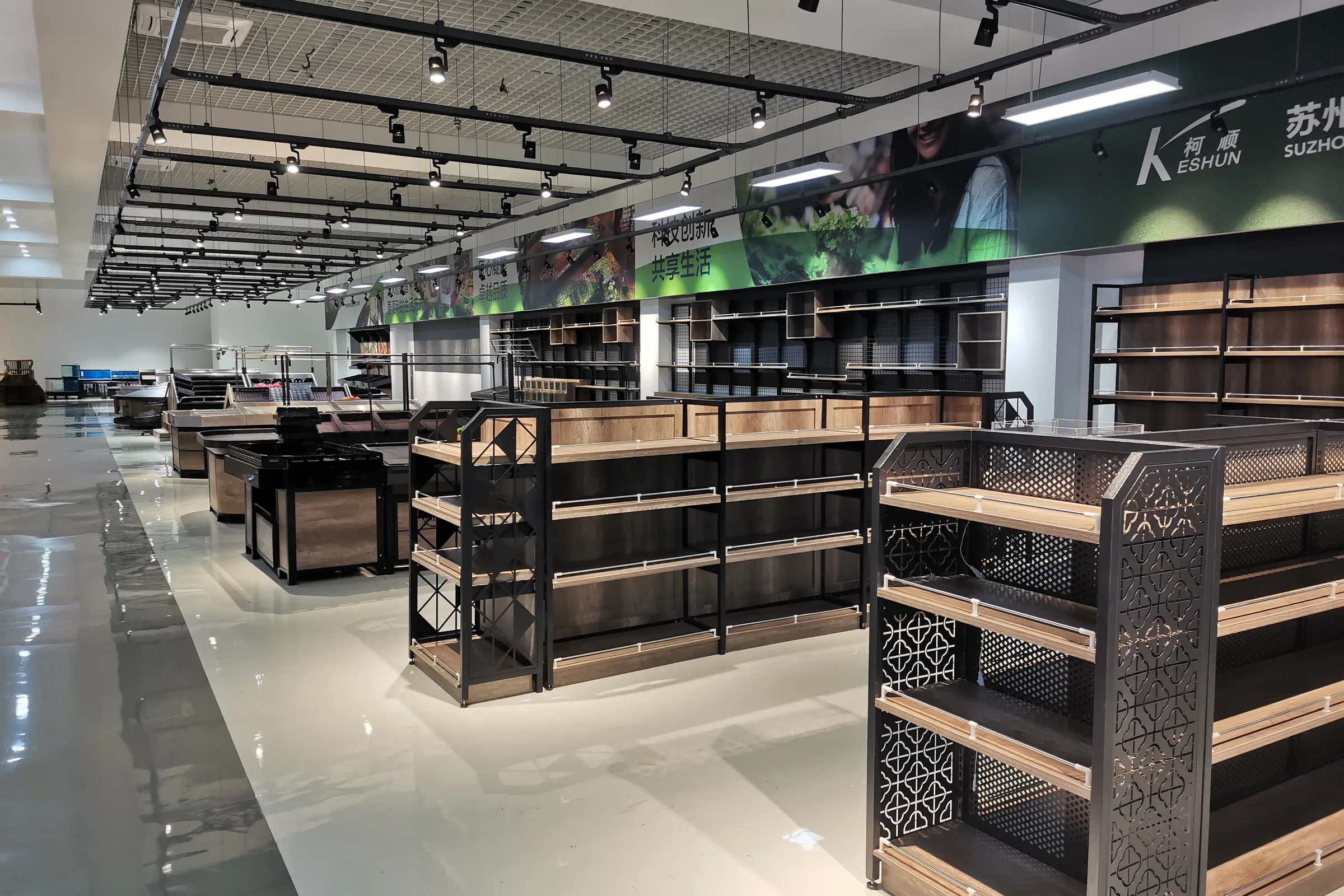
Checkout Counters, Vegetable Racks, Shelving, Bread Racks and Wine Showcases
Twelve categories of retail store fixtures and shop fittings built in one plant in Changshu — so the front end, the fresh zone and the centre store arrive in one finish, on one truck.
Buyers rarely arrive with a product list — they arrive with a floor plan. So the catalogue is grouped by the zone each category belongs to, and every zone carries the unit its equipment is actually ordered in.

The equipment a shopper meets between the door and the till.
Complete retail checkout counters with worktop and packing area, with optional conveyor‑belt setup, fully customisable for different store concepts.
42 models · per lane
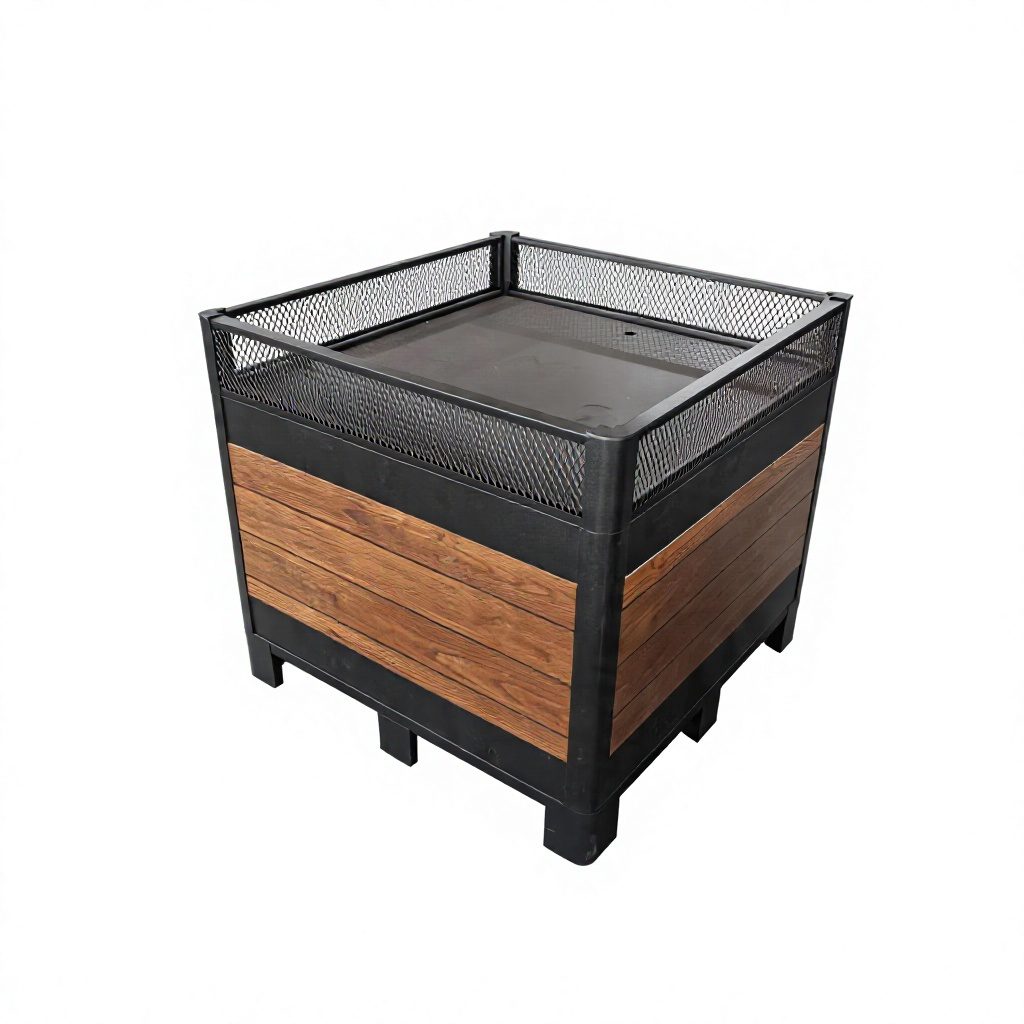
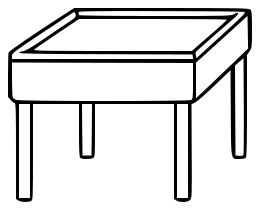
Tiered tables and stacked sets designed for aisle ends and promotional campaign areas, with a standard footprint and height for retail display.
8 models · per table
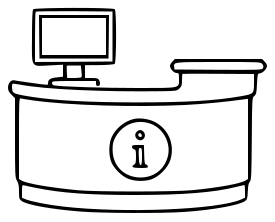
Service points where a shopper is served face to face. A raised screen splits the staff side from the customer side; the cabinet below takes the scale.
3 models · per desk
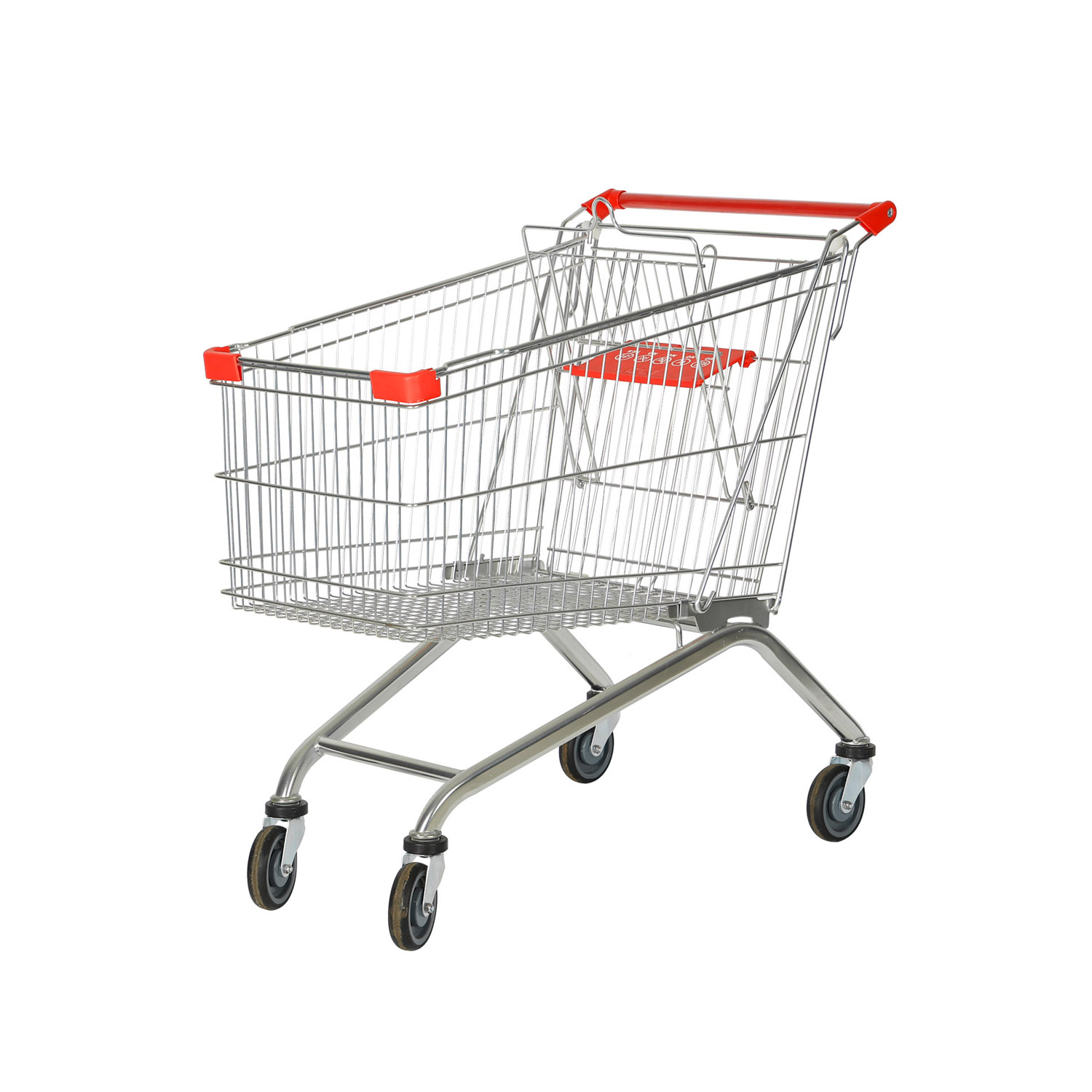
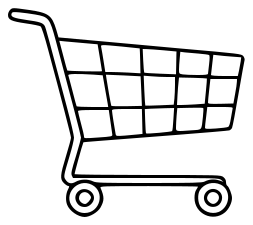
Wire trolleys that nest into one another and hand baskets that stack. Because they nest, a container holds far more than the unit count suggests.
22 baskets + 18 trolleys · per trolley, in nests

Islands, wall runs and racks for produce, chilled goods and bread.
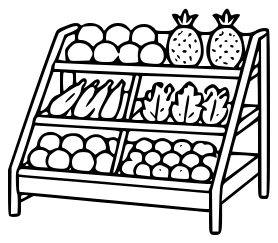
Produce islands and wall‑mounted runs fitted with tilted display trays and overhead headers, available in both double‑sided and single‑sided configurations.
21 models · per island or wall run
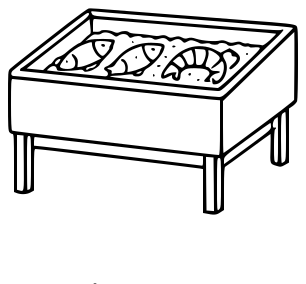
Stainless tables for seafood and chilled produce laid out on ice, with a drained basin and a rim that keeps meltwater off the floor.
3 models · per table
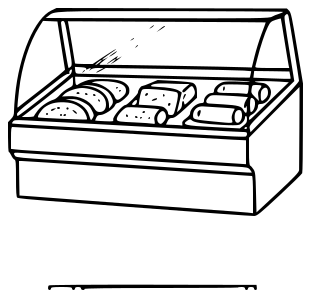
Served deli counters with glass guards between food and shopper, a staff side for portioning and a curved option that follows the corner of the fresh zone.
2 models · per counter
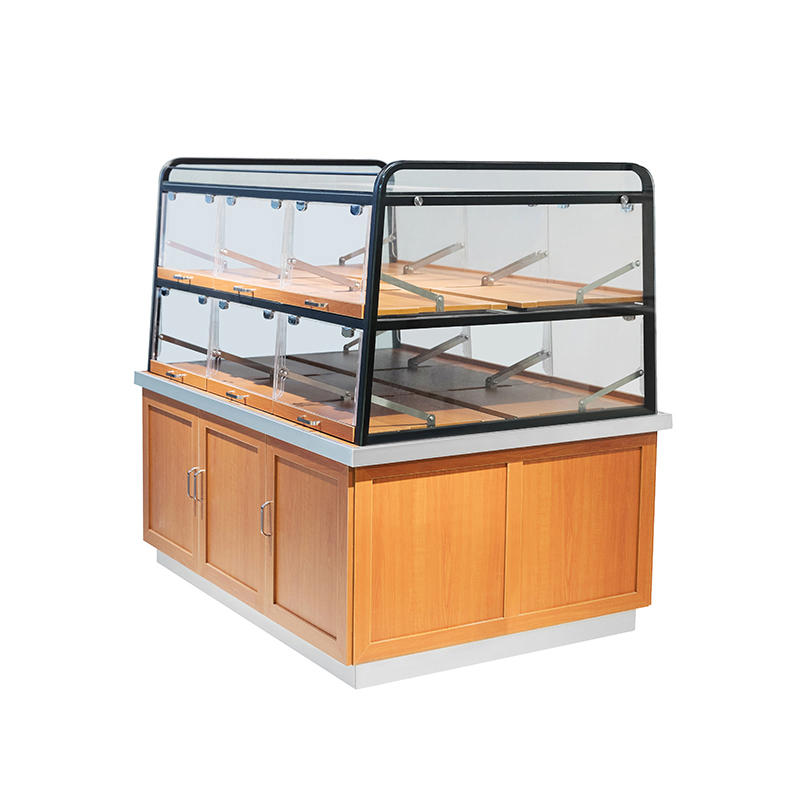
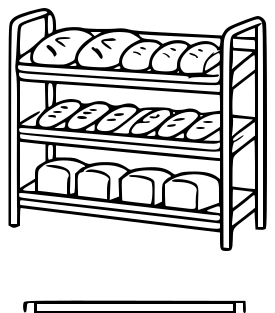
Slanted bread display racks in wood and steel. Tray tilt and tray depth are the two things a bakery buyer checks before anything else.
10 models · per rack
Shelving, bins and cabinets for the centre-store aisles.
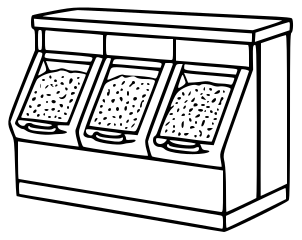
Scoop-and-weigh bins for loose dry goods, tiered so the shopper can see into the back row, with clear lids and refill stock in the cabinet below.
17 models · per cabinet
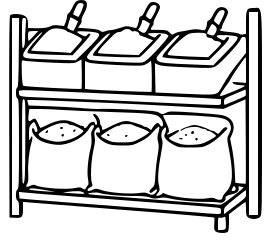
Built around bagged staples rather than boxed goods. The steps carry each bag forward so the printed face stays readable, and the frame takes the weight a rice aisle puts on a shelf.
5 models · per bay
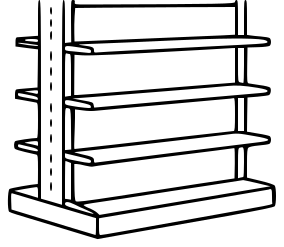
The backbone of the centre store. Uprights, adjustable shelves and back panels make one bay; bays repeat to build an aisle, single sided against a wall or double sided as a gondola.
9 models · per bay
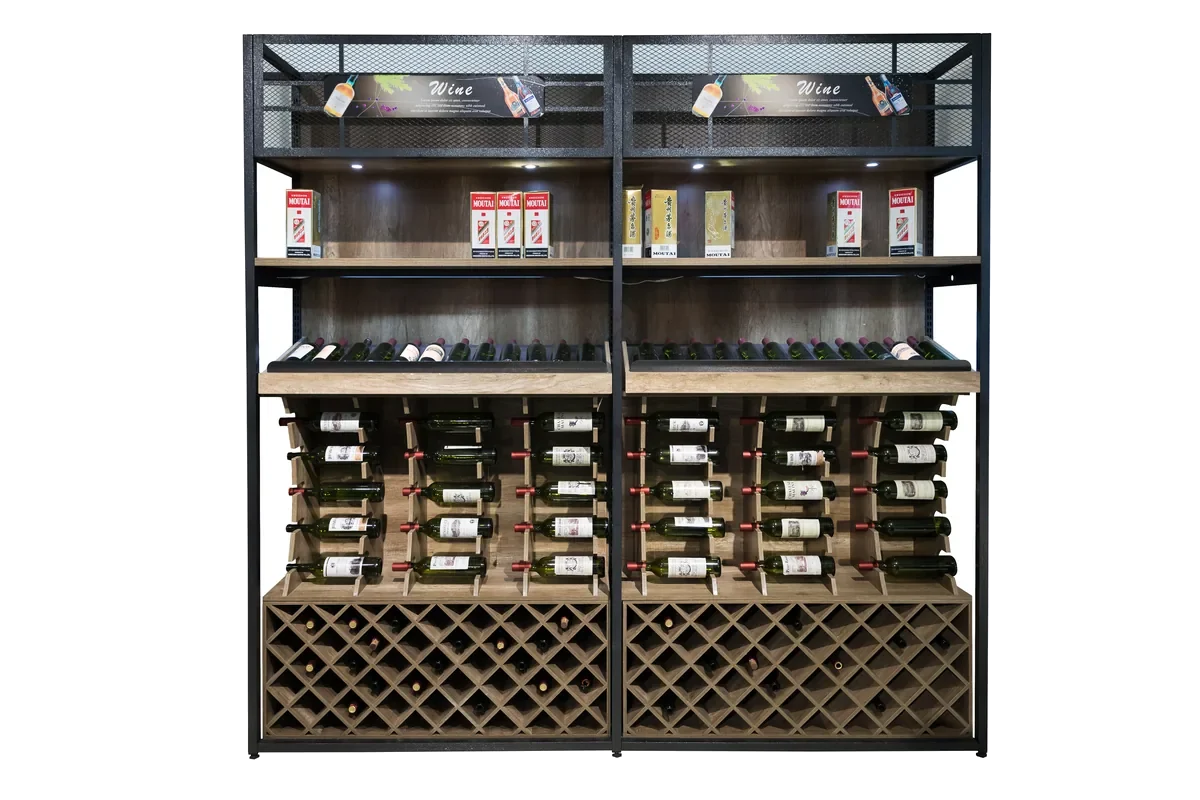
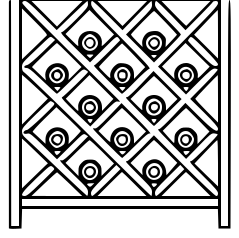
Diamond cells that lay bottles down, flat shelving above for standing stock, and a header that lifts the category out of the aisle.
4 models · per cabinet
Three families do not sit in one zone only. Steel and wood shelving also lines pharmacy and chain-store walls, promotional display stands move to the aisle heads during a campaign, and trolleys and baskets belong to the whole floor. Use the grouping to route, not to rule.
Store fixtures are not chosen by looks. Each one exists because a particular kind of goods behaves in a particular way — loose grain has to be scooped and weighed, a rice sack has a printed face that must stay readable, a bottle has to lie down. Find your goods below and the category follows.

The shopper opens it, scoops it and takes it to a scale. So the fixture needs a lid that stays clear, an opening wide enough for a scoop, and a tier arrangement that lets the back row still be seen.

A sack cannot stand up and its printed face is the only branding it has. So the fixture steps each row forward and tilts it up, and the frame has to carry a full aisle of 25 kg bags without sagging.
Bread is bought by sight and it rolls. So the tray is tilted towards the shopper and stopped with a front lip — the angle is what keeps the loaf visible and reachable from standing height instead of hidden flat on a shelf.
A corked bottle has to lie down, and a lying bottle needs a cell rather than a shelf. So the carcase is built as diamond cells below with flat shelving above for standing stock, and the tobacco side needs glass and a lock.

Ice melts all day. So the table is stainless, the basin is sloped to a drain, and the rim has to be high enough to keep meltwater off the floor of a zone where staff and shoppers are both walking.
Packaged goods change size every season, so nothing can be welded to a fixed height. The uprights are punched at a repeating pitch and the shelves move — which is also why this category is bought by the bay rather than by the unit.
Where you start changes what we need from you. All three routes end at the same place — a priced list with a lead time against your opening date.
You know the category and roughly how many. Open the category page, note the models that fit and tell us the quantity. This is the shortest route and the one most repeat buyers use.
Go to the full rangeYou are refitting one part of the floor — a new fresh zone, an extra pair of checkout lanes. Pull the categories that zone needs from the grouping above and send us the zone rather than the item list.
See the zone groupingYou have a floor plan and an opening date, and you want the whole store from one factory in one matched finish. Send the plan and the area, and we come back with the equipment list zone by zone.
See equipment lists by store size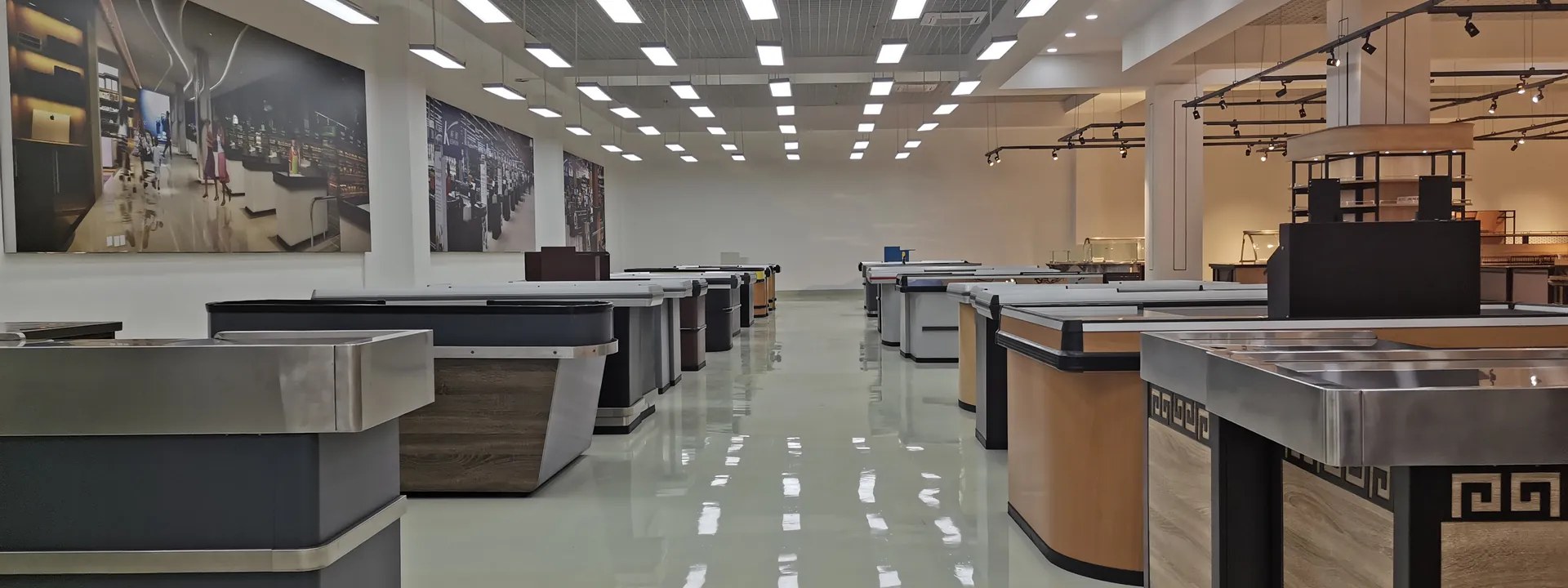
Tell us the categories and the quantity. If you have a floor plan, send that instead — we will read the zones off it and come back with the whole list.
One category or the whole store — either is fine. The more you can say about the store, the closer the first quotation lands.
Ten things that come up once someone starts turning a store into an order. If yours is not here, send it with your plan — we answer with the quotation.
Shelving is quoted by the bay. One bay is the section between two uprights, carrying the shelves hung on them. A run against a wall is single sided, a gondola in the middle of the floor is double sided, and those are two different bays. Send us the length of each aisle and we convert it into bays.
Because a shopper has to be able to see across the floor. Our double sided fresh shelving is built at 1500 mm per group and the single sided wall version at 1700 mm. The same range, 200 mm apart, and the difference is sightline: anything standing in the middle of the floor is held down so the shopper can read the rest of the store over the top of it.
Both are made here. Shorter counters are quoted without a belt, and longer lanes are built with a conveyor belt and a packing end. Recorded counter lengths run 1200, 1800, 1850 and 2000 mm, all on the same 850 mm worktop height. Tell us the length available for each lane and which side the cashier stands on.
Bulk food bins hold loose goods that shoppers scoop and weigh. Grain and rice racks are built around bagged staples and step the bags forward so the printed face stays readable. Steel and wood shelving carries packaged goods on adjustable shelves and is bought by the bay. Most stores use all three in the same dry goods aisle.
Trolleys and baskets ship nested, so the shipped volume is far smaller than the number of units suggests. Shelving ships knocked down as uprights, shelves and back panels. Counters and cabinets ship assembled, with impact padding on steel parts and bubble wrap plus stretch film on wooden parts.
Yes. Steel, woodworking and stainless steel production all run in the same plant in Changshu, so one colour, one wood tone and one surface grade can be held across every category on the order. The finish standard is described in full on our About page.
A single category is fine. Most first orders are one category or one zone, and the whole store package comes later. What changes is the information we need from you: for one category the model and quantity is enough, for a whole store we need the floor plan and the area.
All twelve categories are manufactured in our own plant in Changshu, Jiangsu. Steel fabrication, woodworking and stainless steel production run on the same site, which is why the finish can be matched across categories that would normally come from three different suppliers.
A supermarket runs on twelve of them, and this page is arranged in that order: checkout counters, produce racks, gondola shelving, bulk food bins, grain racks, wine and tobacco showcases, bakery cases, promotion tables, ice fresh tables, deli counters, service desks and trolleys. Most stores buy nine or ten.
Either from a distributor holding stock, or direct from the factory that builds them. Buying direct is slower to start and cheaper per container, and it is the only way to get one colour reference held across every category on the order. We are the factory — steel, woodworking and stainless all on one site in Changshu.