

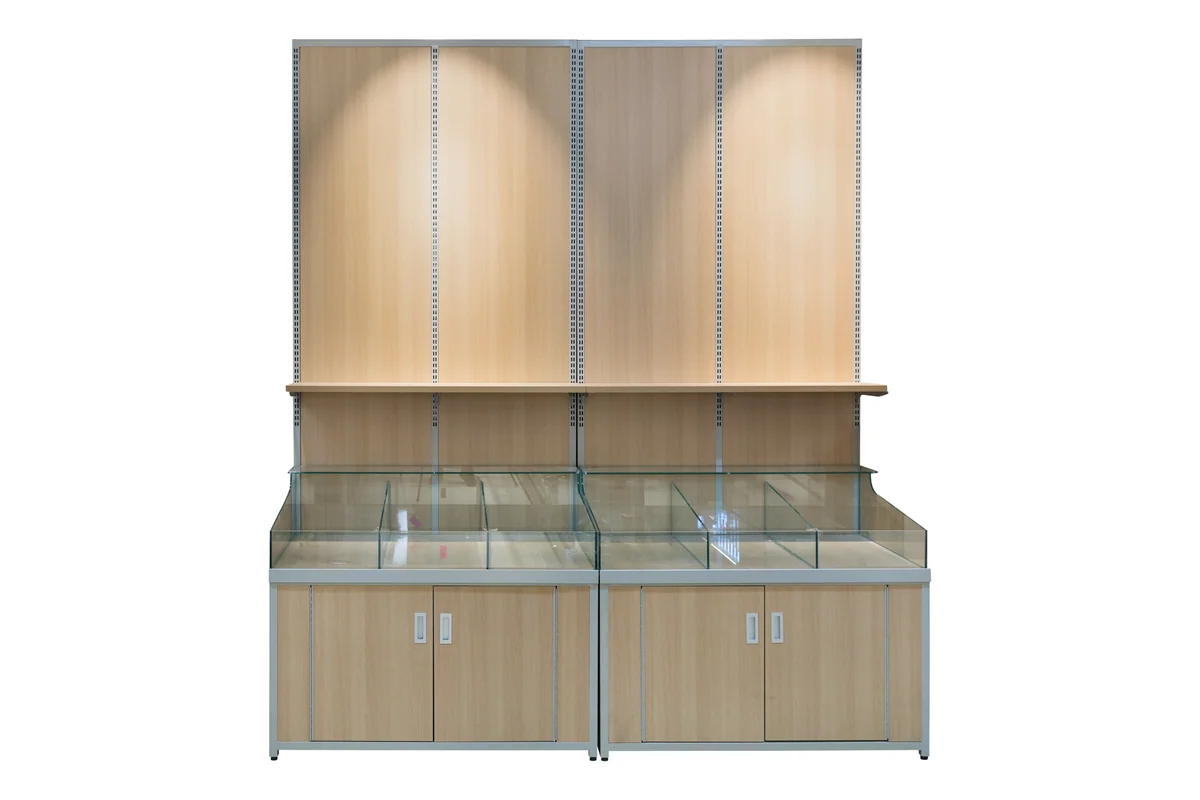
Lit wall unit with glazed bins
A wall-standing cabinet with an illuminated back panel behind glazed bins, so the goods are lit from behind rather than from the ceiling.
Wall cabinet, illuminated back
Open the product file
Bulk Area Islands, Tilt Bin Displays and Dry Goods Cabinets
The widest range we make: seventeen builds, from a tilt-bin island a shopper serves themselves from to a glazed cabinet that keeps everything behind a lid.
Seventeen dry goods builds, photographed in our own studio. This is the broadest category in the catalogue because a bulk aisle carries the widest variety of things: nuts, dried fruit, sweets, tea, herbs, pulses, and in some markets an entire section of loose Chinese medicine. The compartment is the unit of trade here, not the metre.
A wall-standing cabinet with an illuminated back panel behind glazed bins, so the goods are lit from behind rather than from the ceiling.
Wall cabinet, illuminated back
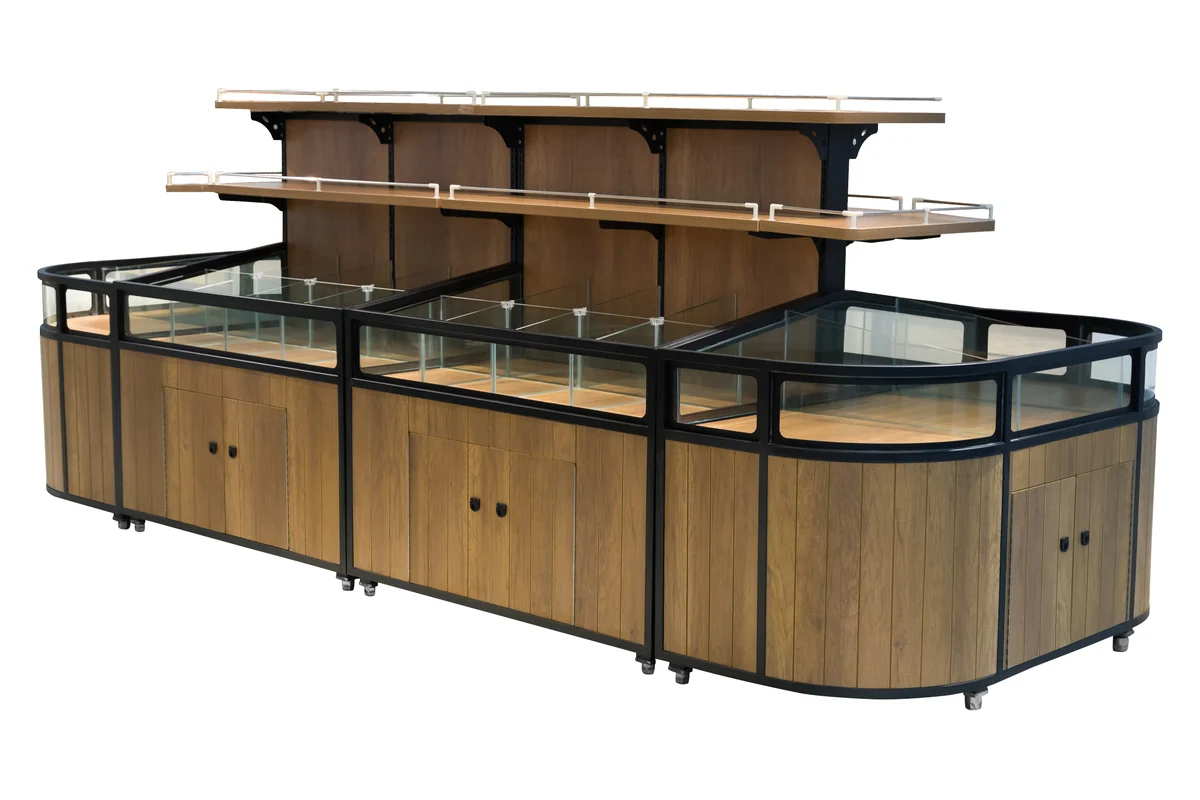
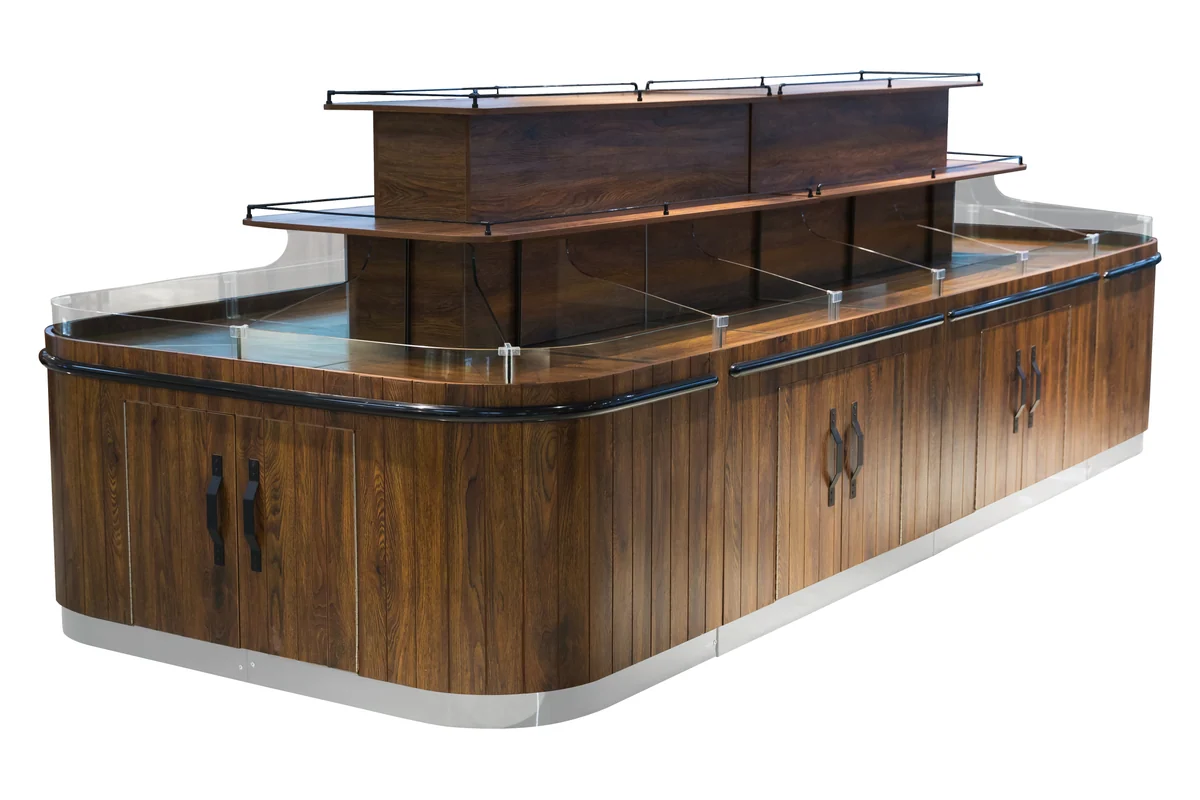
Open the product fileA raised second level over a timber base, with glazed rails holding the upper display back from the edge. Two levels double the frontage without widening the island.
Two-level island, glazed rails
Open the product fileTwo bays under one top, glass panelled on the flanks, with cupboard doors right along the base. Reads as a single fixture but merchandises as two.
Twin bay, glazed flanks
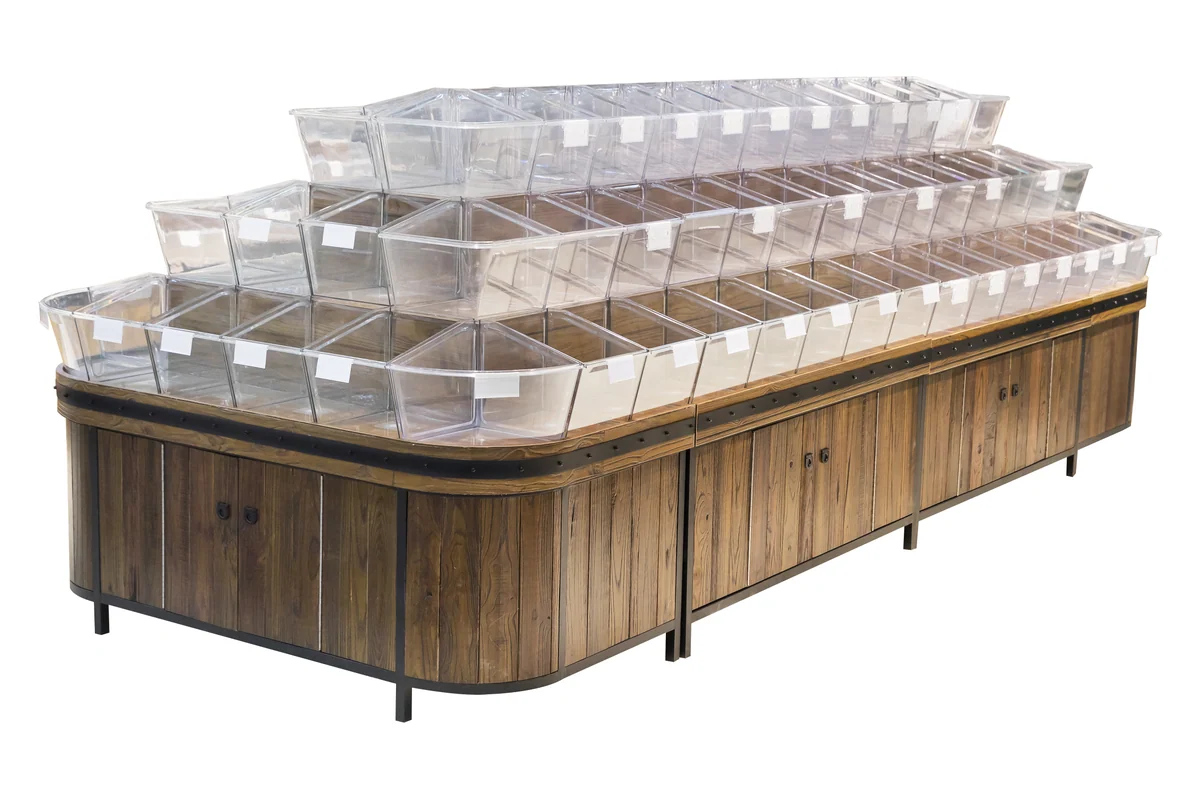
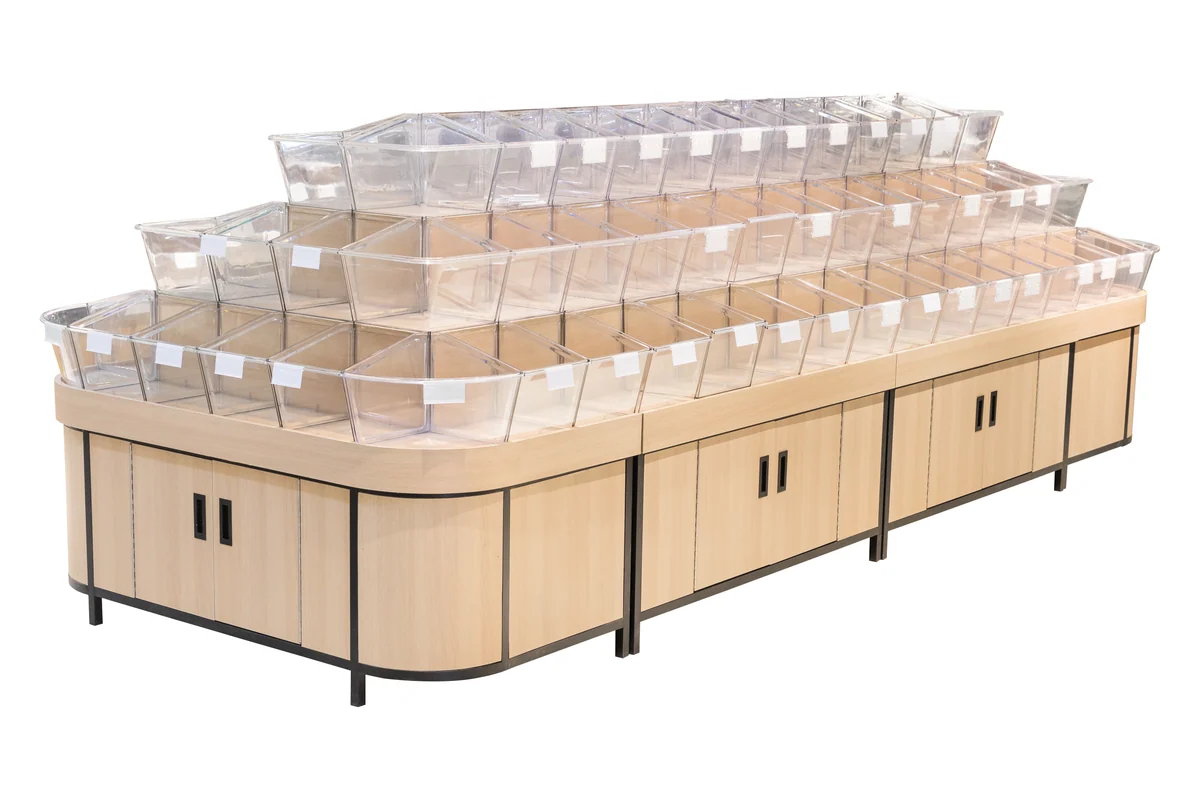
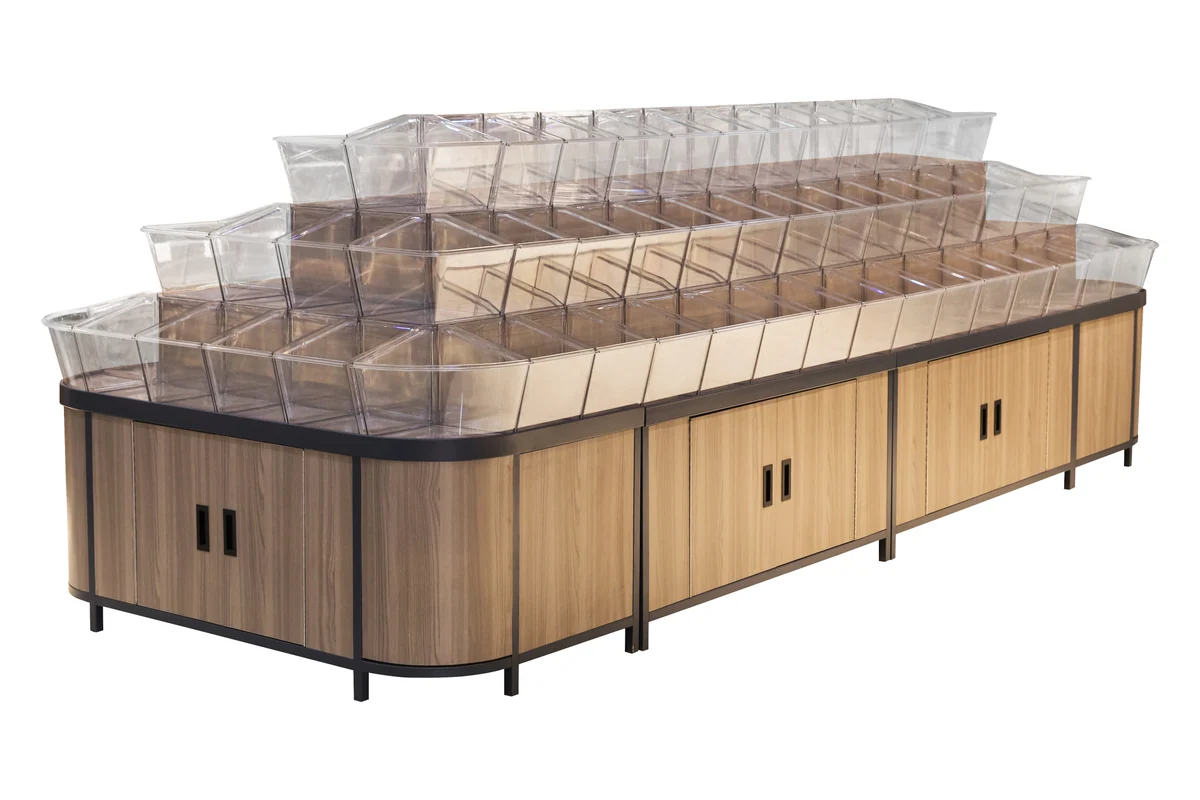
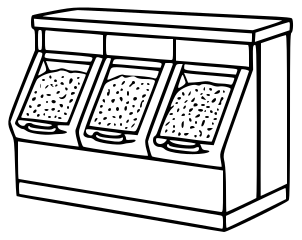
Open the product fileRows of clear tilt bins stepped up the face of a timber island, so the shopper sees into every bin from standing height rather than only into the front row.
Tiered clear tilt bins
Open the product fileA long curved body with deeper bins than the standard build, for lines that sell fast enough to need the extra volume between refills.
Curved run, deep bins
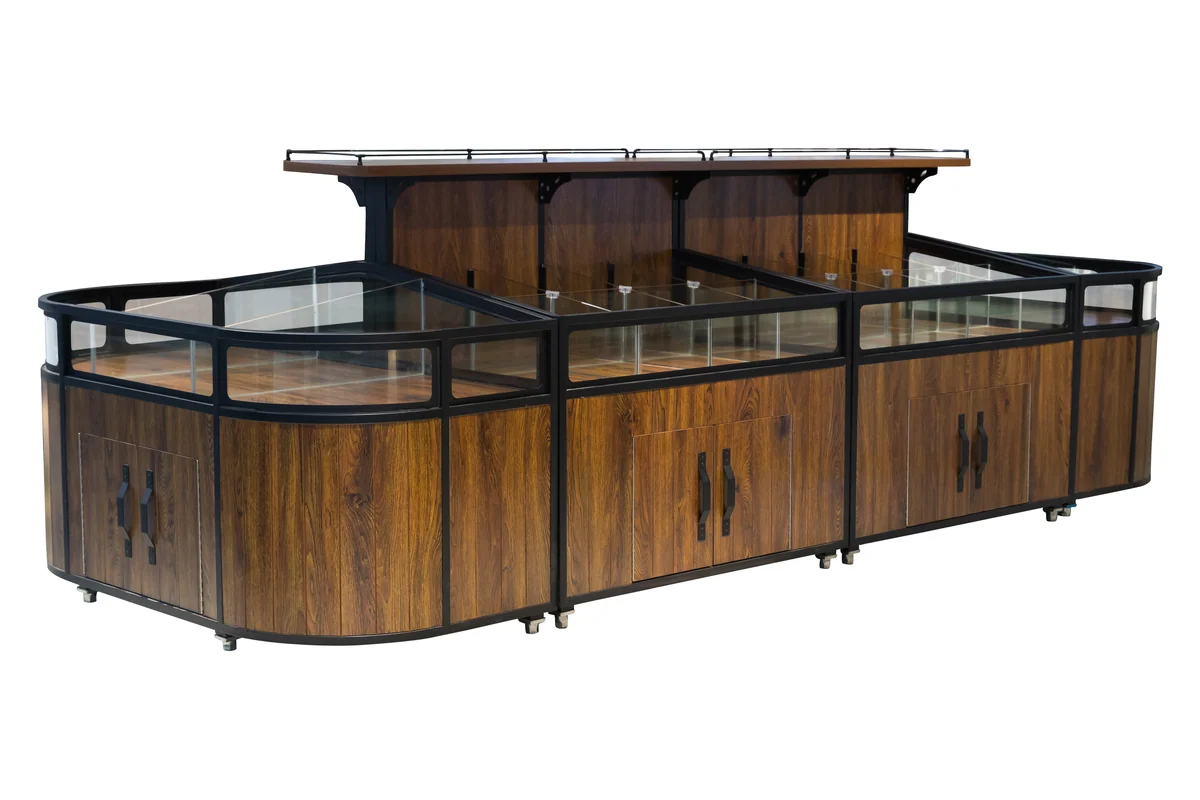
Open the product fileA long island with a raised spine down the middle carrying its own glazed display, so the fixture sells three levels deep from both flanks.
Raised centre spine, glazed
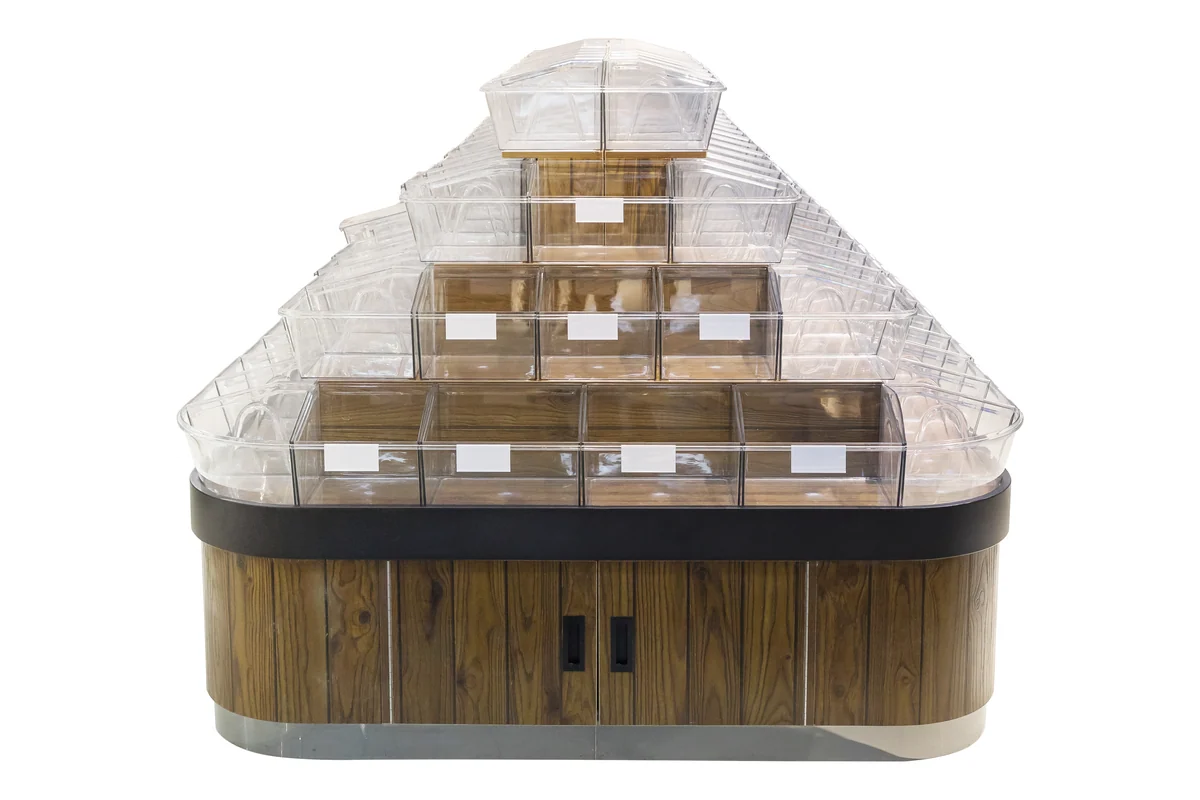
Open the product fileBins stepped into a pyramid rather than a rectangle, so the display has a peak. It is the shape a store uses at the head of an aisle where the fixture has to be seen from across the floor.
Pyramid stepped bins
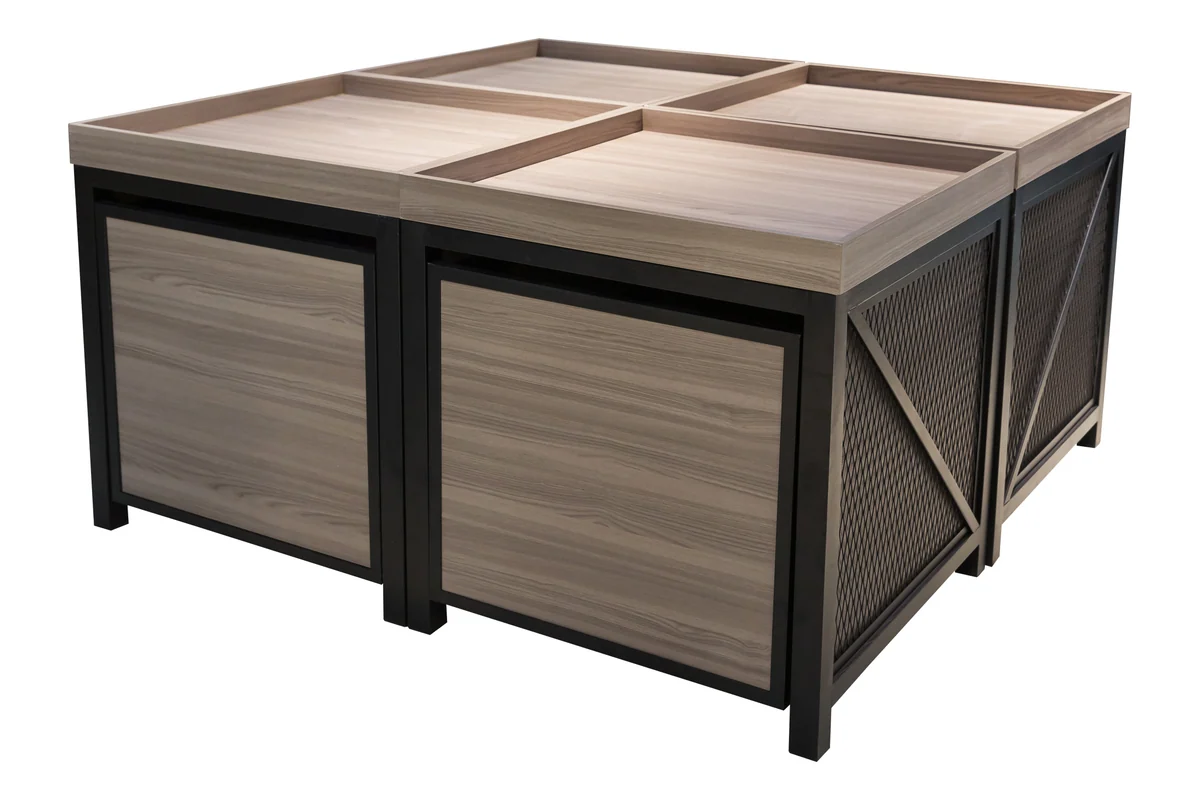
Open the product fileA heavier build with cross-bracing worked into the flanks, which turns the structure into the decoration. It suits a store selling grains and pulses as provisions rather than as groceries.
Cross-braced flanks
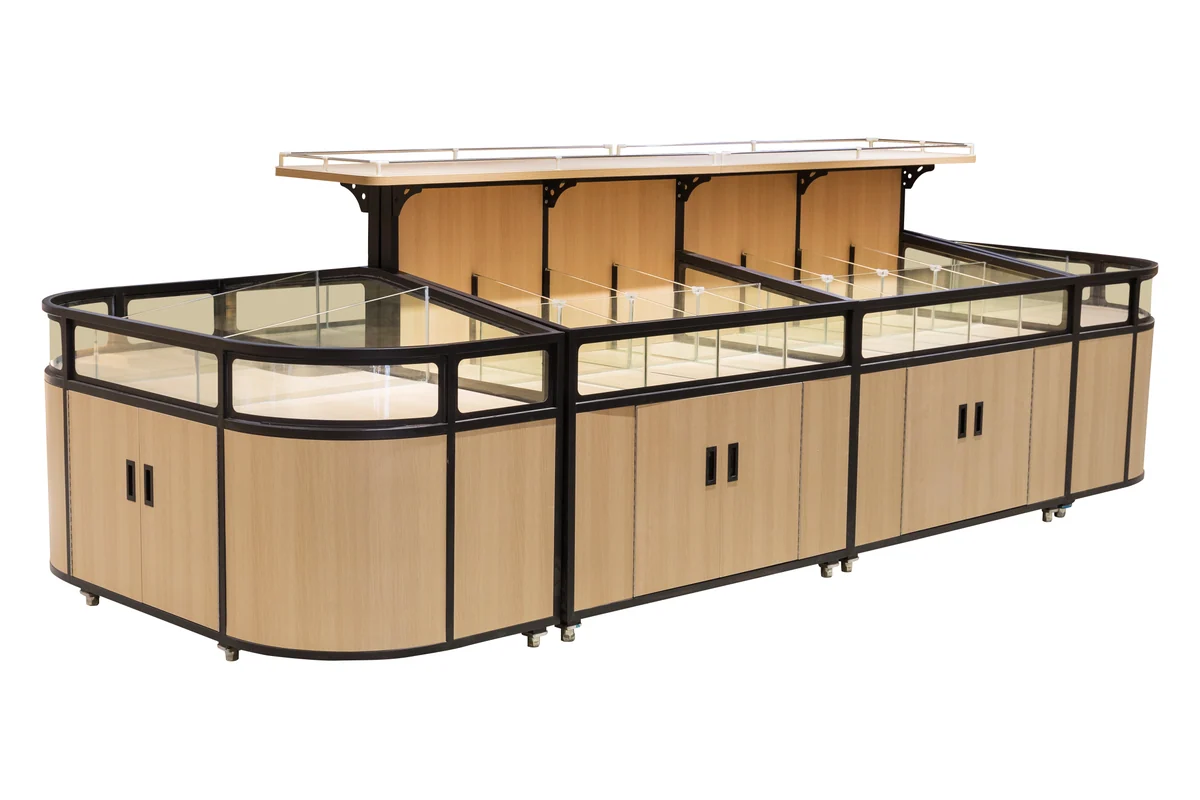
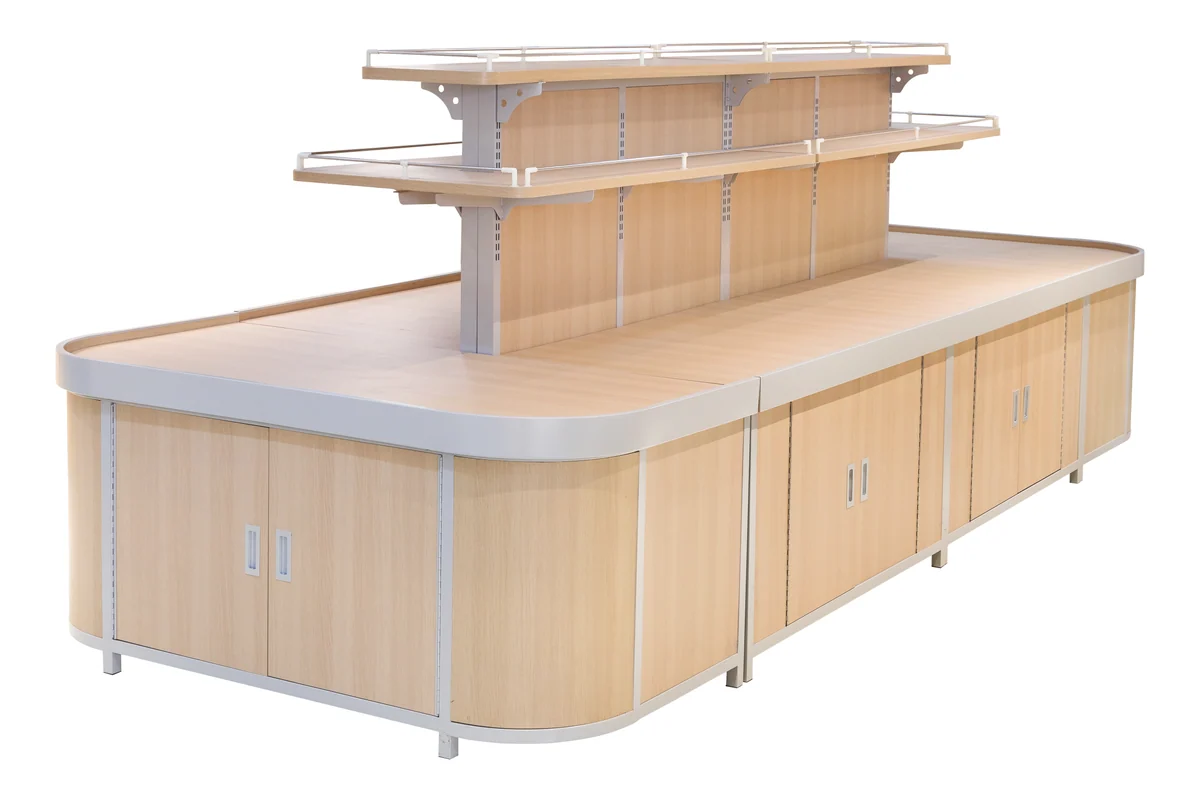
Open the product fileA pale worktop over light timber with a single shelf above it. Cleaner and quieter than the bin builds, for a dry goods section that sells packaged rather than loose.
Pale top, single upper shelf
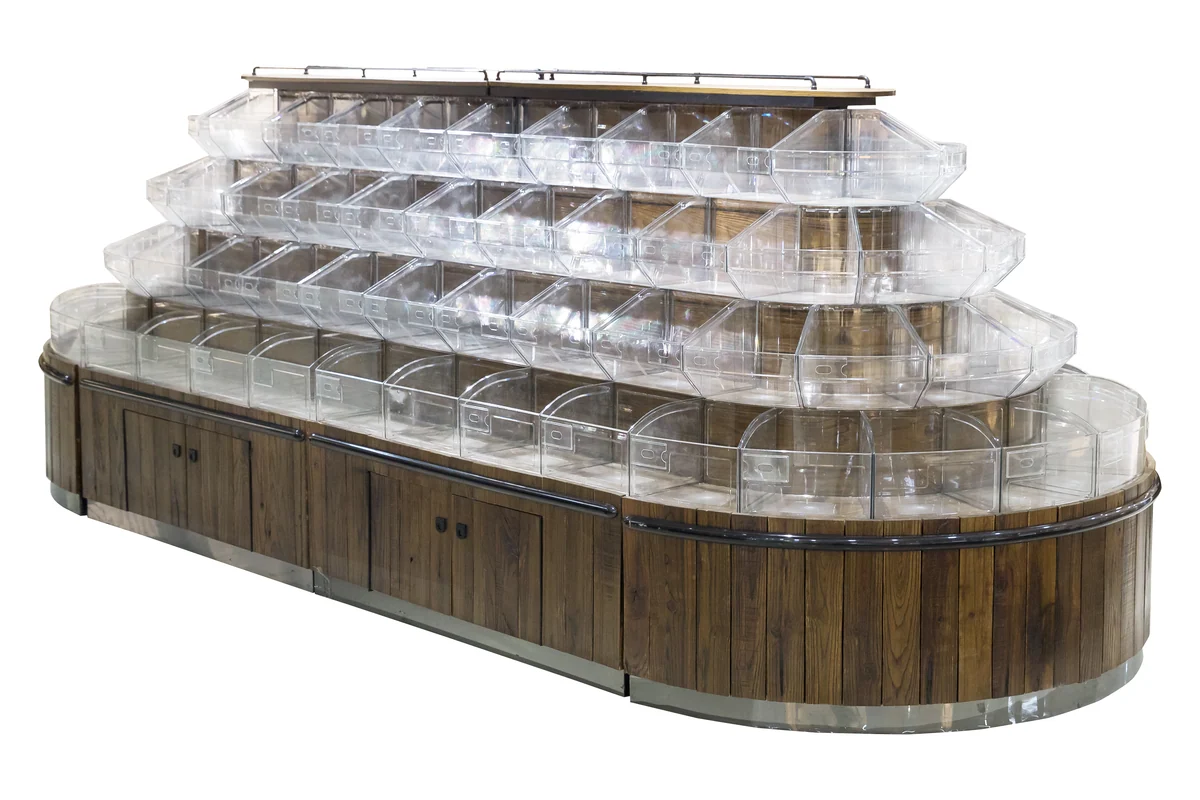
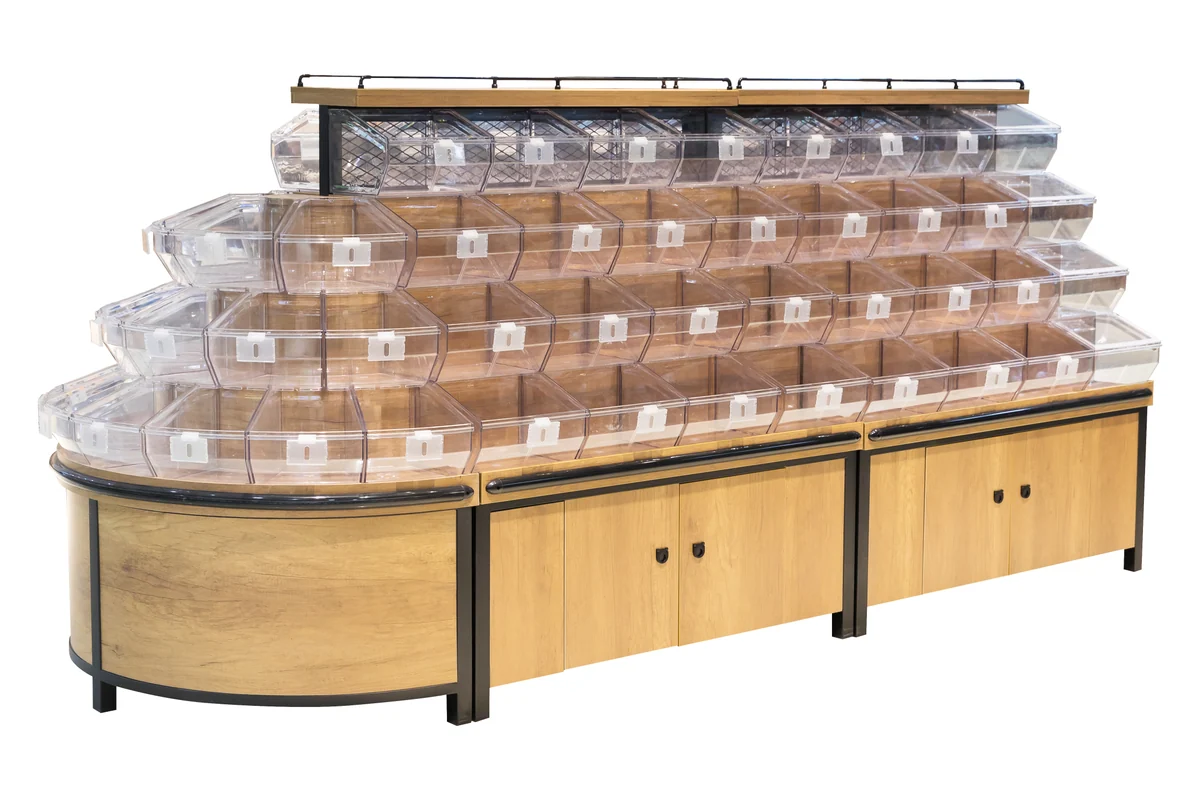
Open the product fileThe densest build in the file: five stepped rows of clear bins on a timber body. Where a bulk section is the reason people come to the shop, this is the fixture that carries it.
Five stepped bin rows
Open the product fileThe glazed build with one end rounded, which lets it close the head of an aisle without presenting a corner to the main walkway.
Glazed island, rounded end
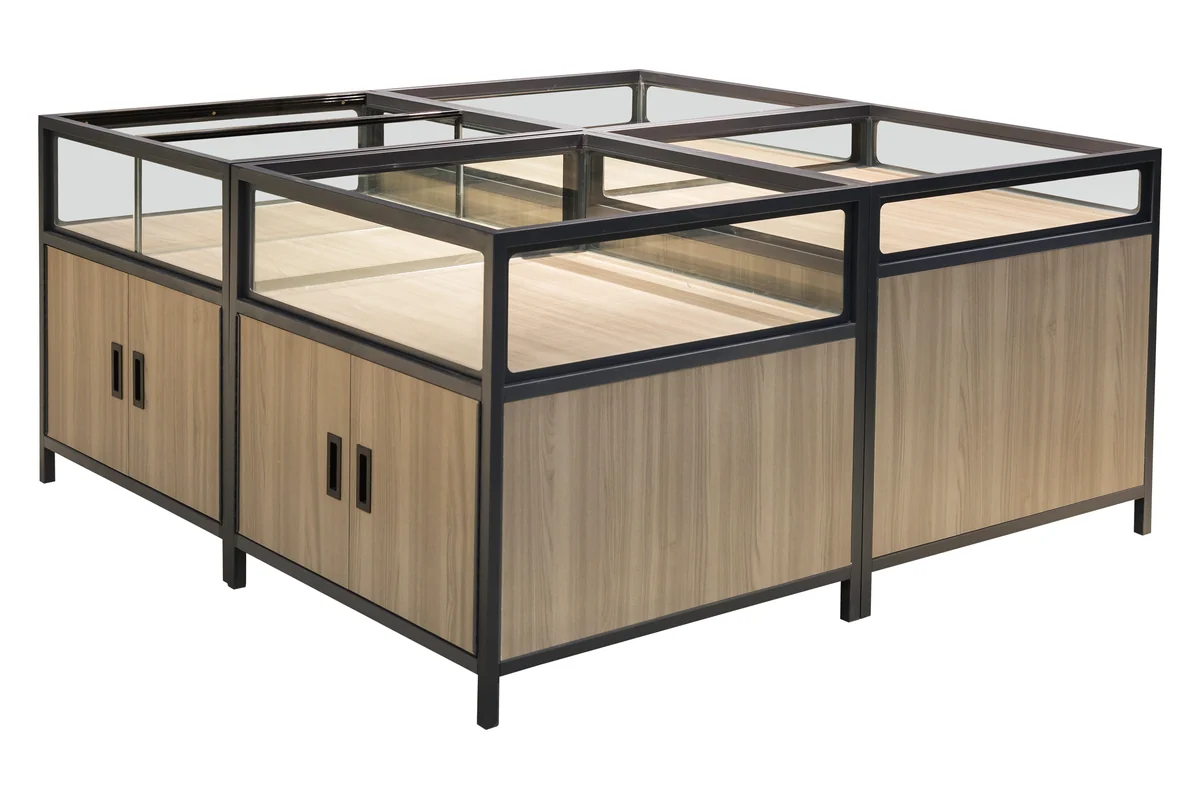
Open the product fileA square glazed island where the frame does the work and the glass is nearly invisible. Everything inside is covered and everything is visible from every side.
Glazed island, exposed frame
Open the product fileThe full-length version of the tilt bin island, with a curved head at one end so it can sit at the mouth of an aisle without a hard corner facing the walkway.
Long run, curved head
Open the product fileThe same tilt bin geometry in a much darker timber, which is what a store reaches for when the bulk section has to read as a speciality department rather than as a value aisle.
Dark timber, tilt bins
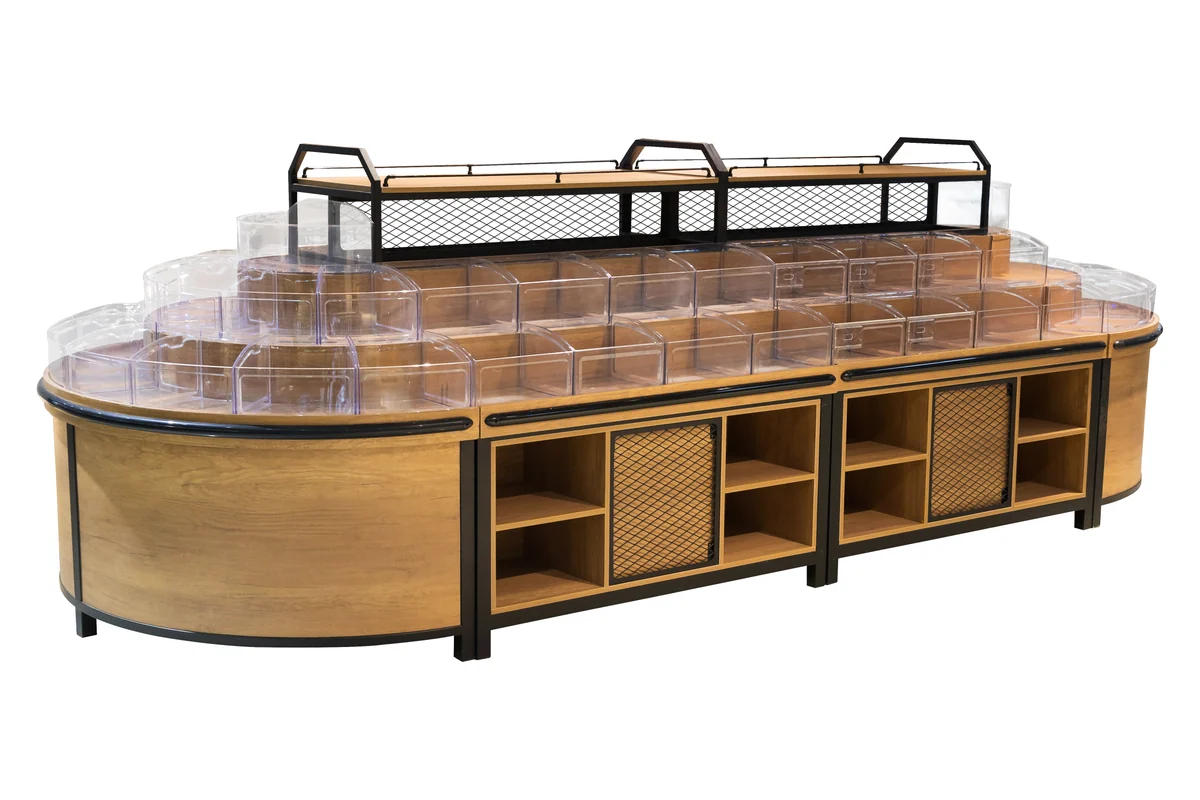
Open the product fileA rounded end so trolleys clear the corner, tilt bins above and open cubbies through the base for sacked and boxed back stock.
Rounded end, open base cubbies
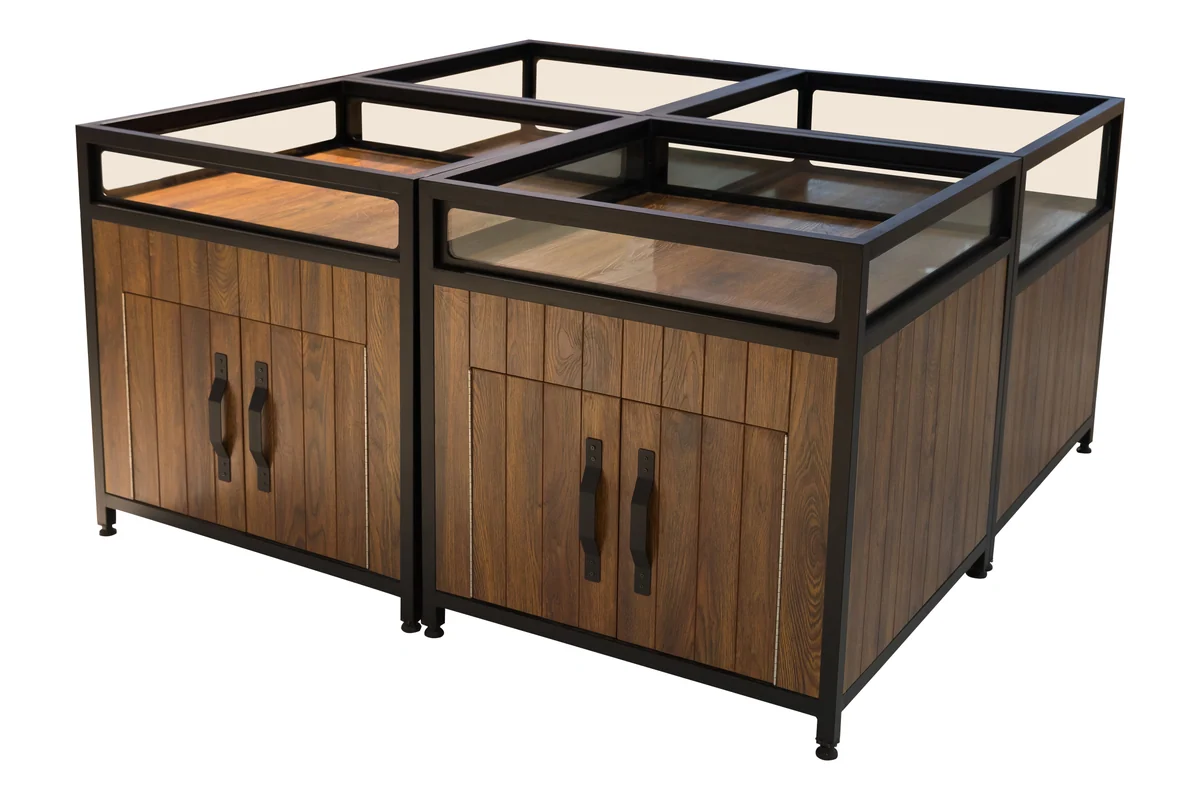
Open the product fileA black frame carrying glass panels over a timber carcase, four-sided and square. Everything is covered, which is what a store specifies when the local rule will not allow open bins.
Four-sided glazed cabinet
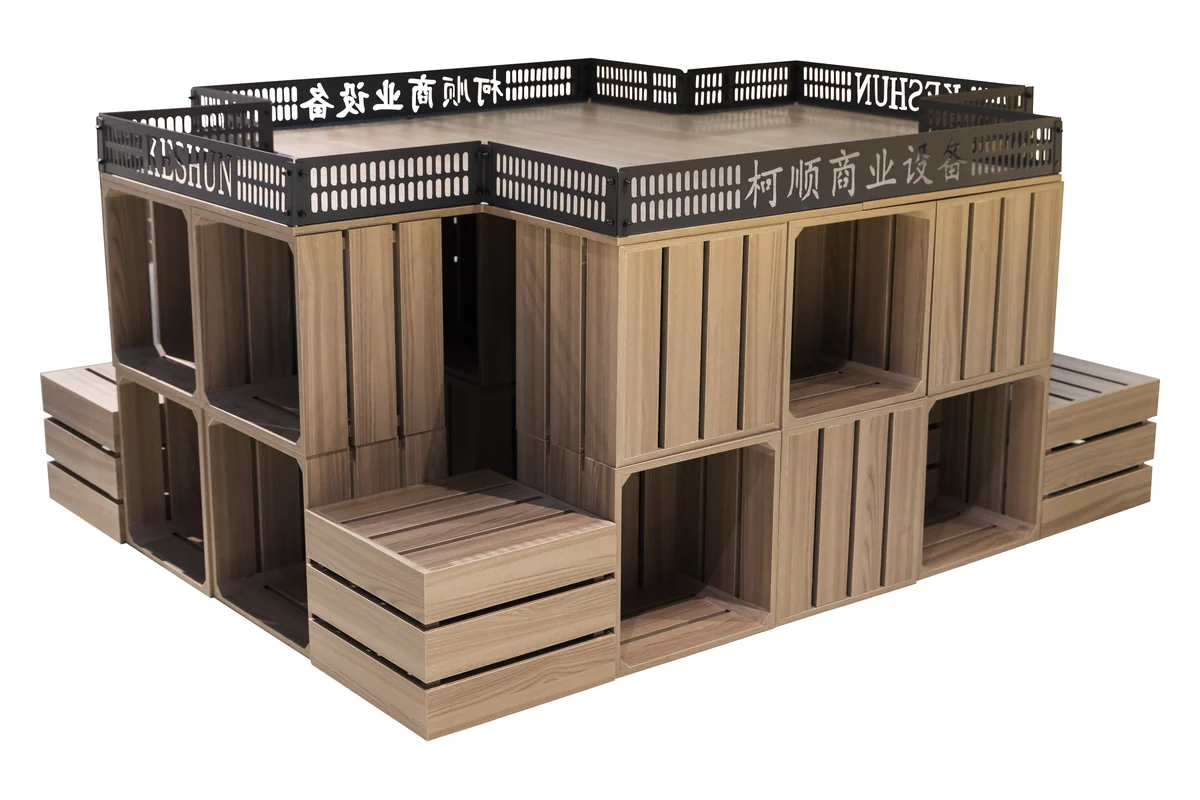
Open the product fileA stepped set of open crates under a tall signage header. Not a bin fixture at all: this is the scenario display a store builds when it wants a market stall in the middle of a supermarket.
Open crates, tall header
Open the product fileCompartment counts and bin sizes are drawn against what you sell, so they are set with the quotation rather than published here. Colour is a RAL or PANTONE reference held across the order, which keeps a bulk island in the same shade as the grain racks that usually share its aisle.
Tell us how many separate lines your bulk section has to carry. Compartment count settles the fixture faster than any dimension does.
Every question below is one we would have to ask you anyway. Answering them now takes a round trip out of the quotation.
Seven things buyers ask before they order a bulk aisle. If yours is not here, put it in the message box above and it gets answered with the quotation. For where a bulk cabinet sits between racking and shelving, see Racking or Shelving? Getting the Terms Right.
The four bulk builds on record, KS-SZG-01 through KS-SZG-04, are all cut to the aisle rather than sold in fixed sizes, so we do not publish a size table for this category. A bulk island is drawn against your aisle and your line count, and the figures come back with the quotation.
Because length does not tell us what the fixture has to do. A four-metre island with twelve bins carries twelve lines; the same four metres with forty bins carries forty. The metres are identical and the fixture is completely different. Line count settles the build; length settles where it goes.
That is decided by your local food hygiene regime rather than by us, and it varies widely between the markets we ship to. Tell us the rule you are working to. Most aisles we quote end up split: open tilt bins on the fast-moving lines, glazed cabinets on everything else.
So the shopper looks into the bin rather than at its rim. An upright bin only shows its contents to somebody standing directly over it, which on a four-row island means three of the four rows are invisible. Tilting the bins and stepping the rows makes the back row as readable as the front.
Into the base of the fixture. Bulk lines empty faster than anything else on the floor, so open cubbies or cupboards through the base carry the sacks and boxes directly under the display. It turns a refill into a ten-second job instead of a trip to the stock room.
Yes, our records have listed price tickets as part of the supply for years. On a forty-bin island that matters more than it sounds: forty names and forty prices written by hand on opening morning is exactly what a new bulk section should not look like.
A bin a shopper serves themselves from, rather than one holding packaged stock. In a supermarket that means bulk food bins with clear tilt fronts or gravity dispensers, filled from a closed refill cabinet underneath. What your local food hygiene rule allows — open, covered or fully enclosed — decides which of the three you can use.