





Doors Inside The Frame
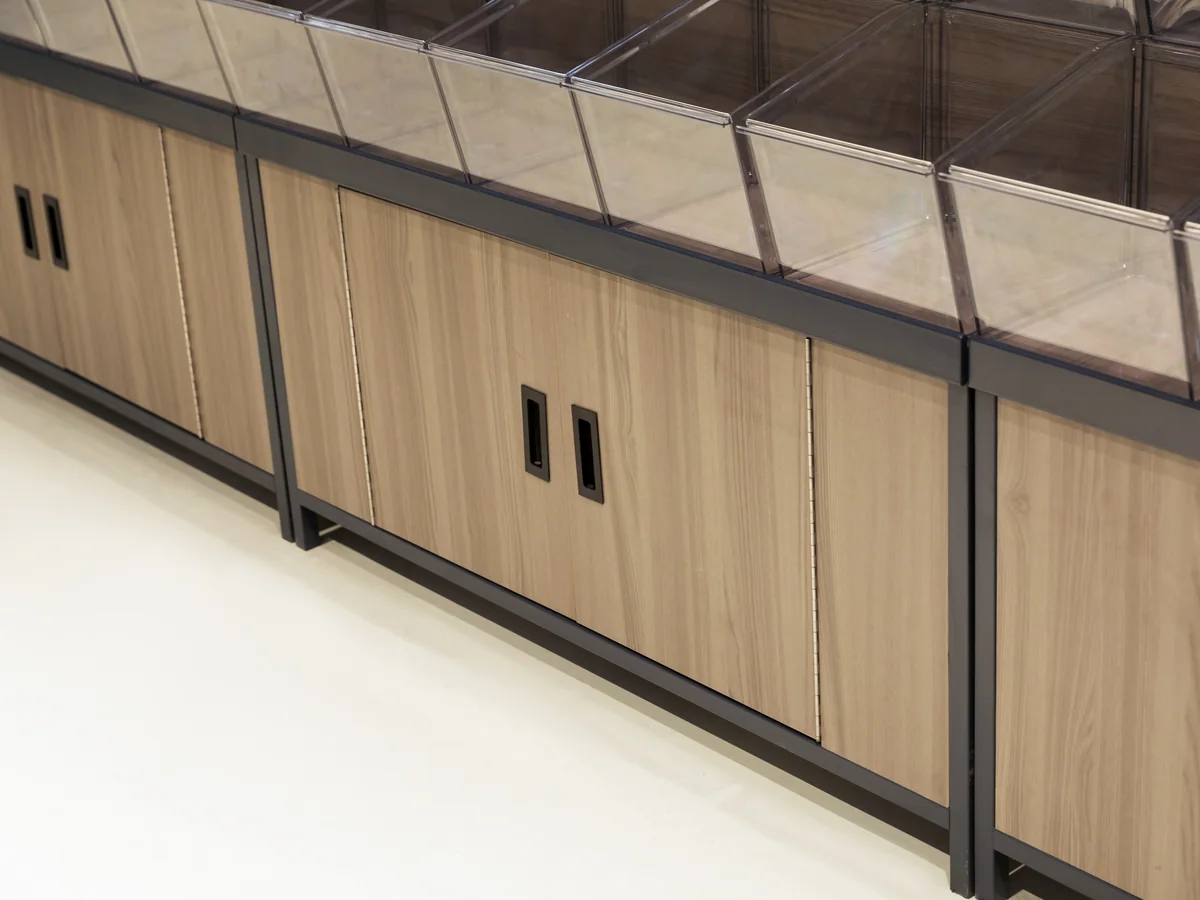
Frame proud, doors flush
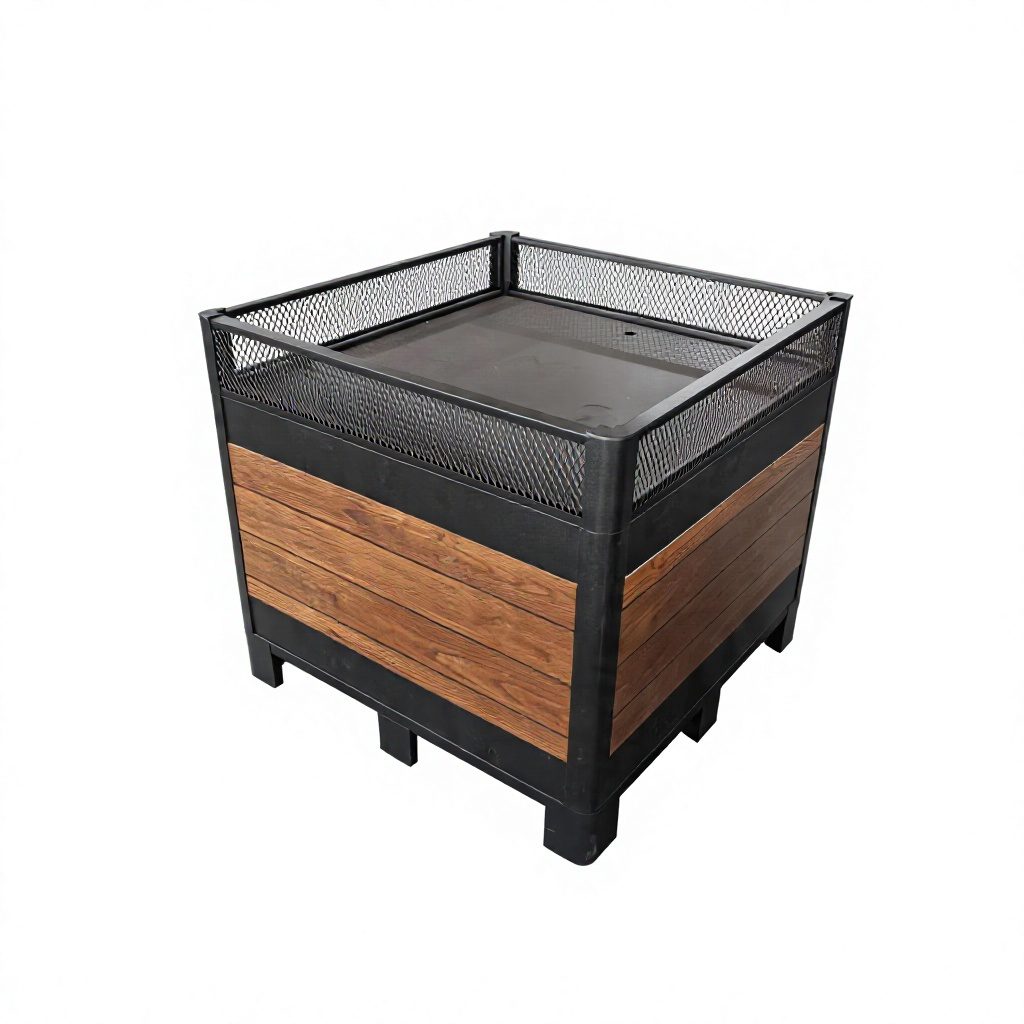
The black frame stands slightly proud of the door faces, so the doors sit inside it rather than flush with the outer line. It is what gives the island its defined edge from across a floor.
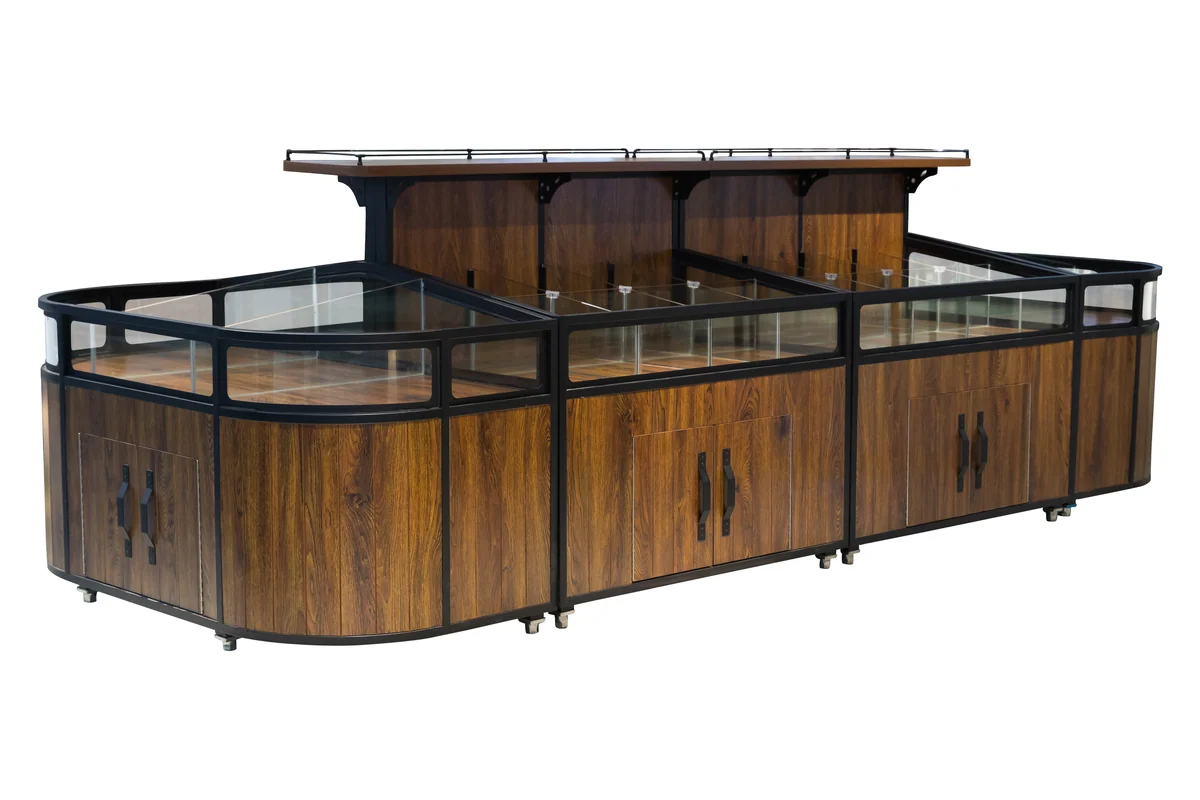
Three rows of clear tilt bins on a mid-toned timber island framed in black steel. Where the pale builds recede, this one holds its own line across a floor — which is what a store wants when the island is the feature of the aisle.
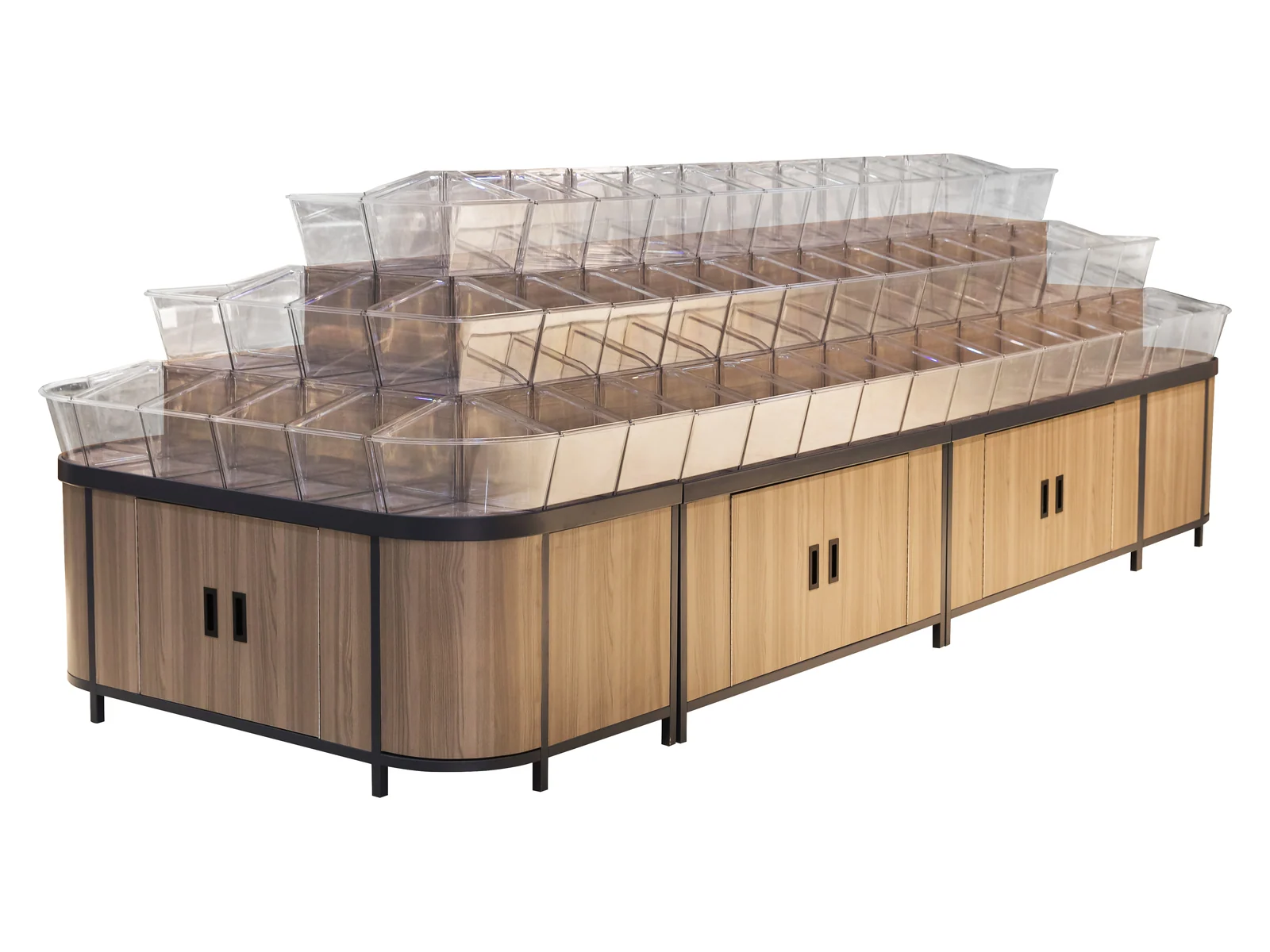
Two studio angles on white. The base run, the plinth junction, an open cabinet and the curved end bin are shown below.
Structurally this is the standard three row bin island: clear tilt bins in stepped rows, a closed cabinet base for refill stock, one radiused end. What changes is the treatment. The timber is mid to dark with a visible grain, and a black steel frame runs the perimeter and the leg line, so the fixture reads as a defined object rather than as a neutral platform.
That matters more than it sounds. A pale island under bright retail lighting disappears behind its product, which is right for a store where the range is the message. A dark framed island is a piece of furniture in the room, which is right for a store selling the idea of a market rather than the idea of a warehouse.
Three rows of clear tilt bins on a mid-toned timber island framed in black steel. Where the pale builds recede, this one holds its own line across a floor — which is what a store wants when the island is the feature of the aisle.
Supermarkets, convenience stores, chain retail and speciality stores. Tell us the store format and the floor area and the specification comes back written against them.
What separates this from the pale island is all in the treatment, so these four are about how the frame, the timber and the plinth meet.
Frame proud, doors flush
The black frame stands slightly proud of the door faces, so the doors sit inside it rather than flush with the outer line. It is what gives the island its defined edge from across a floor.
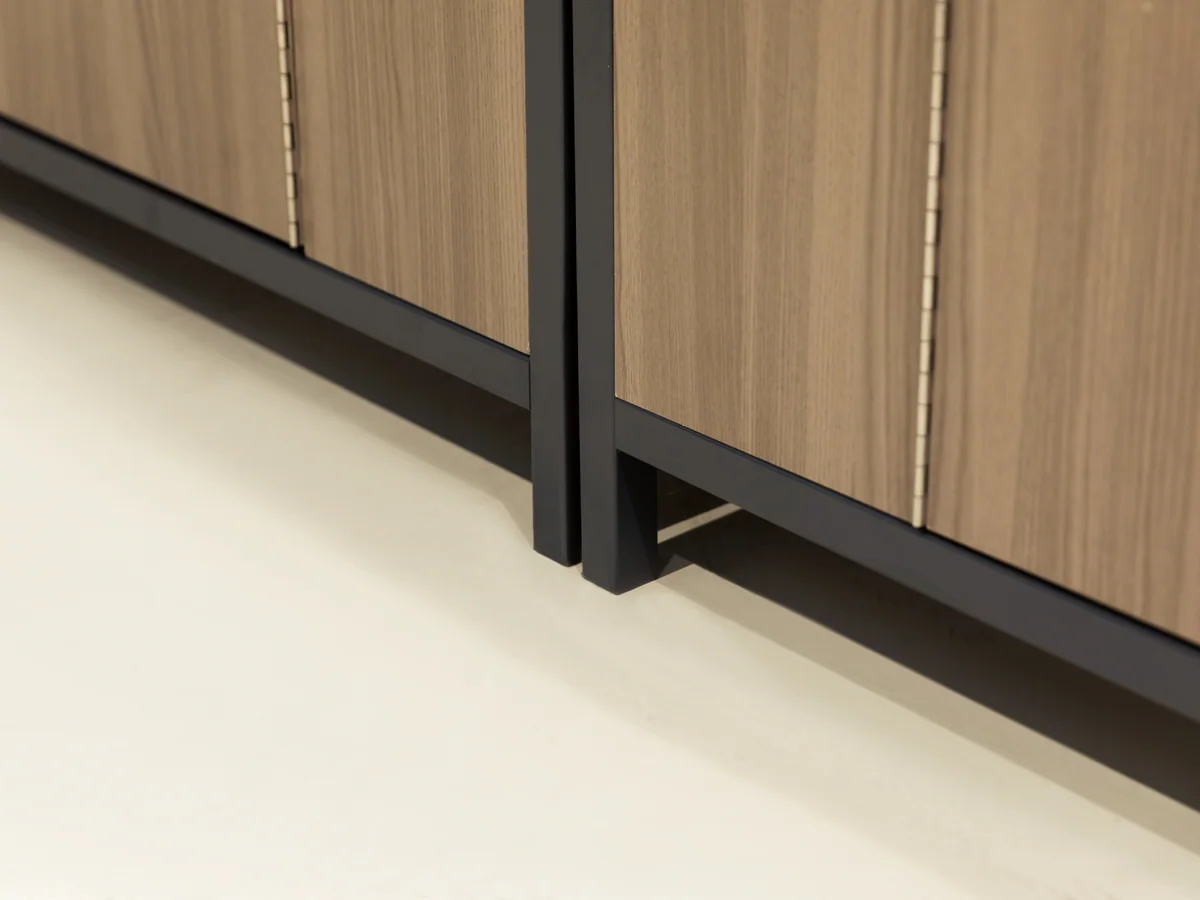
Steel plinth under timber
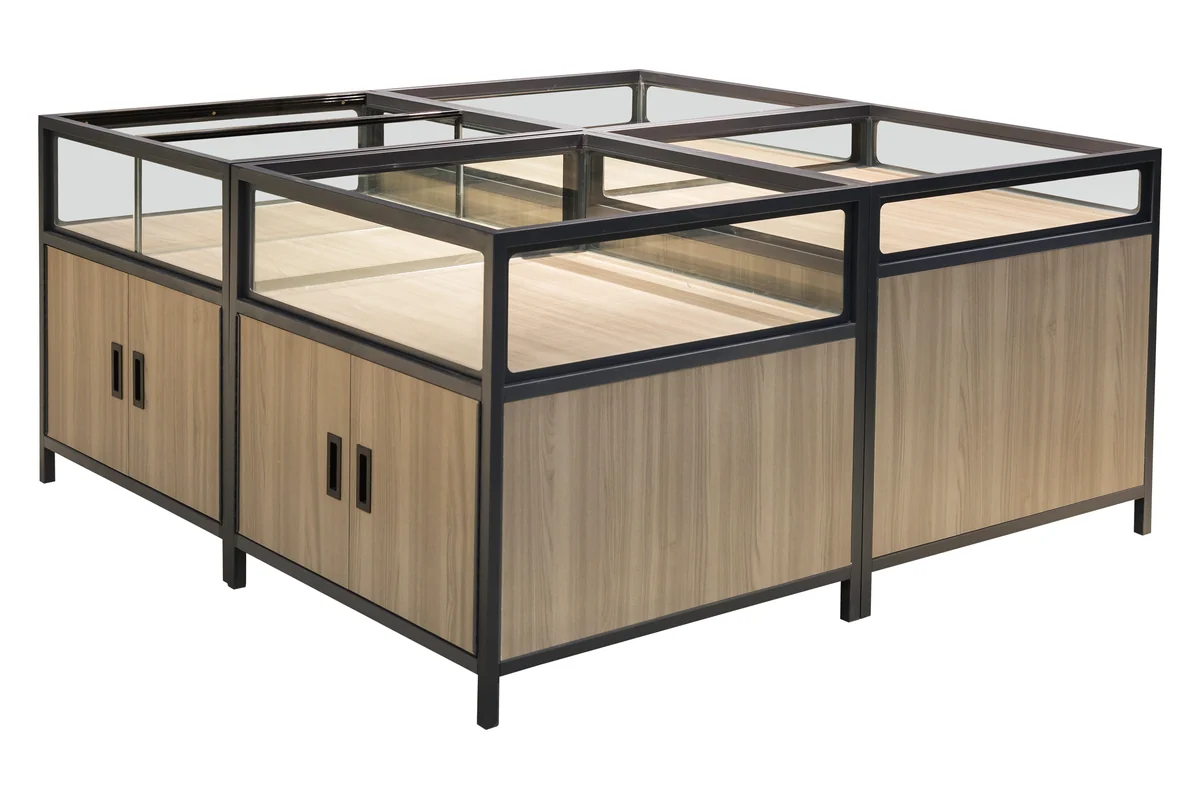
The timber facing stops short and the steel plinth takes over below it. Keeping the board off the floor line is the single biggest thing you can do for the life of a fixture in a washed-down aisle.
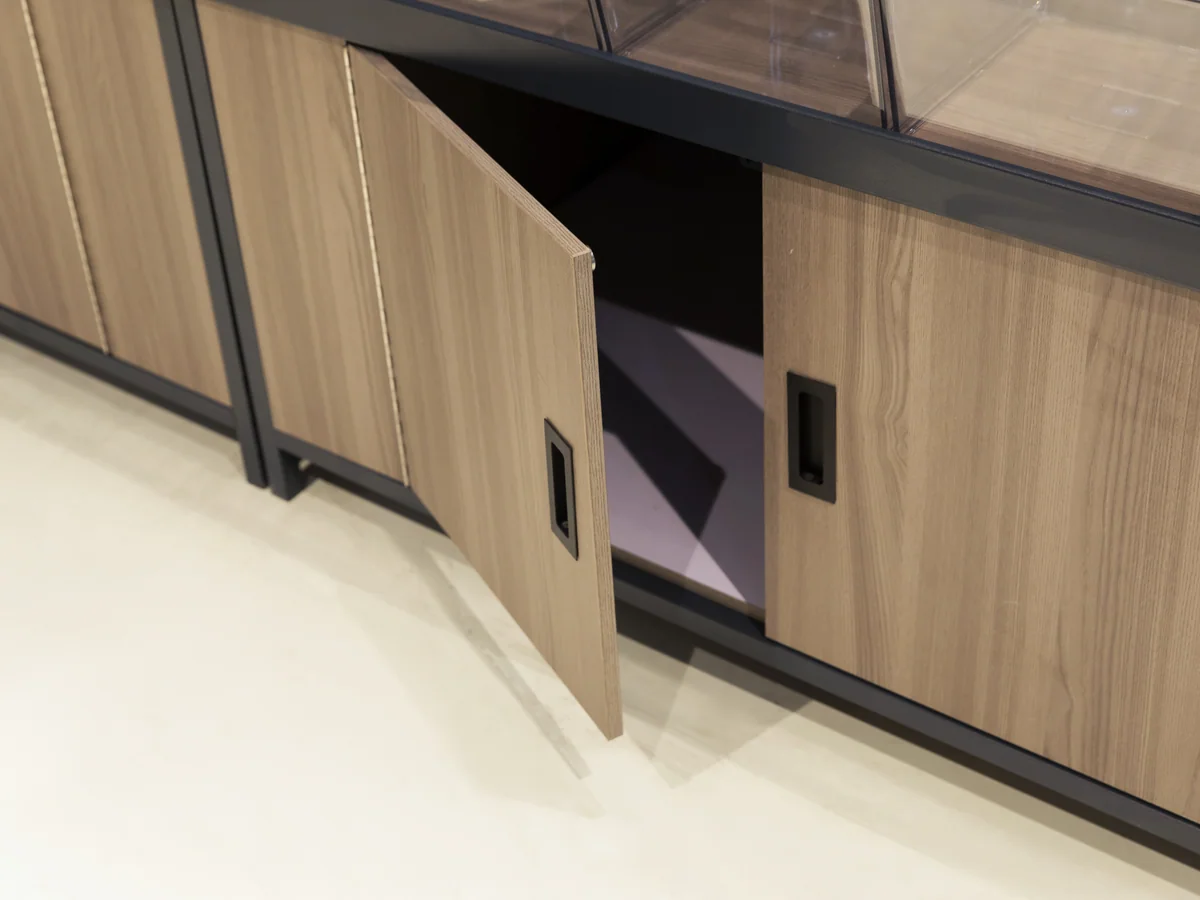
Left clear as standard
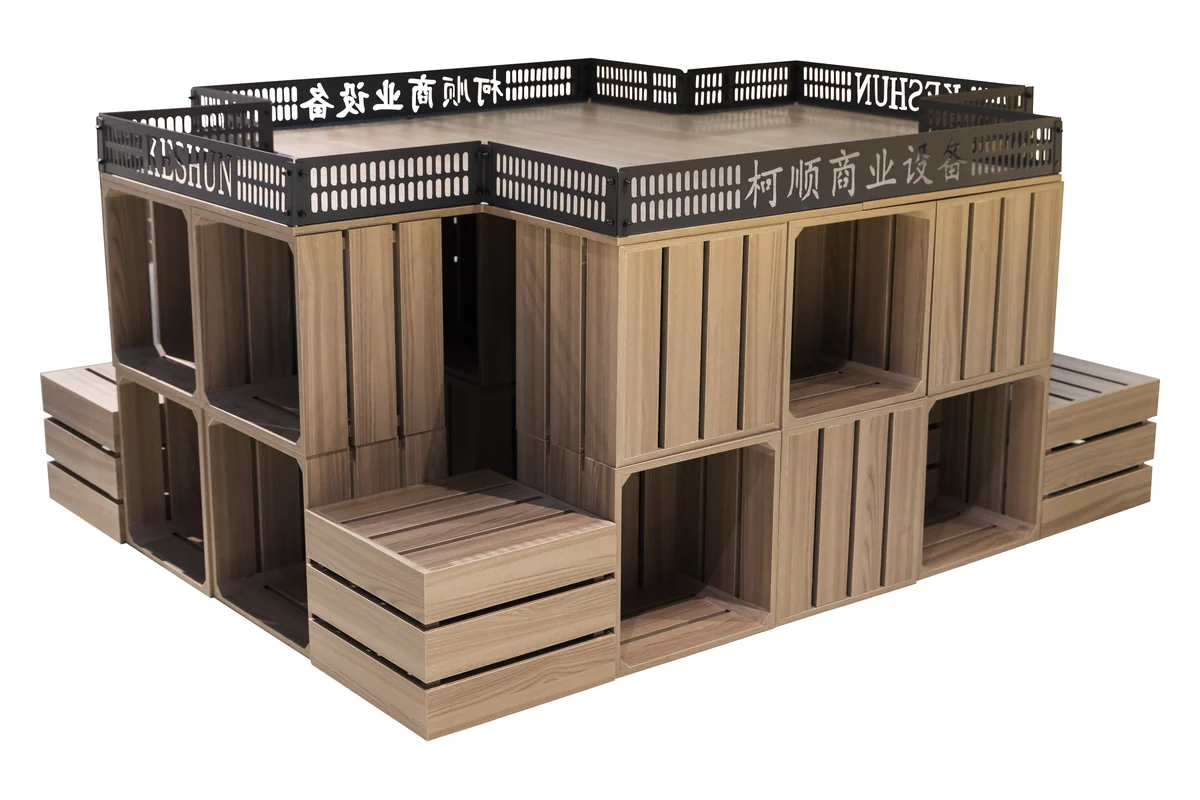
The interior is left clear in the standard build. Shelves, dividers or a stainless liner are fitted against what you store, so a cabinet under a bin run and one under an open deck are not fitted out the same way.
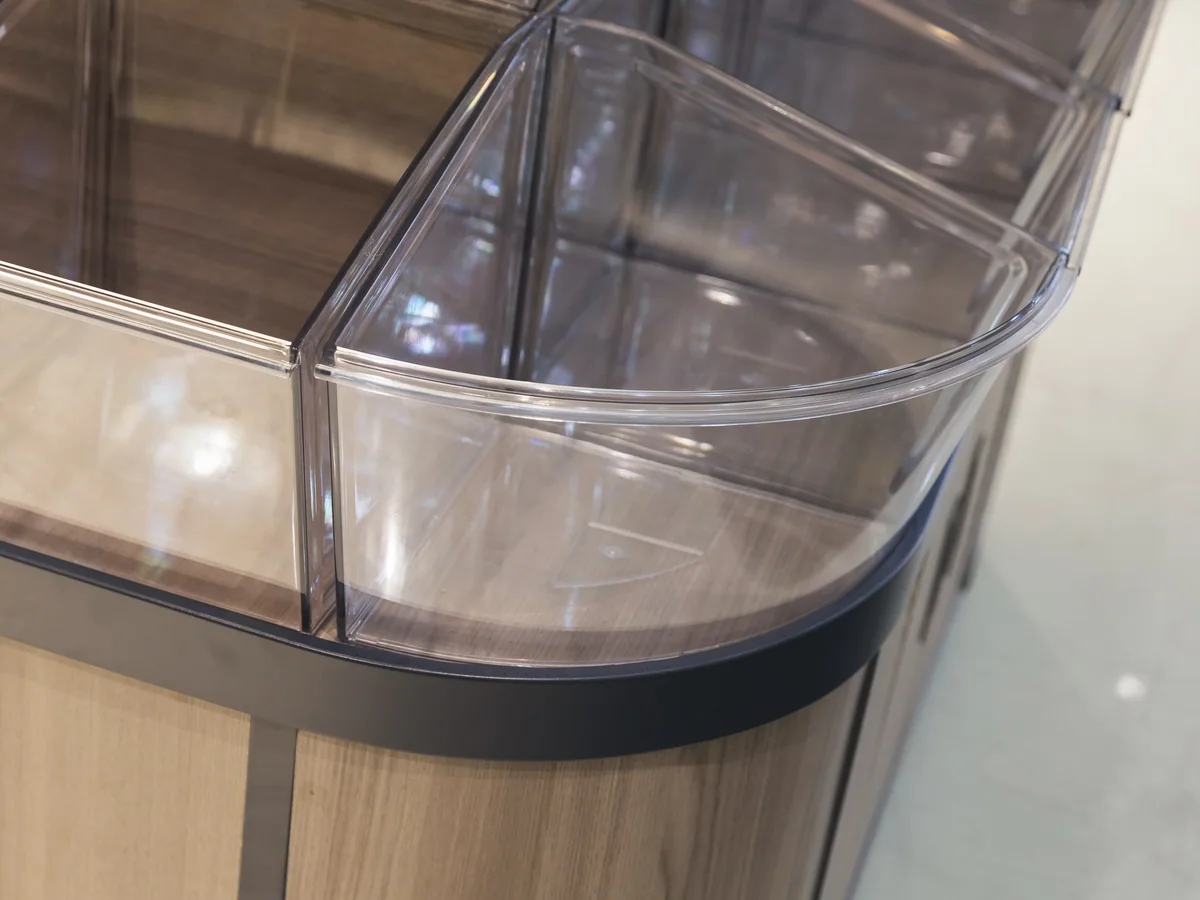
Tiers follow the radius
The bin rows continue around the radiused end. It is the part of the island a shopper meets first coming down the aisle, so leaving it as blank timber would waste the best position on the fixture.
Every item on this page is made to order. Send a floor plan, a hand sketch or a photograph of a fixture you like, and we quote against it.
Store fixtures are light for their size, so a container fills up on volume long before it fills up on weight. What decides your freight is not what one unit weighs — it is what shape the goods are in when they go through the container door. Everything we build leaves in one of three shapes, and a bulk island is the one that travels best.
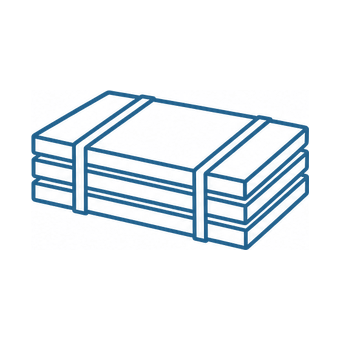
Shelving bays, produce islands and bulk cabinets travel as panels — uprights, shelves, back panels and plinths, strapped flat with bubble wrap on every component. They are built up on the shop floor, so the packing list and the assembly drawings travel with the goods.
This model
Trolleys slide into one another and baskets stack. Past the first unit, each extra one adds only its nesting pitch instead of its full length, so the shipped volume ends up a fraction of what the unit count suggests.

A checkout lane is welded, coated and fitted out as one piece, so it is crated whole with padding on the steel. Nothing waits to be assembled at the store beyond levelling it into the lane, and the crate is the counter plus a margin.
Because this island ships as panels rather than assembled, the container arithmetic runs on panel count instead of on finished size — which is why two islands of the same footprint can load very differently depending on how many compartments each one carries. We do not publish a units-per-container figure for that reason. It is worked out against your actual order and comes back on the packing list together with the case dimensions, once the island size is confirmed.
A bulk island rarely arrives on its own. These three categories share the dry goods aisle with it, and putting them on one order is what lets a single colour reference run across the whole aisle, because it is then one batch of coating rather than three.
Loose grain and loose dry goods almost always share an aisle, and both want stainless wherever a scoop lands. Ordering them together keeps the two halves of the aisle in one timber.
See grain racksThe bays that run behind and alongside a bulk island are what a shopper sees while standing at it, so they carry the same colour and the same board tone.
See shelving baysLoose lines are promoted constantly, and a 1000 mm promotion square at the head of the aisle is the cheapest way to push one without rebuilding the island.
See retail display tablesHow many of each a store needs is a floor area question rather than a product question, and it is answered store by store on the equipment lists by store size.
Send a plan or a photograph of the run you need and we will price it against your opening date.
Tell us the store size and the finish you need; our engineers reply with a counted list.
The ones that come up on nearly every enquiry for this category.
Structurally almost nothing — both are three stepped rows over a closed base. The difference is the finish and the exposed black frame, which changes how the fixture reads in a lit store. Pale recedes behind the product; dark framed stands as an object. Choose on the store, not on the spec sheet.
Yes. The frame colour and the board tone are specified separately, and any RAL or PANTONE reference is available on the coating. A black frame with pale boards is a common combination and it reads differently again from either of the two builds photographed here.
Locks are fitted where a store asks for them. It is not standard on this build because the base is refill storage rather than valuables, but on a fixture near an entrance it is worth having — flag it with the enquiry.
The facing is board over a steel carcase and it runs in one direction across the whole run, so a multi-bay island reads as one piece. Grain matching panel to panel is part of the build rather than something the site crew has to sort out.