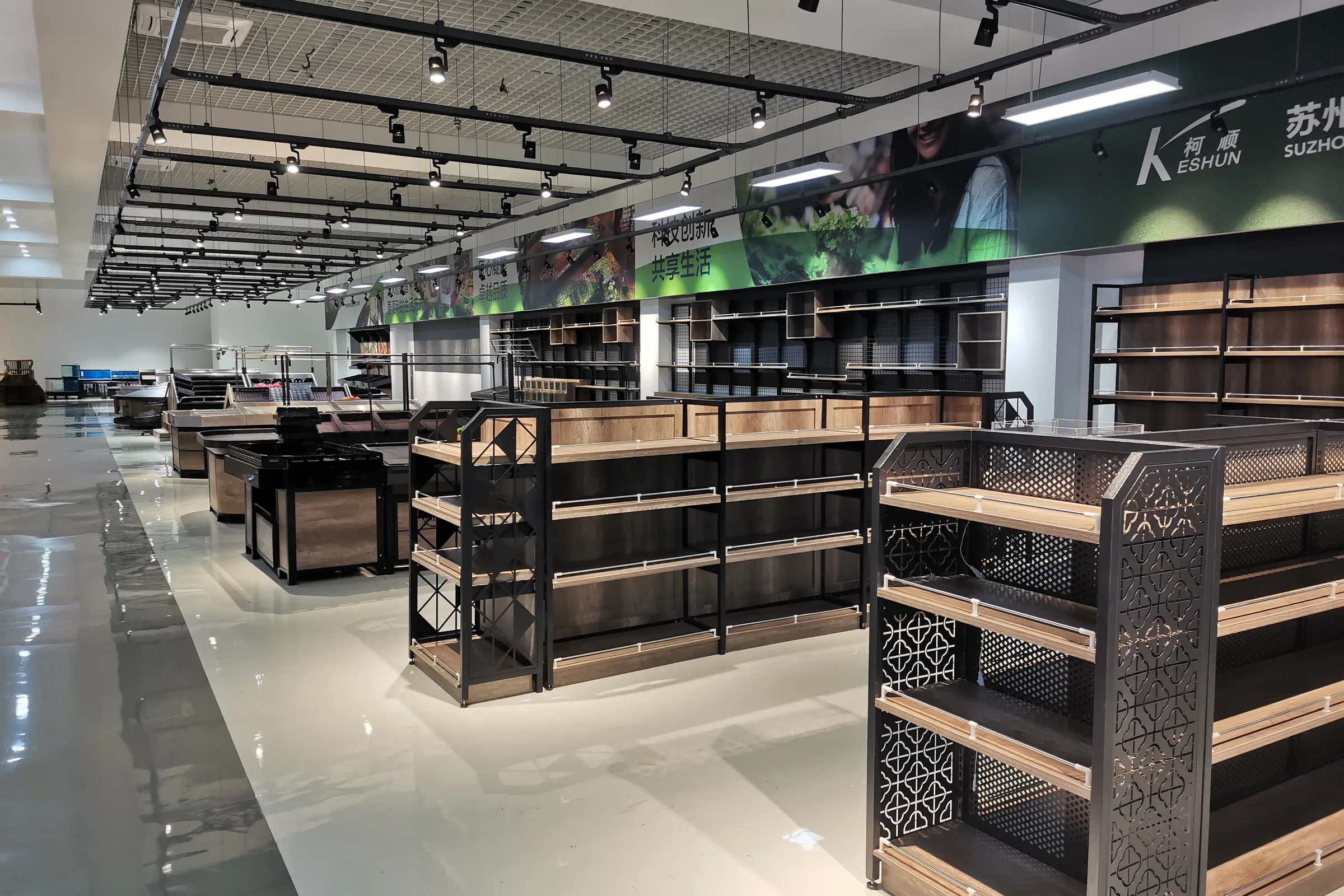
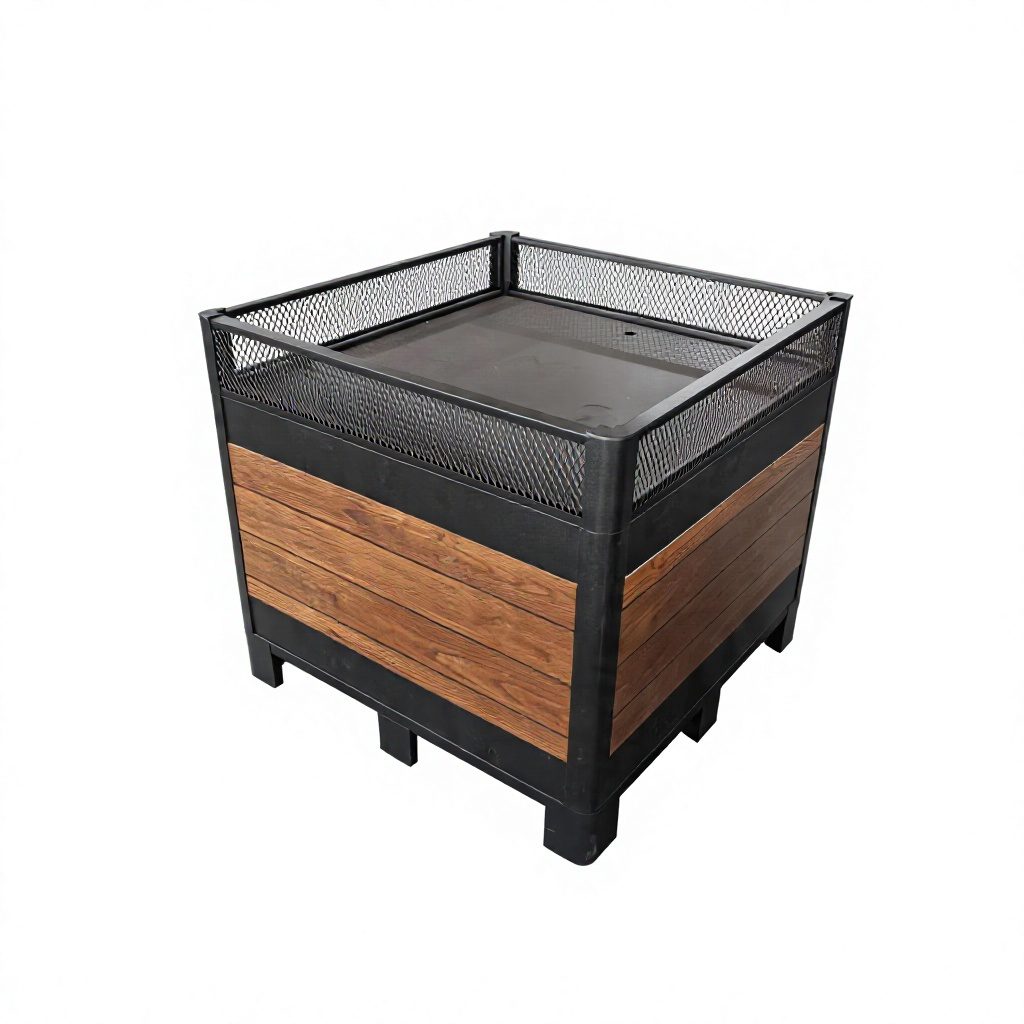
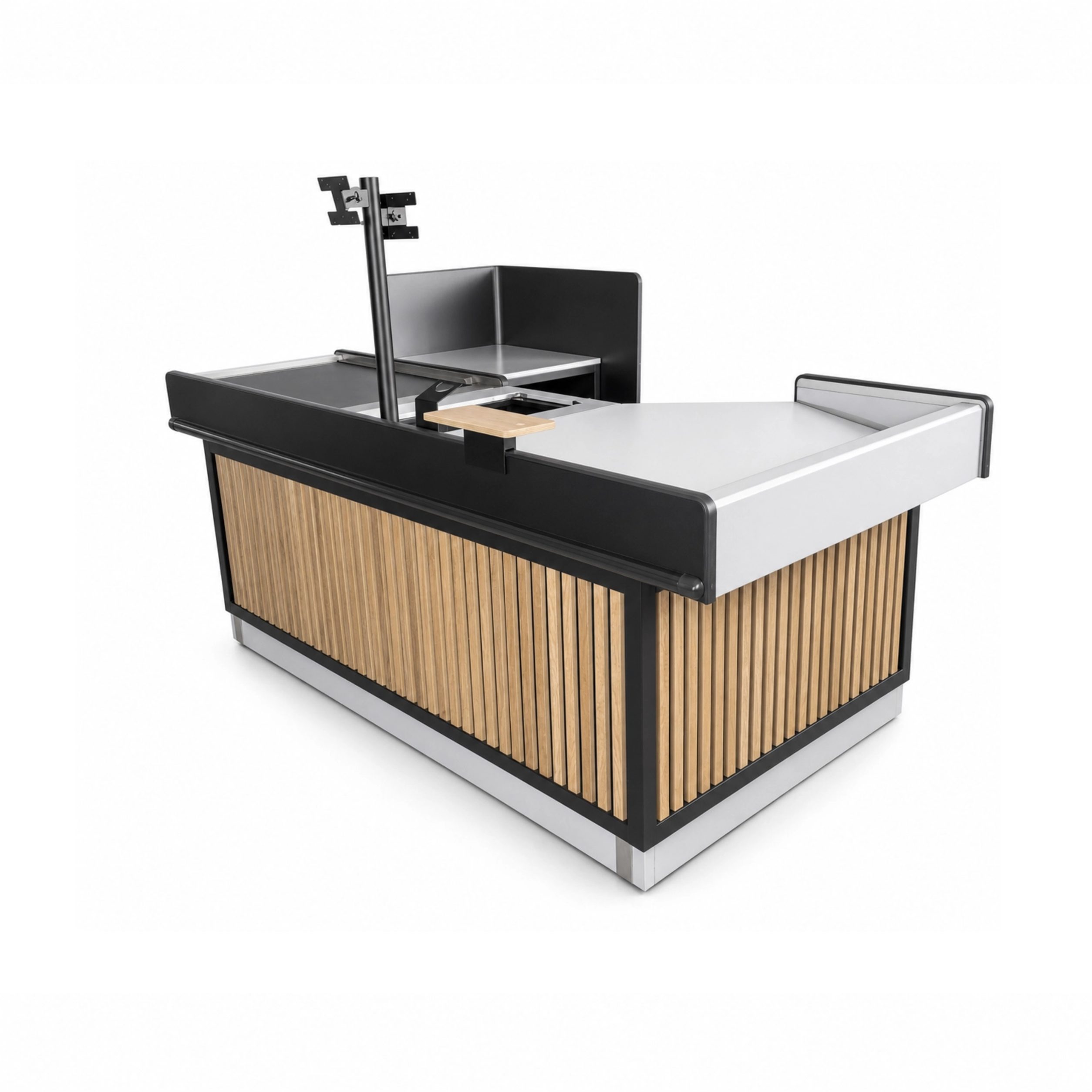
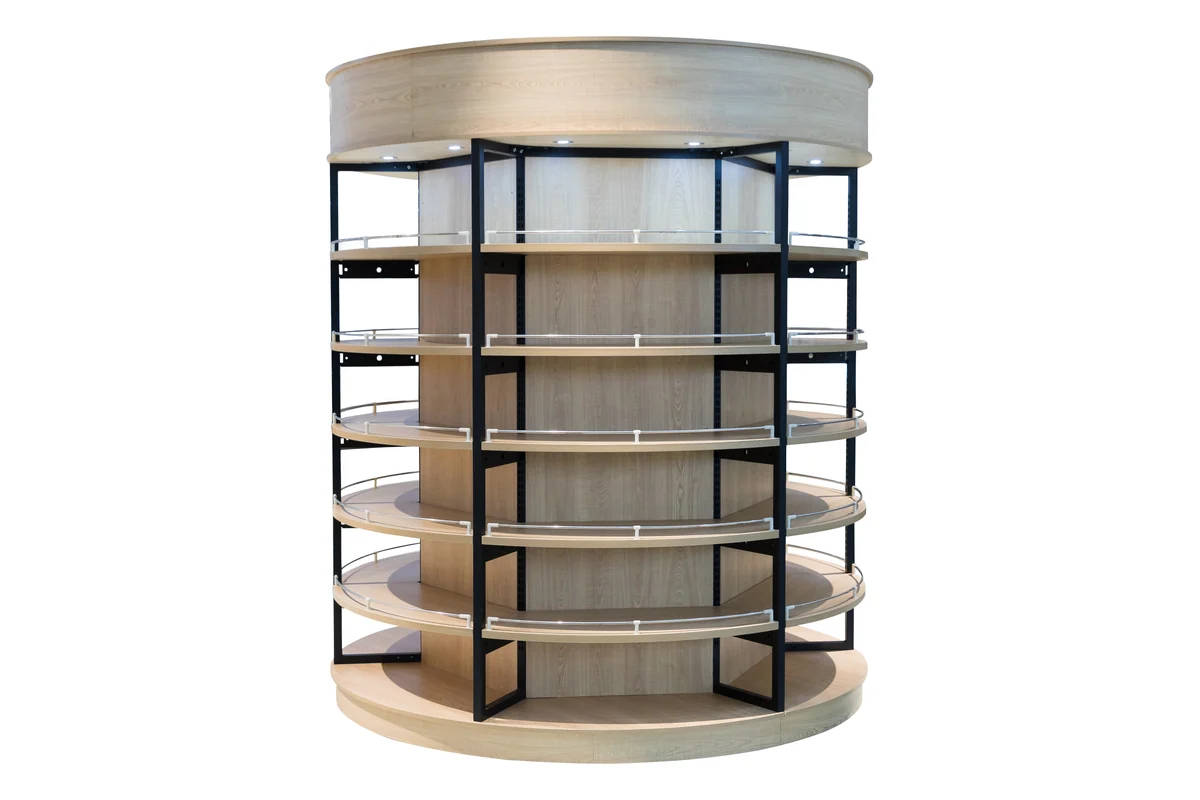
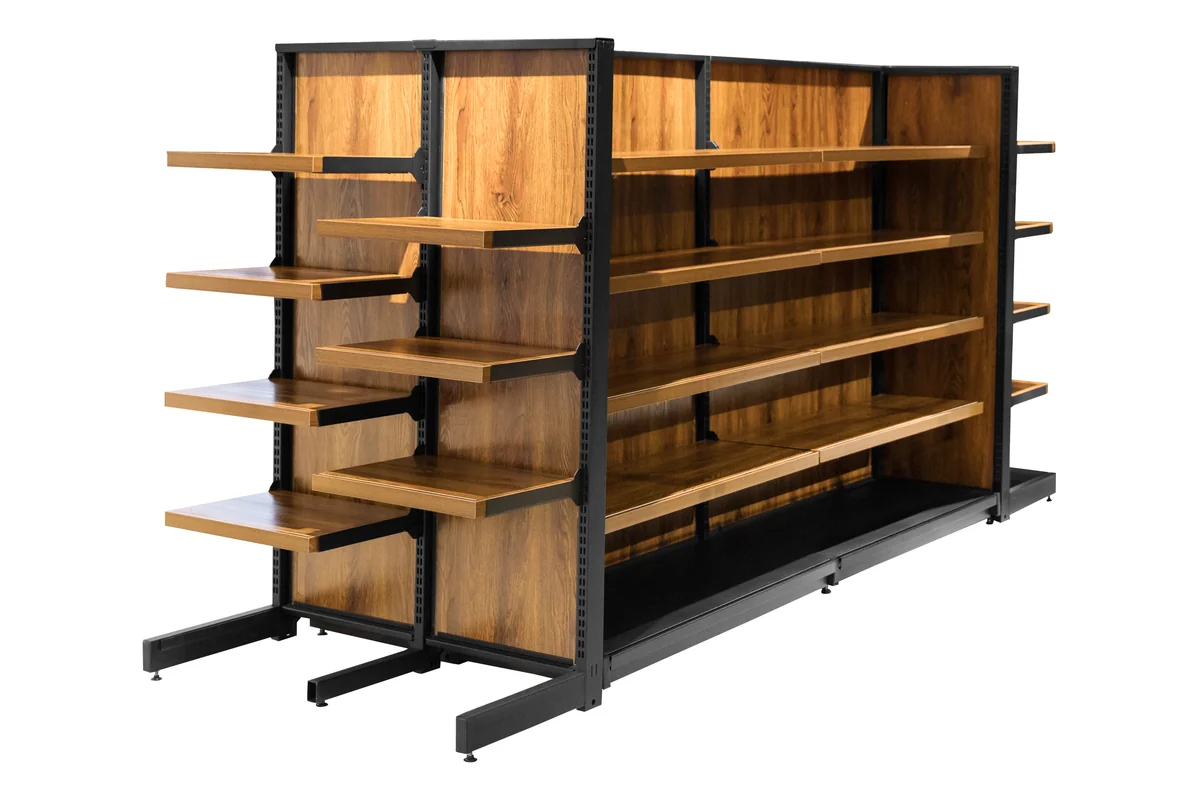
Showroom aisle of store fixtures with steel and wood shelving bays, produce islands and checkout counters

Gondola Run with Stepped Promotional End

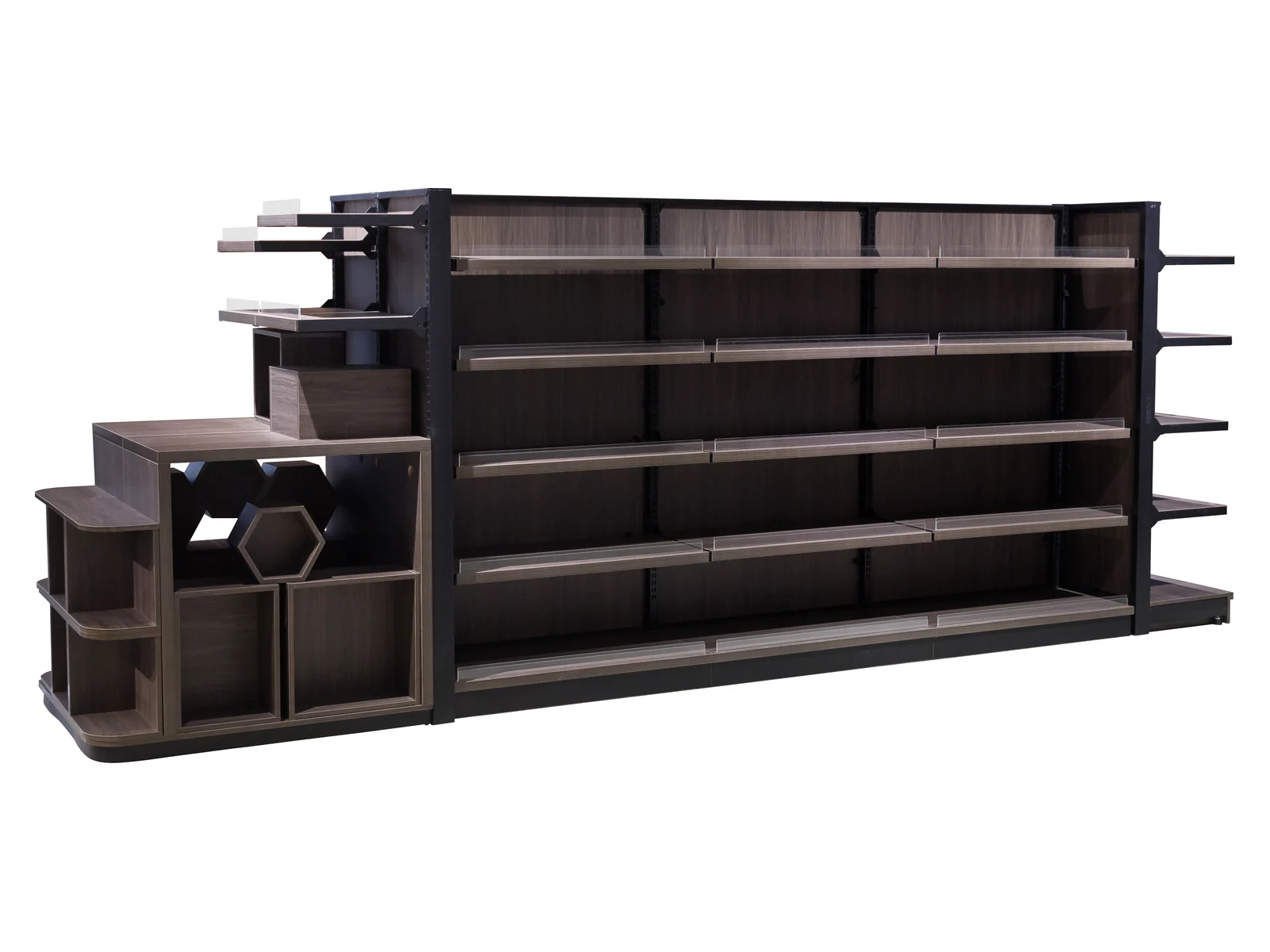
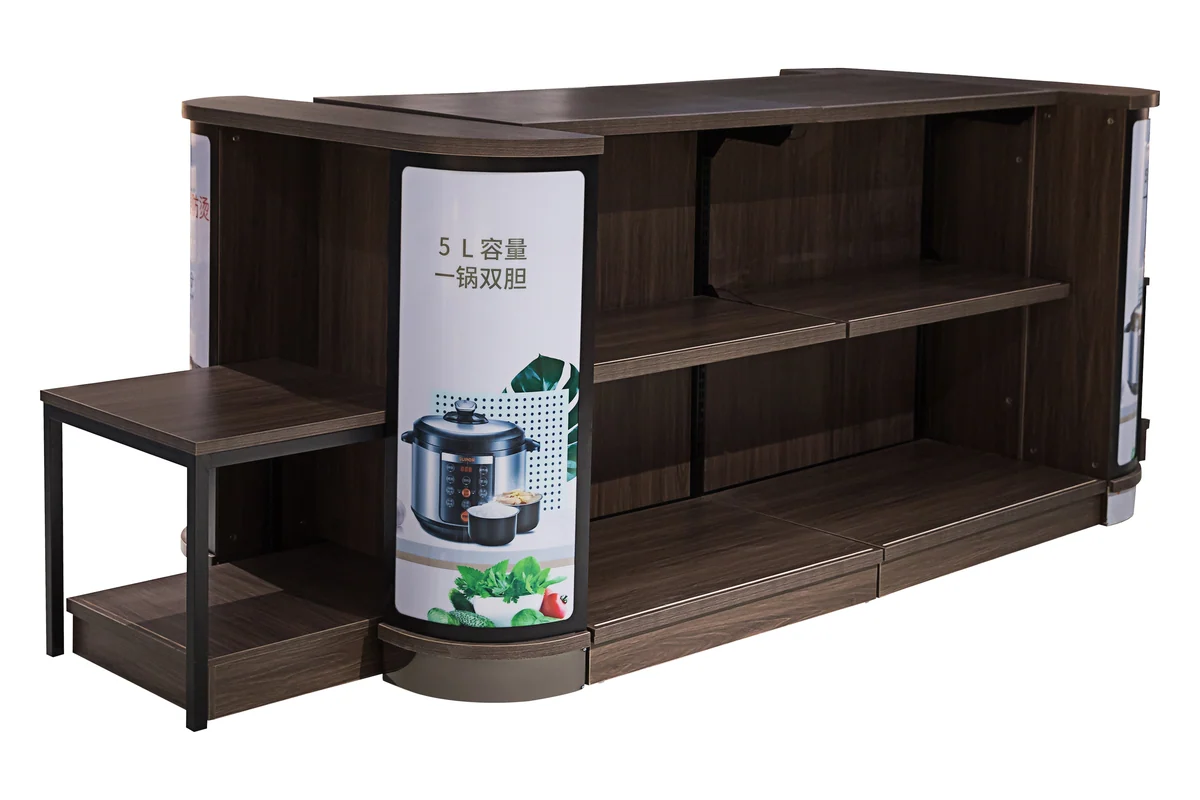
A dark timber gondola that steps down into a promotional platform at one end, so the run and its end cap are one fixture rather than two objects standing next to each other.

Product File

The Run And Its End, Built As One Thing

Most stores buy a shelving run and then buy a promotional stand to put at the end of it, and the two never quite line up. This build steps the run itself down into a low promotional platform at one end, so the transition is designed rather than improvised, and the whole thing carries one board tone and one colour.

The steps also do something a separate stand cannot: they give the shopper a descending line to walk toward, which is how you get somebody to turn into an aisle rather than past it. Above the steps the bay is a conventional dark timber gondola on slotted uprights.

End Stepped promotional platform
Body Dark timber
Frame 0.8–1.5 mm steel
Run length Built in bays
  • Nearly 30 years
  • Changshu, Jiangsu
  • ISO 9001
  • HS Code 94031000
Product Description

Gondola Run with Stepped Promotional End

A dark timber gondola that steps down into a promotional platform at one end, so the run and its end cap are one fixture rather than two objects standing next to each other.

Key Features

  • Built to your drawing rather than to a fixed configuration — length, depth, height and internal layout all follow your floor plan.
  • Cold rolled steel body with the finish carried across every category on the same order, to one RAL or PANTONE reference.
  • Manufactured in our own plant in Changshu, where steel fabrication, woodworking and stainless steel production run on one site.

Applications

Supermarkets, convenience stores, chain retail and speciality stores. Tell us the store format and the floor area and the specification comes back written against them.

What The Photographs Show

The transition from bay to platform is the whole build. Two of these four are that junction.
Close-up of the stepped platform at the end of the gondola run

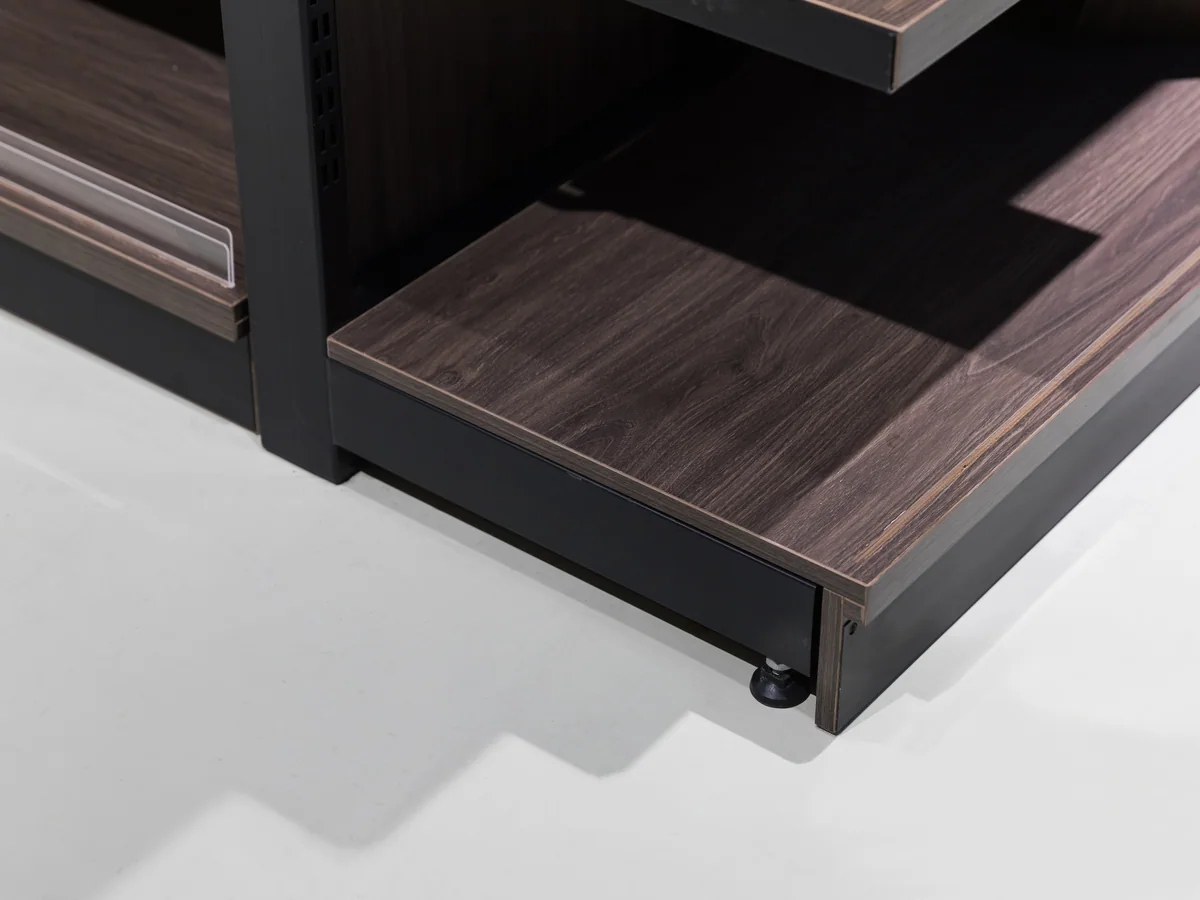
Stepped Platform

Descends from the bay

The platform steps down out of the run rather than standing beside it. A shopper walking the main aisle gets a descending line drawing them toward the turn, which is the whole reason this costs more than a stand.
Close-up of the black steel frame at the step transition

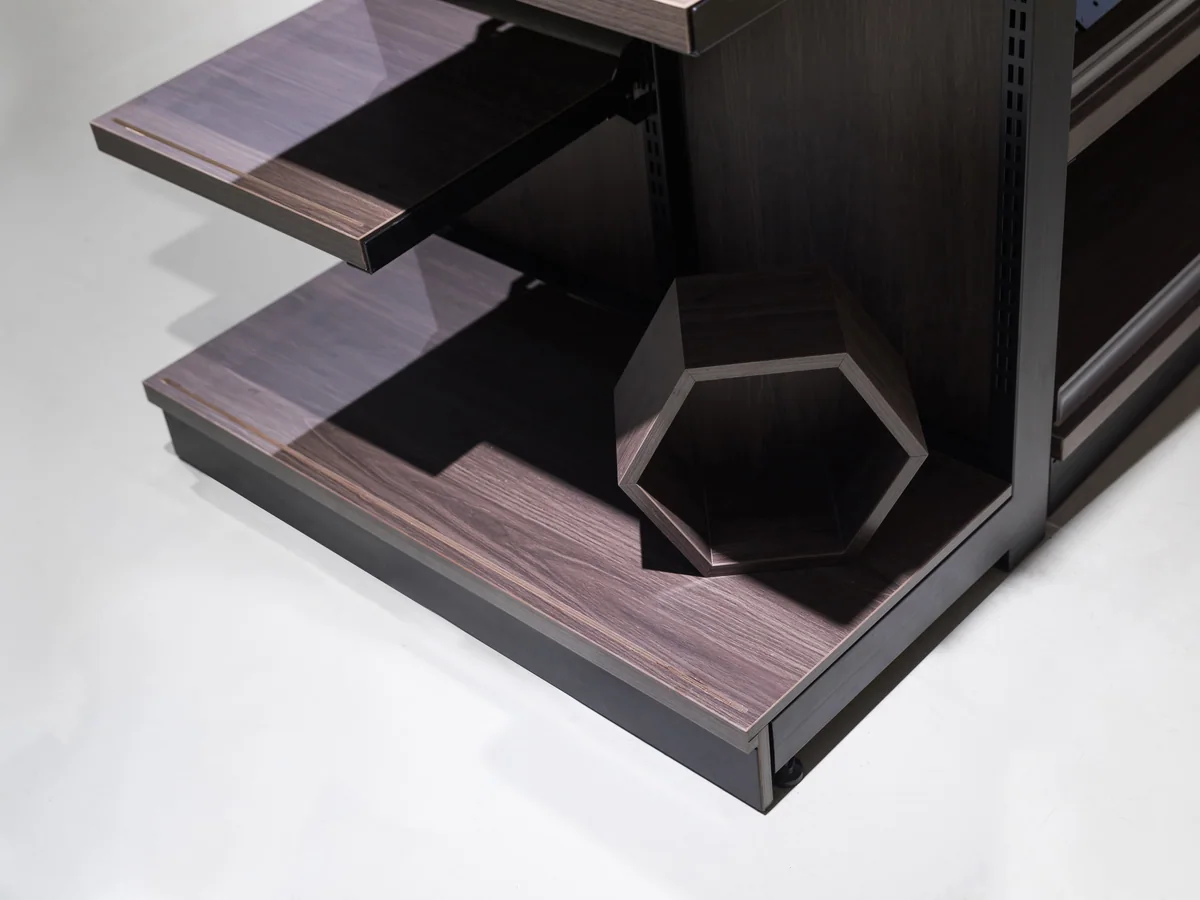
Step Transition

One frame throughout

The frame carries through from the full height bay into the platform. It is one structure, so nothing drifts out of line the way a separate stand does after a month of being pushed.
Close-up of a dark timber shelf in the gondola bay

Dark Timber Shelf

Board on steel

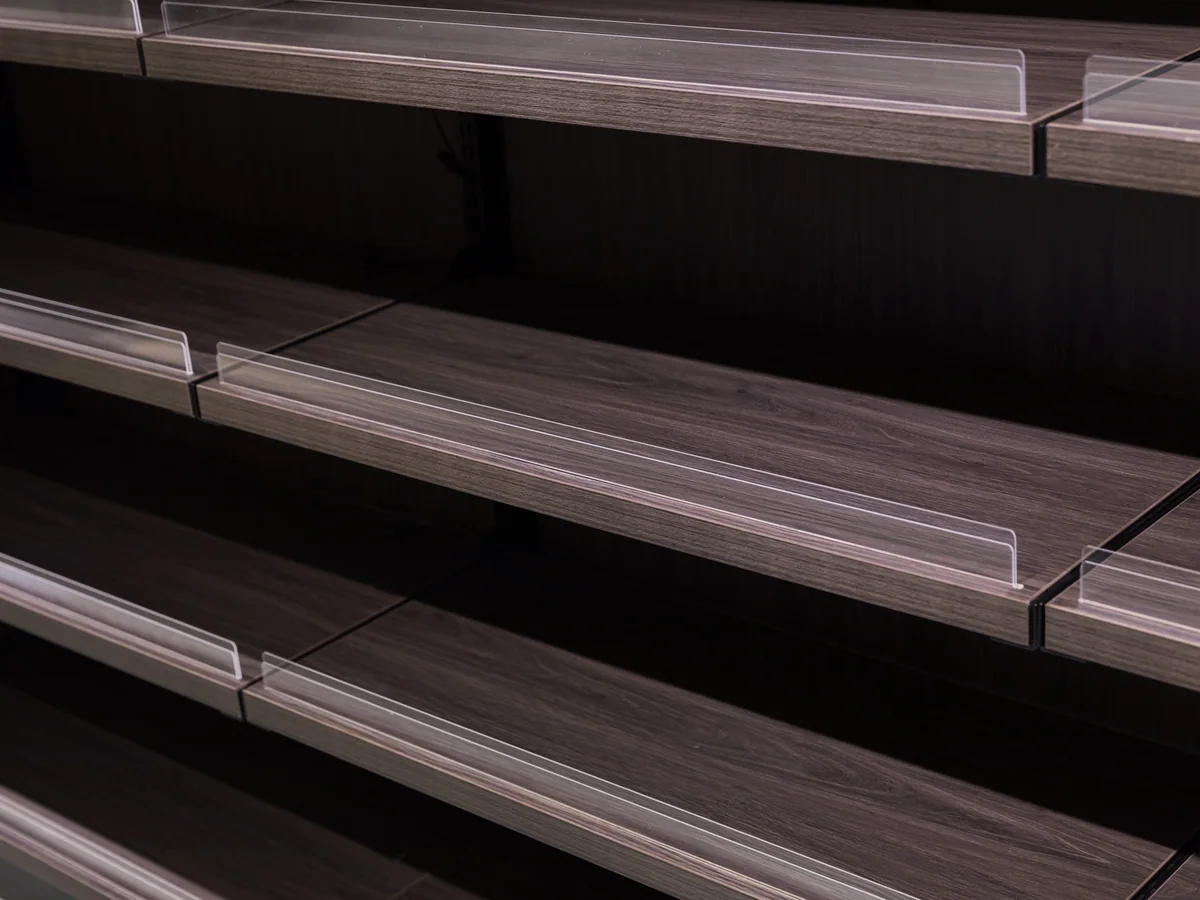
Board shelves on the steel system, in a dark tone. Dark shelving makes packaged goods read brighter, which is the argument for it over pale in a dry grocery aisle.
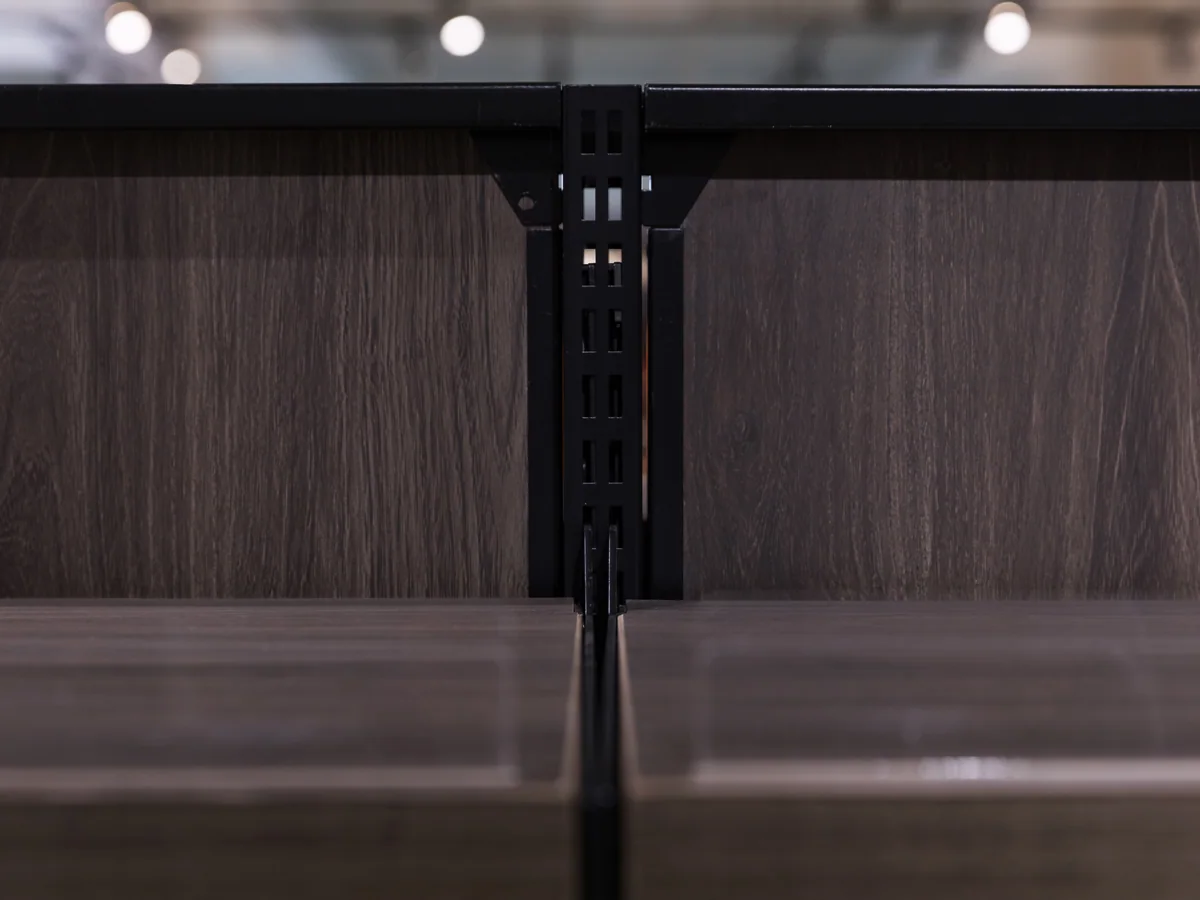
Close-up of the slotted upright in the full height section

Slotted Upright

Adjustable full height

The full height section is a conventional adjustable bay. Nothing about the stepped end changes how the shelving above it works, which is deliberate — the promotional end should not cost you a normal bay.

Customisation

Every item on this page is made to order. Send a floor plan, a hand sketch or a photograph of a fixture you like, and we quote against it.

Shipping Form

How This Shelving Leaves The Factory

Store fixtures are light for their size, so a container fills up on volume long before it fills up on weight. What decides your freight is not what one unit weighs — it is what shape the goods are in when they go through the container door. Everything we build leaves in one of three shapes, and a bulk island is the one that travels best.

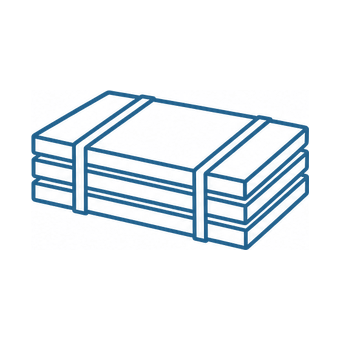
Line icon of four flat panels stacked and bound with two strapping bands

Flat Packed Cabinet And Shelving Panels

Shelving bays, produce islands and bulk cabinets travel as panels — uprights, shelves, back panels and plinths, strapped flat with bubble wrap on every component. They are built up on the shop floor, so the packing list and the assembly drawings travel with the goods.

This model
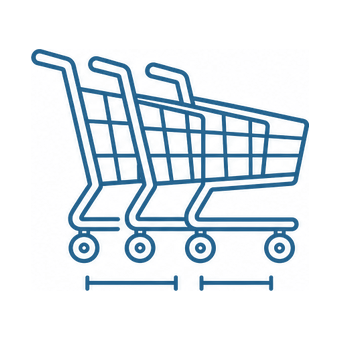
Line icon of three supermarket trolleys nested into one another with a bracket marking the nesting pitch

Nested Trolleys And Hand Baskets

Trolleys slide into one another and baskets stack. Past the first unit, each extra one adds only its nesting pitch instead of its full length, so the shipped volume ends up a fraction of what the unit count suggests.

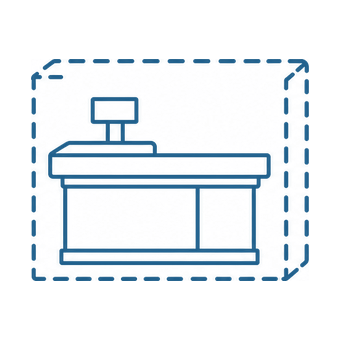
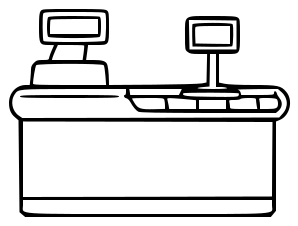
Line icon of an assembled checkout counter inside a dashed crate outline

Fully Assembled Counters

A checkout lane is welded, coated and fitted out as one piece, so it is crated whole with padding on the steel. Nothing waits to be assembled at the store beyond levelling it into the lane, and the crate is the counter plus a margin.

Shelving is the category flat packing was invented for: uprights, shelves, back panels and plinths all travel as flat strapped bundles, and a container of shelving carries several times the store area that the same container of assembled counters would. Two group sizes are on record — single-sided at L1000 × W400 × H1700 mm and double-sided at L1000 × W800 × H1500 mm — and a loading plan is worked from those.

Ships With

What Usually Travels In The Same Container

Shelving is the backbone of the store and everything else is arranged against it. These three categories are what fill the gaps a shelving run leaves.

How many of each a store needs is a floor area question rather than a product question, and it is answered store by store on the equipment lists by store size.

Gondola Run with Stepped Promotional End photographed from the front on a white studio background

Send a plan or a photograph of the run you need and we will price it against your opening date.

Get A Quotation

Get a Quotation For Steel and Wood Shelving

Tell us the store size and the finish you need; our engineers reply with a counted list.

Your enquiry goes to keshun@kssyt.com. Drawings and floor plans are welcome by email — hand sketches included.

Buyer Questions

Questions Buyers Ask Before Ordering

The ones that come up on nearly every enquiry for this category.

Q01 Can both ends step down?

Yes, on a run standing in open floor with traffic from both directions. Against a back wall only one end matters and stepping the other costs you a full bay of shelving for nothing.

Q02 How low does the platform go?

Step count and height are set against your ceiling and against what you promote on it. Bulky cased goods want a low platform; small multi-buys want it closer to hand height.

Q03 Does the stepped end reduce the shelving in the run?

It does — the platform occupies what would otherwise be a full height bay. That is the honest trade: you lose a bay of shelf and gain an end position that people actually turn toward.

Q04 Is the platform strong enough for cased goods?

Loading is specified against what you put on it. Tell us the heaviest thing you promote — a pallet of water is a different specification from a stack of cereal — and the platform gauge comes back on the quotation.

WhatsApp +86 13222226666 keshun@kssyt.com

keshun-sales