

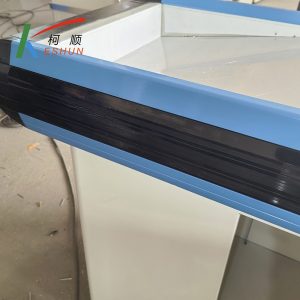
Edge Bumper Strip
Full‑length bumper strip absorbs cart impacts. It prevents scratches and paint damage to protect counter edges during daily supermarket operations.
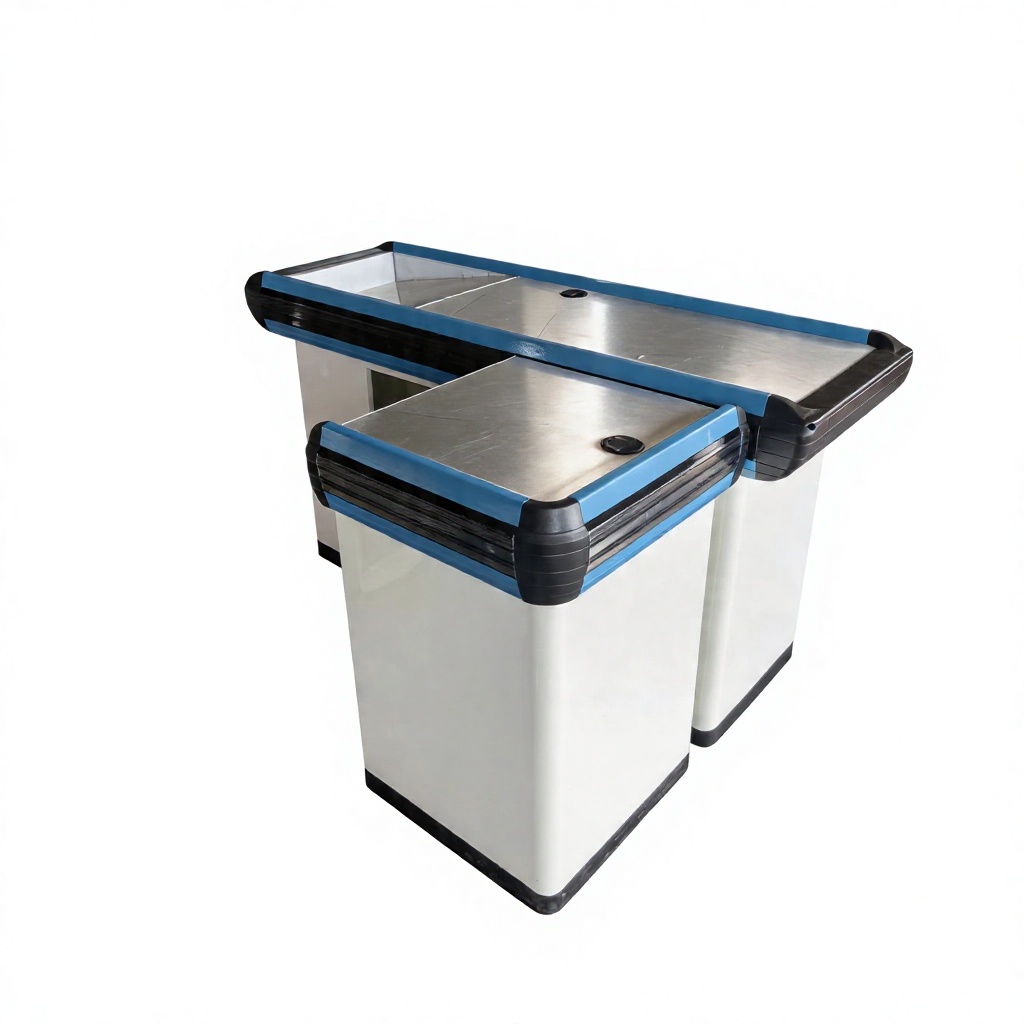
Key Features Built to your drawing rather than to a fixed configuration — length, depth, height and internal layout all follow your floor plan. Cold rolled steel body with the finish carried across every category on the same order, to one RAL or PANTONE reference. Manufactured in our own plant in Changshu, where steel fabrication, […]
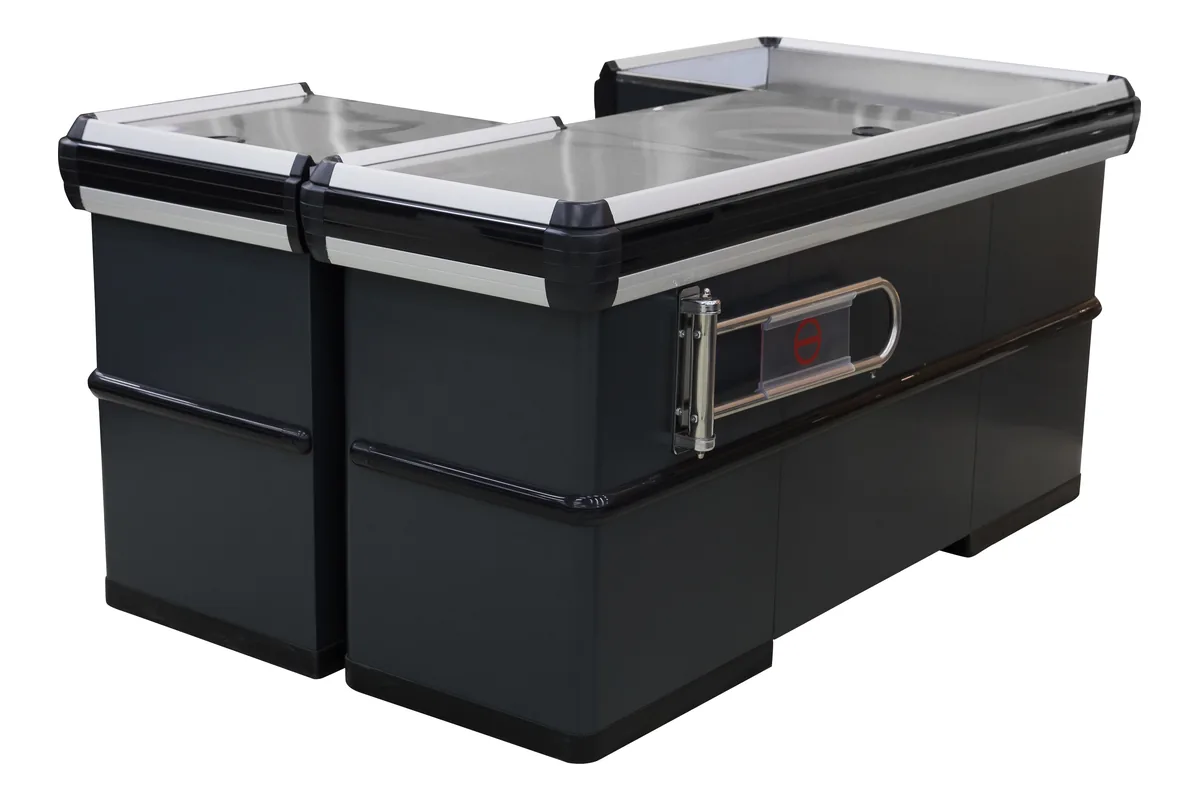
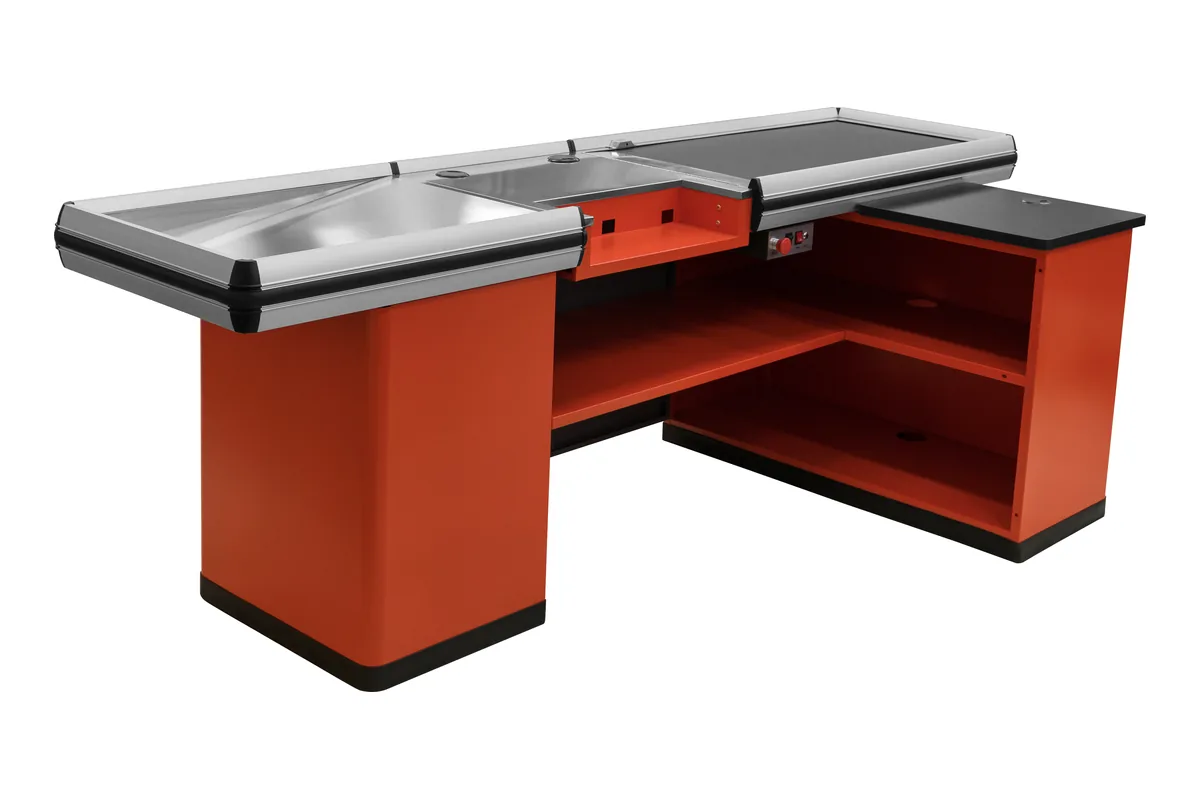
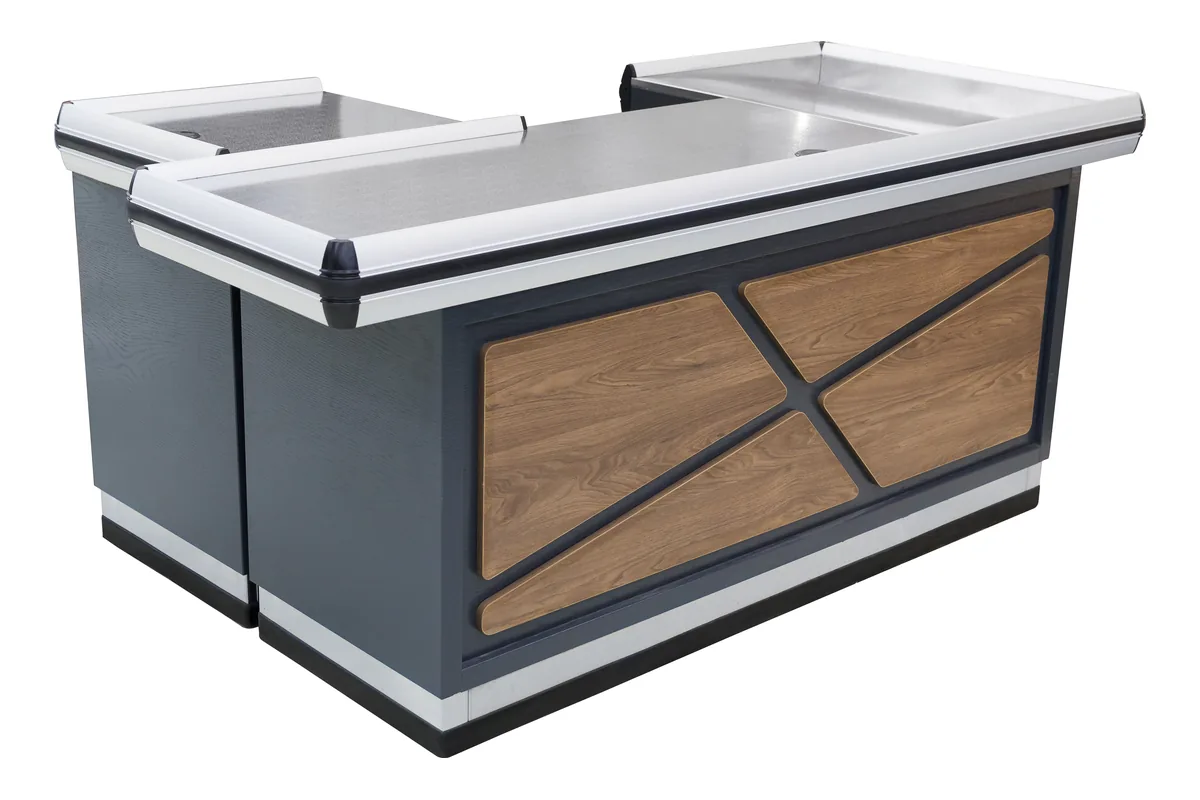
Studio angles on white, with close-ups below.
This robust supermarket checkout counter is built for supermarkets, grocery stores and chain convenience stores. The anti‑rust stainless‑steel conveyor top copes with heavy daily checkout workload. Full‑length bumper strips and reinforced corner guards resist cart collisions. Built‑in cable grommet keeps POS cables well organized. Custom sizes and colors are available. Solid cabinet ensures long‑term commercial service. Multiple packaging choices satisfy domestic and export project orders.
Supermarkets, convenience stores, chain retail and speciality stores. Tell us the store format and the floor area and the specification comes back written against them.
Building two positions as one block is a carcase decision, so these four are about how the block is divided and finished.
Full‑length bumper strip absorbs cart impacts. It prevents scratches and paint damage to protect counter edges during daily supermarket operations.
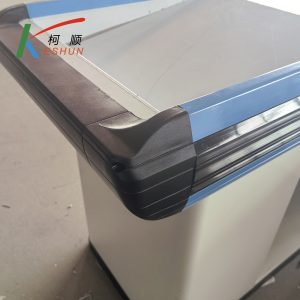
Heavy‑duty corner guards absorb sharp knocks. It avoids corner chipping and cracking and lowers maintenance costs for retail checkout furniture.
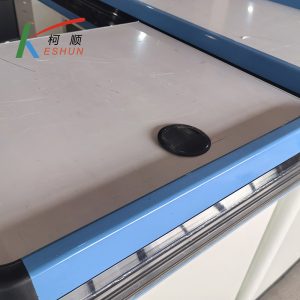
Built‑in cable grommet conceals messy POS cables. It eliminates tripping hazards and keeps cashier work surface neat and orderly.
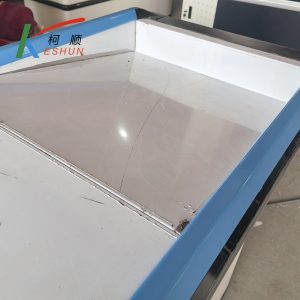
Rust‑proof stainless‑steel top resists heavy friction. Easy‑to‑clean surface suits high‑volume checkout for supermarkets and grocery stores.
Smooth stainless‑steel countertop is rust‑proof, wear‑resistant and easy to clean. Suitable for frequent goods placing in high‑traffic supermarket scenarios. Firm welding craftsmanship guarantees flat, stable work surface for long‑term commercial operation.
Store fixtures are light for their size, so a container fills up on volume long before it fills up on weight. What decides your freight is not what one unit weighs — it is what shape the goods are in when they go through the container door. Everything we build leaves in one of three shapes, and a bulk island is the one that travels best.
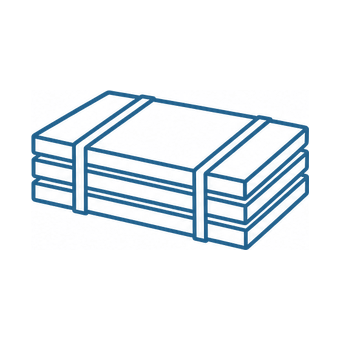
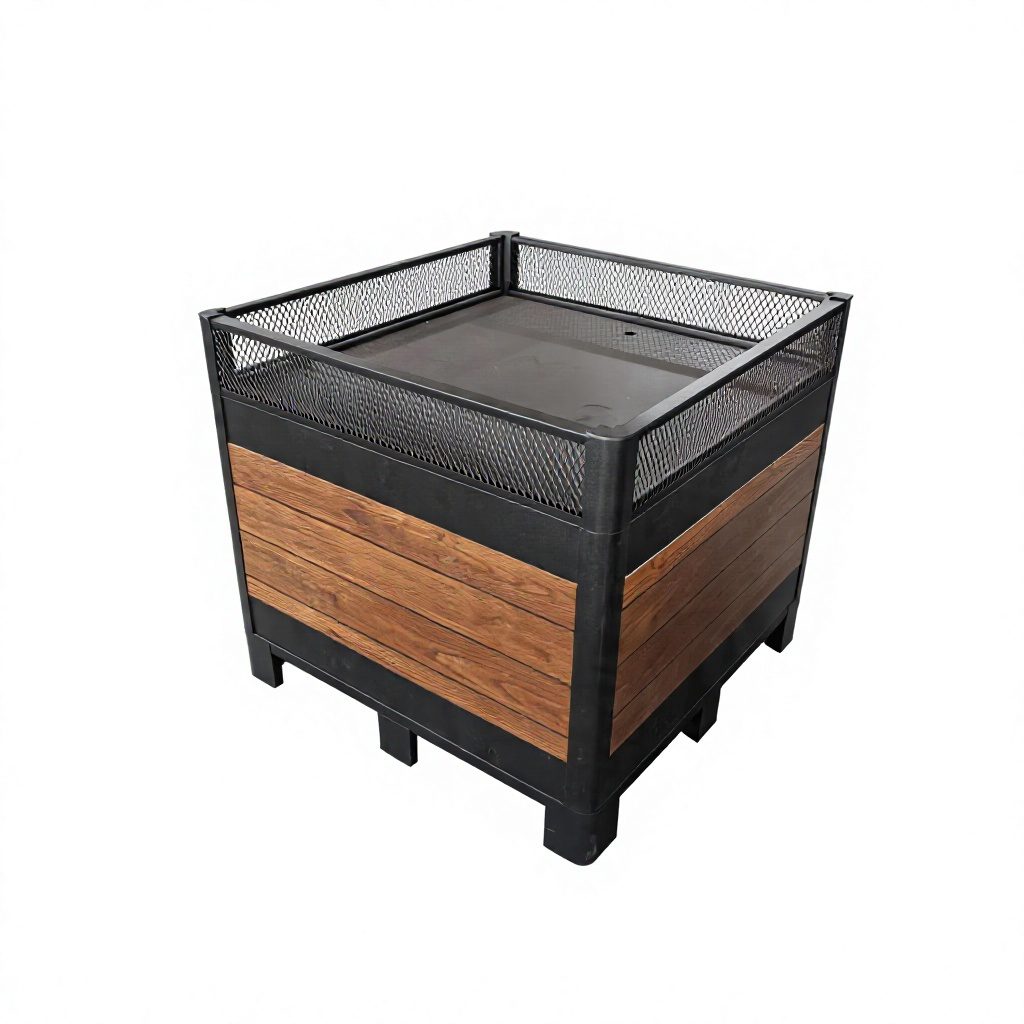
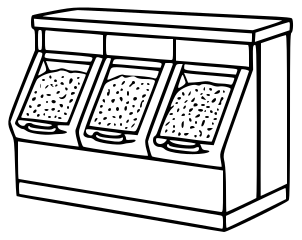
Shelving bays, produce islands and bulk cabinets travel as panels — uprights, shelves, back panels and plinths, strapped flat with bubble wrap on every component. They are built up on the shop floor, so the packing list and the assembly drawings travel with the goods.
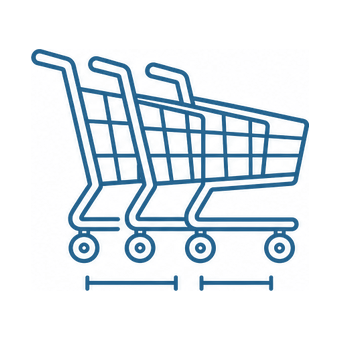
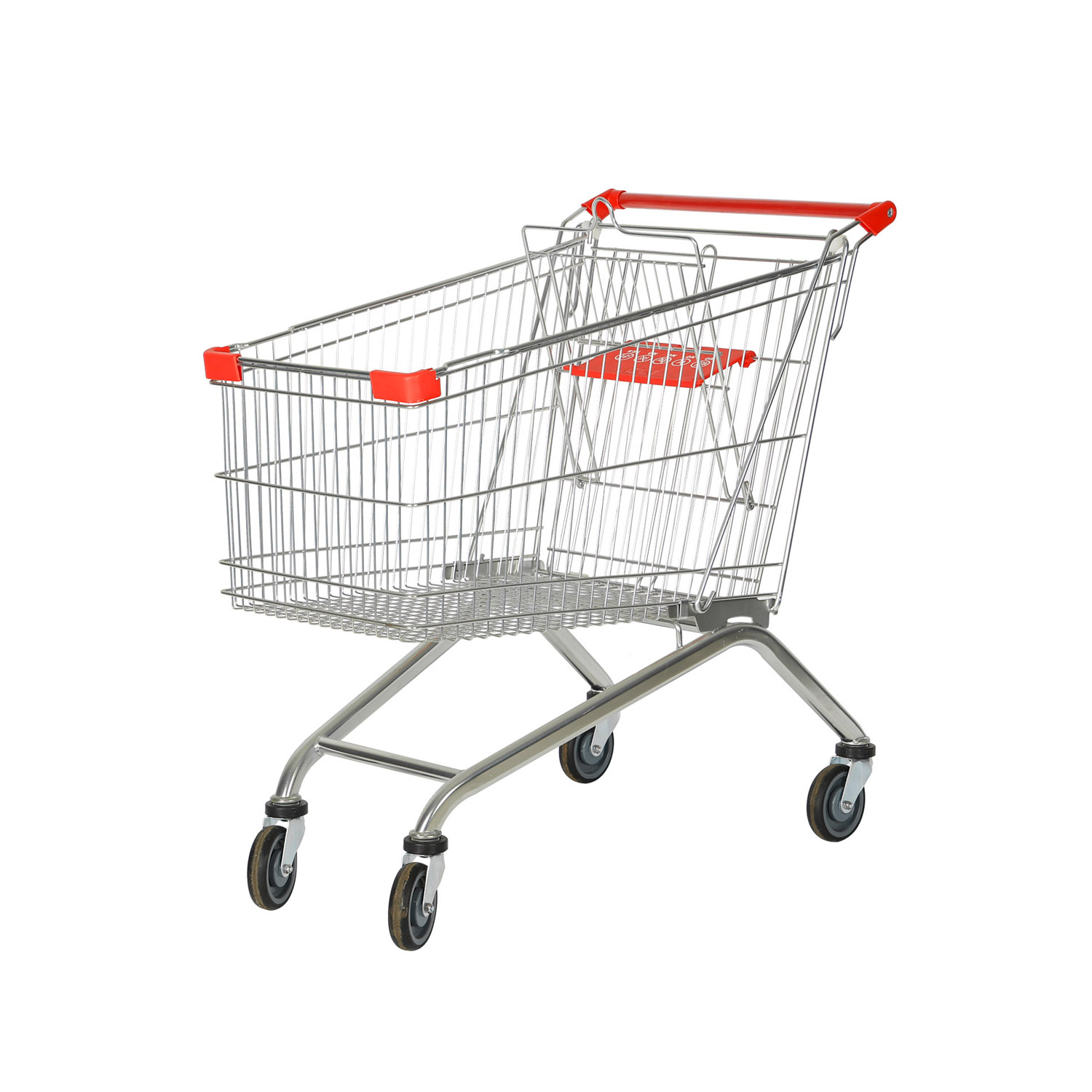
Trolleys slide into one another and baskets stack. Past the first unit, each extra one adds only its nesting pitch instead of its full length, so the shipped volume ends up a fraction of what the unit count suggests.

A checkout lane is welded, coated and fitted out as one piece, so it is crated whole with padding on the steel. Nothing waits to be assembled at the store beyond levelling it into the lane, and the crate is the counter plus a margin.
This modelA checkout lane ships assembled, so the crate is the counter plus a margin and the length you order is the length that loads. That is the expensive end of the freight scale, which is why a counter order is usually put on the same container as flat packed shelving and nested trolleys rather than shipped on its own. The loading plan comes back with your quotation.
A checkout lane almost never arrives alone. These three categories share the front of the store with it, and putting them on one order is what lets a single colour reference run across the whole front, because it becomes one batch of coating rather than three.
The trolley bay sits within a few metres of the lane, and the lane length has to leave room for a loaded trolley to turn out of it.
See shopping carts and basketsThe 1000 mm promotion square is what fills the queue side of a lane, and it is the cheapest impulse position in the store.
See retail display tablesThe bays a shopper faces while queuing carry the same colour and board tone as the lane itself.
See shelving baysHow many of each a store needs is a floor area question rather than a product question, and it is answered store by store on the equipment lists by store size.
Send a plan or a photograph of the run you need and we will price it against your opening date.
Tell us the store size and the finish you need; our engineers reply with a counted list.
The ones that come up on nearly every enquiry for this category.