

Green Moulded Handle
Any reference
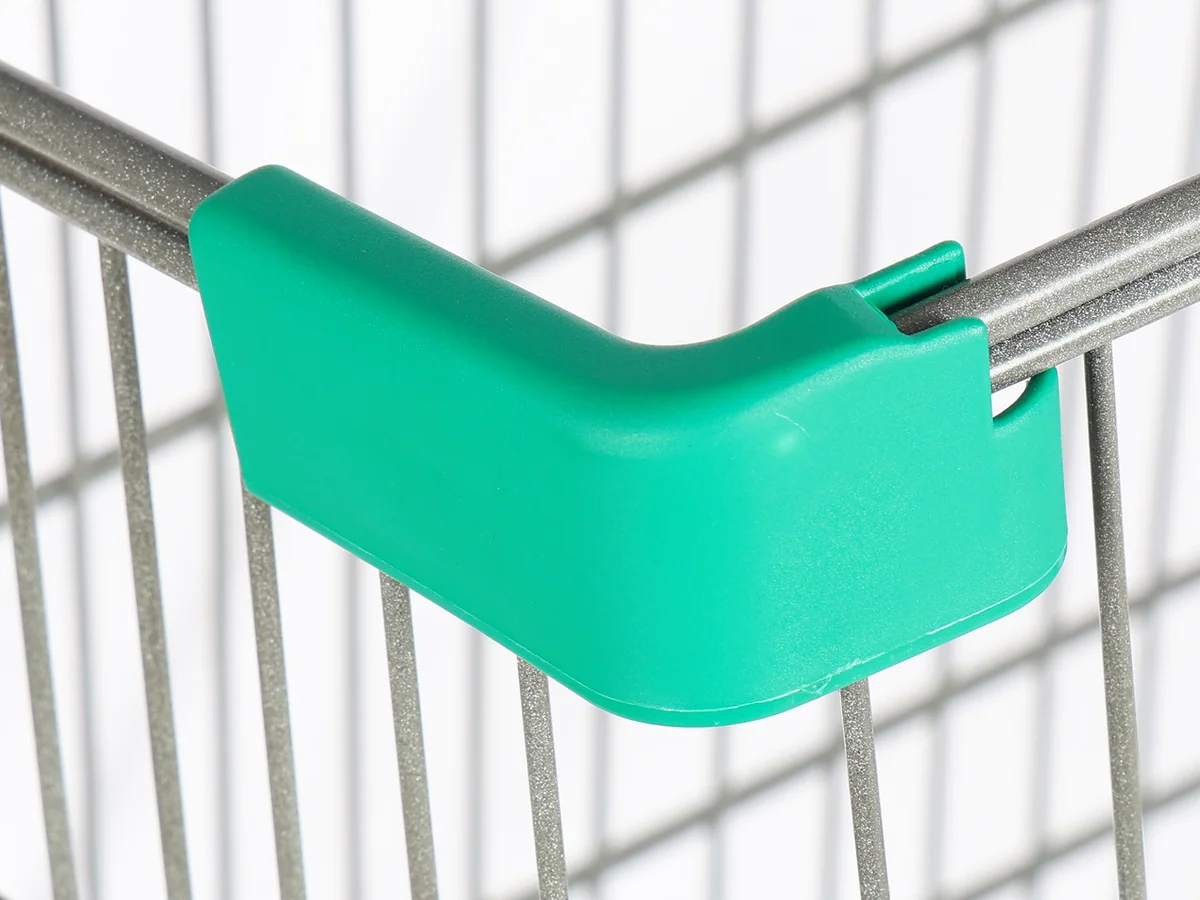
Moulded in colour rather than coated, like every handle in this range. Green is the most common choice for fresh-led stores and it stays legible under cool department lighting.
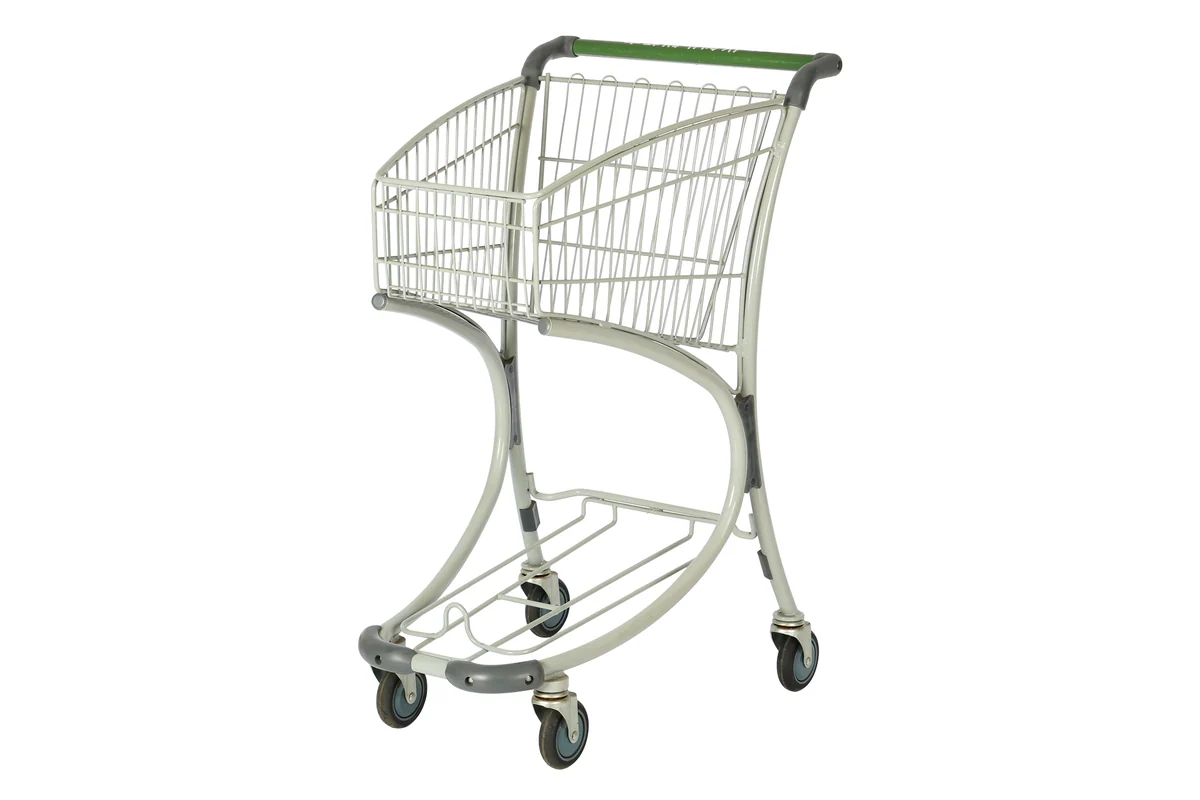
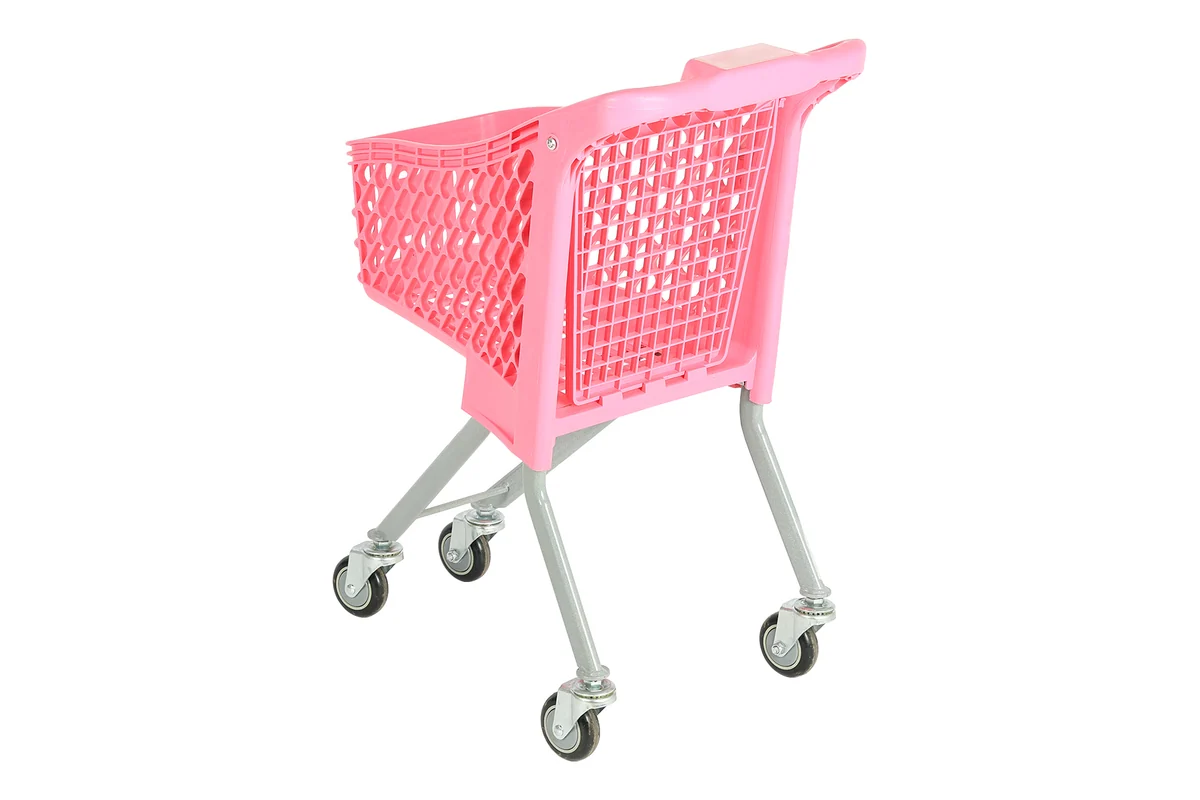
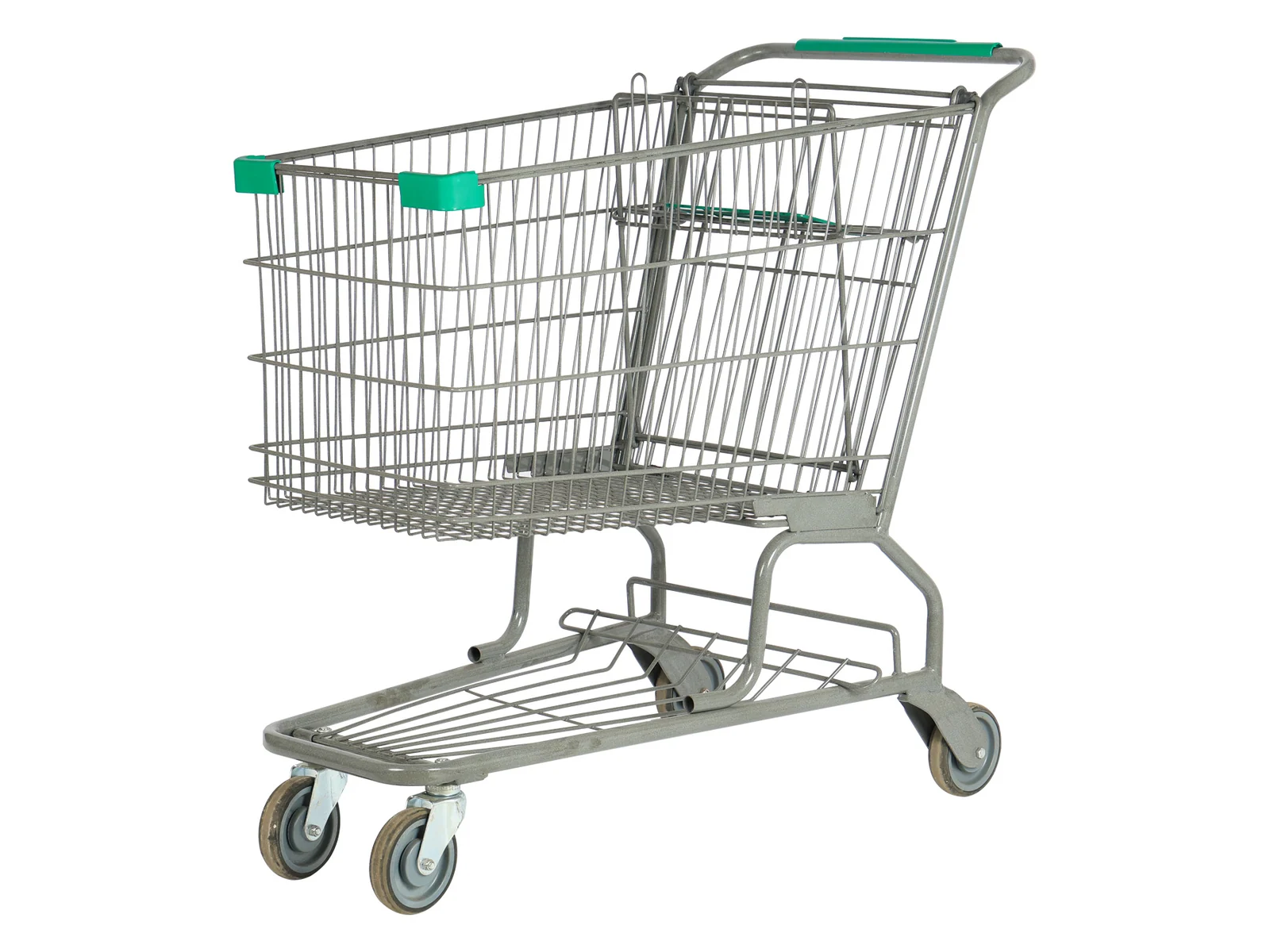
The deep-basket nesting trolley in a green handle treatment. Green is the colour most often chosen by stores whose proposition is fresh food, and it is the one that reads best against produce.
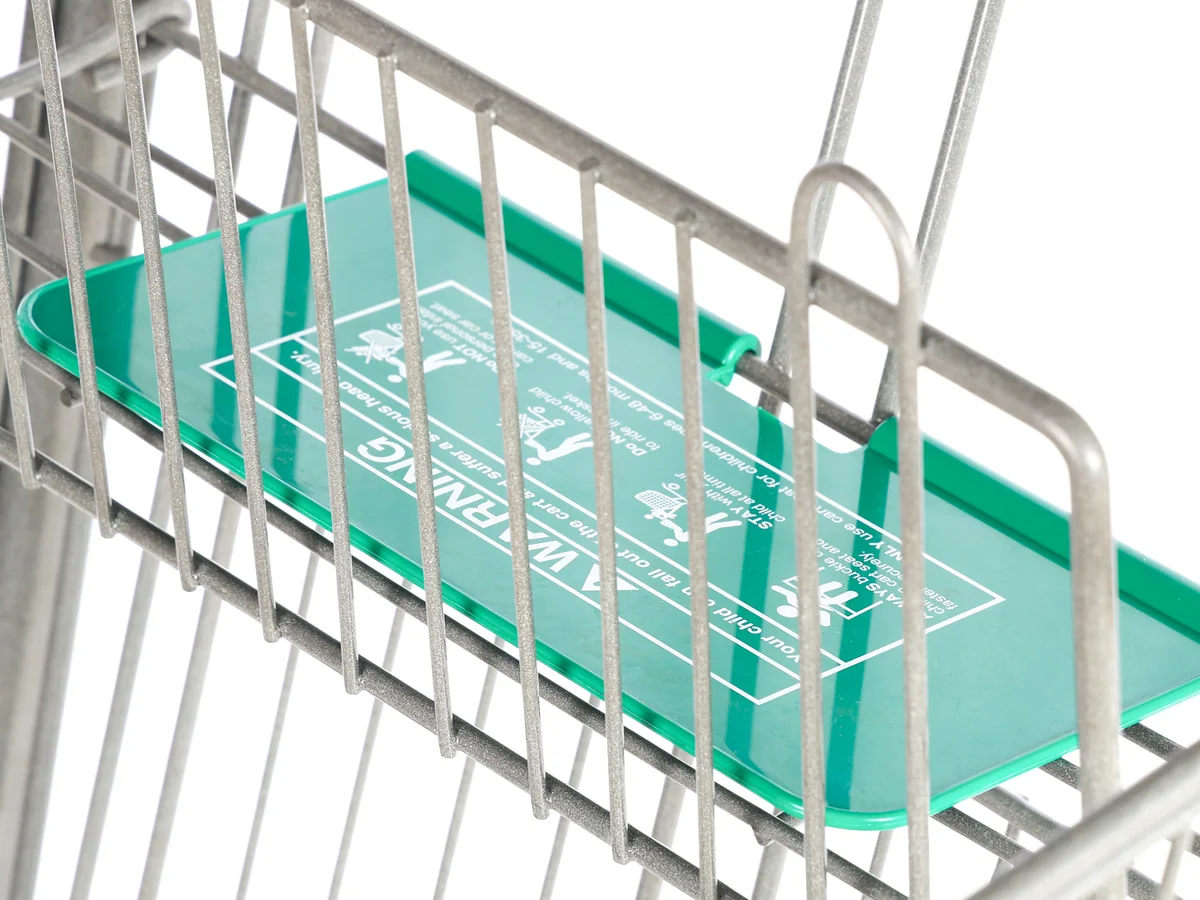
Studio angles on white, with close-ups below.
Colour choice on a trolley fleet is rarely arbitrary. Stores whose proposition is fresh food choose green far more often than any other colour, and it holds up: a green handle reads well against produce, it does not clash with the packaging in a fresh aisle, and it stays legible under the cool lighting most fresh departments use.
The build underneath is the deep-basket trolley, which is the usual pairing — a store selling fresh food is a store where people shop for the week, and a shallow basket forces a second trip to the front for another trolley.
The deep-basket nesting trolley in a green handle treatment. Green is the colour most often chosen by stores whose proposition is fresh food, and it is the one that reads best against produce.
Supermarkets, convenience stores, chain retail and speciality stores. Tell us the store format and the floor area and the specification comes back written against them.
The colour is the visible difference and the basket depth is the functional one. These four cover both.
Any reference
Moulded in colour rather than coated, like every handle in this range. Green is the most common choice for fresh-led stores and it stays legible under cool department lighting.
Weekly shop capacity
The deep basket is the usual pairing with a fresh proposition, because a store selling fresh food is a store where people shop for the week rather than for tonight.
Sacrificial strip
The rim carries the same colour and takes the impacts in the bay. It protects the basket and your shelf ends and it can be replaced on its own.
Welded throughout
A deeper basket loads the frame harder than a standard one. Every junction is welded, and this is the build where that matters most in the range.
Every item on this page is made to order. Send a floor plan, a hand sketch or a photograph of a fixture you like, and we quote against it.
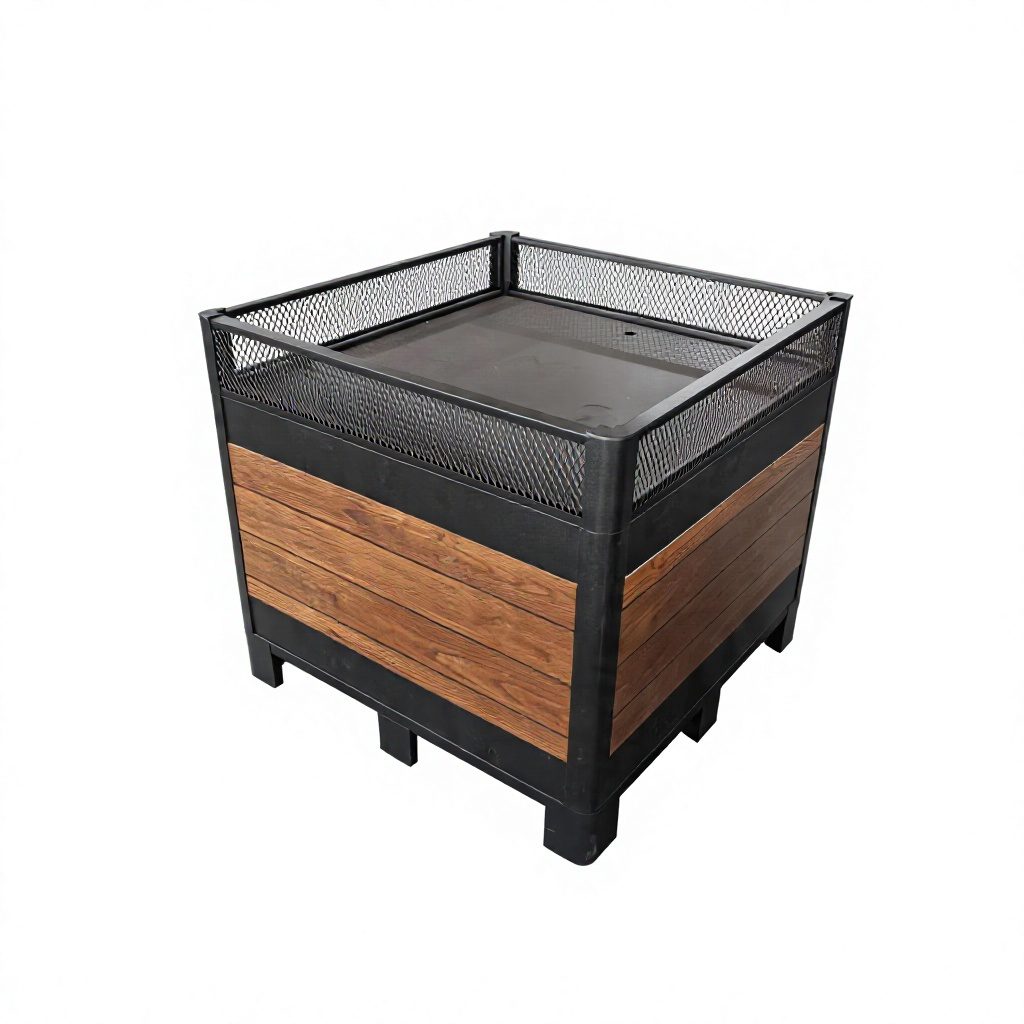
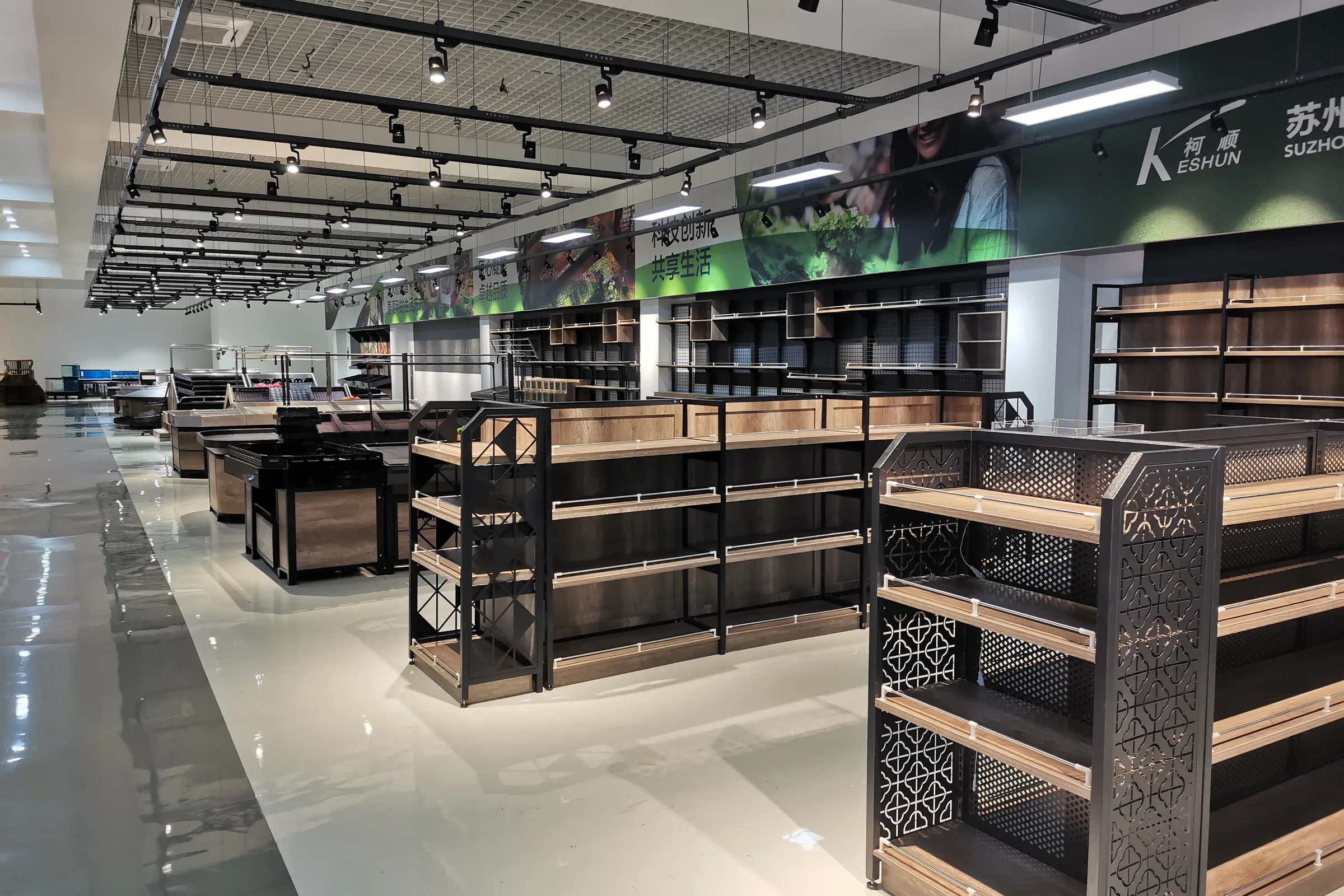
Store fixtures are light for their size, so a container fills up on volume long before it fills up on weight. What decides your freight is not what one unit weighs — it is what shape the goods are in when they go through the container door. Everything we build leaves in one of three shapes, and a bulk island is the one that travels best.
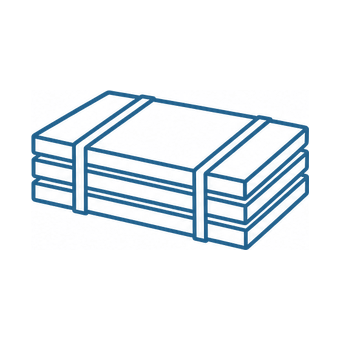
Shelving bays, produce islands and bulk cabinets travel as panels — uprights, shelves, back panels and plinths, strapped flat with bubble wrap on every component. They are built up on the shop floor, so the packing list and the assembly drawings travel with the goods.
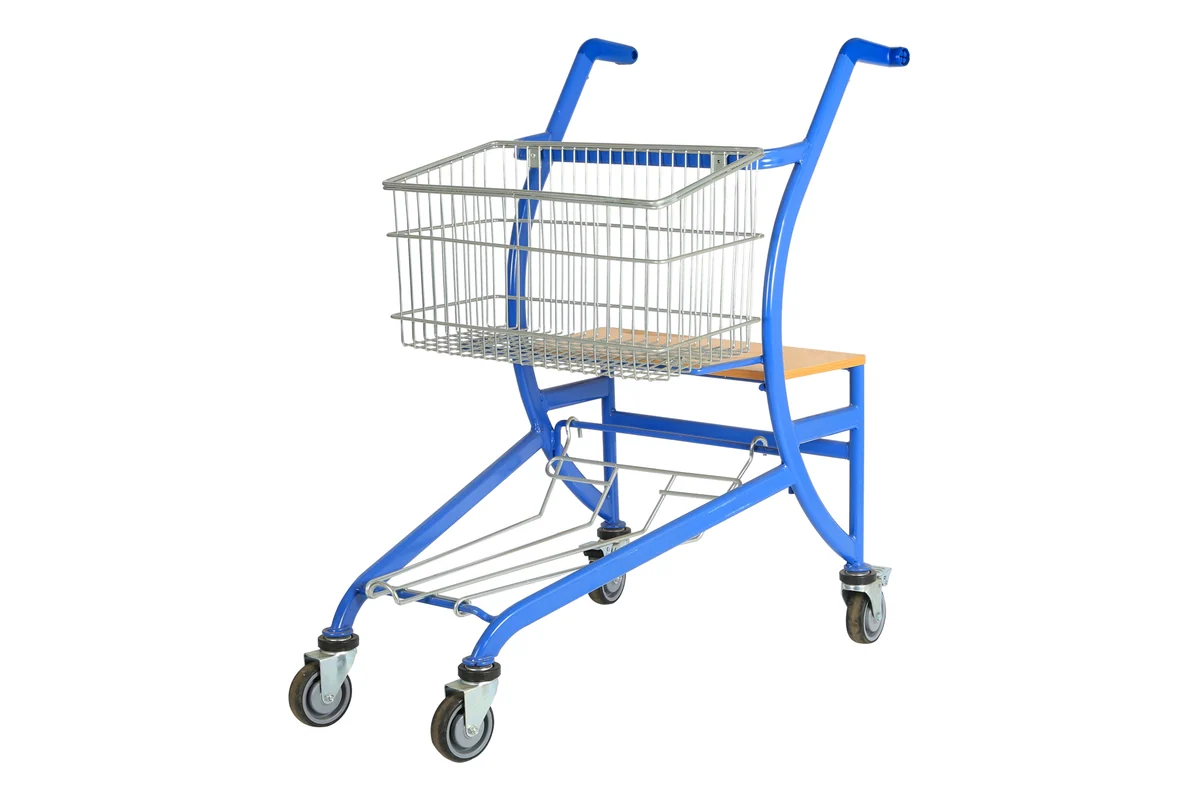
Trolleys slide into one another and baskets stack. Past the first unit, each extra one adds only its nesting pitch instead of its full length, so the shipped volume ends up a fraction of what the unit count suggests.
This model
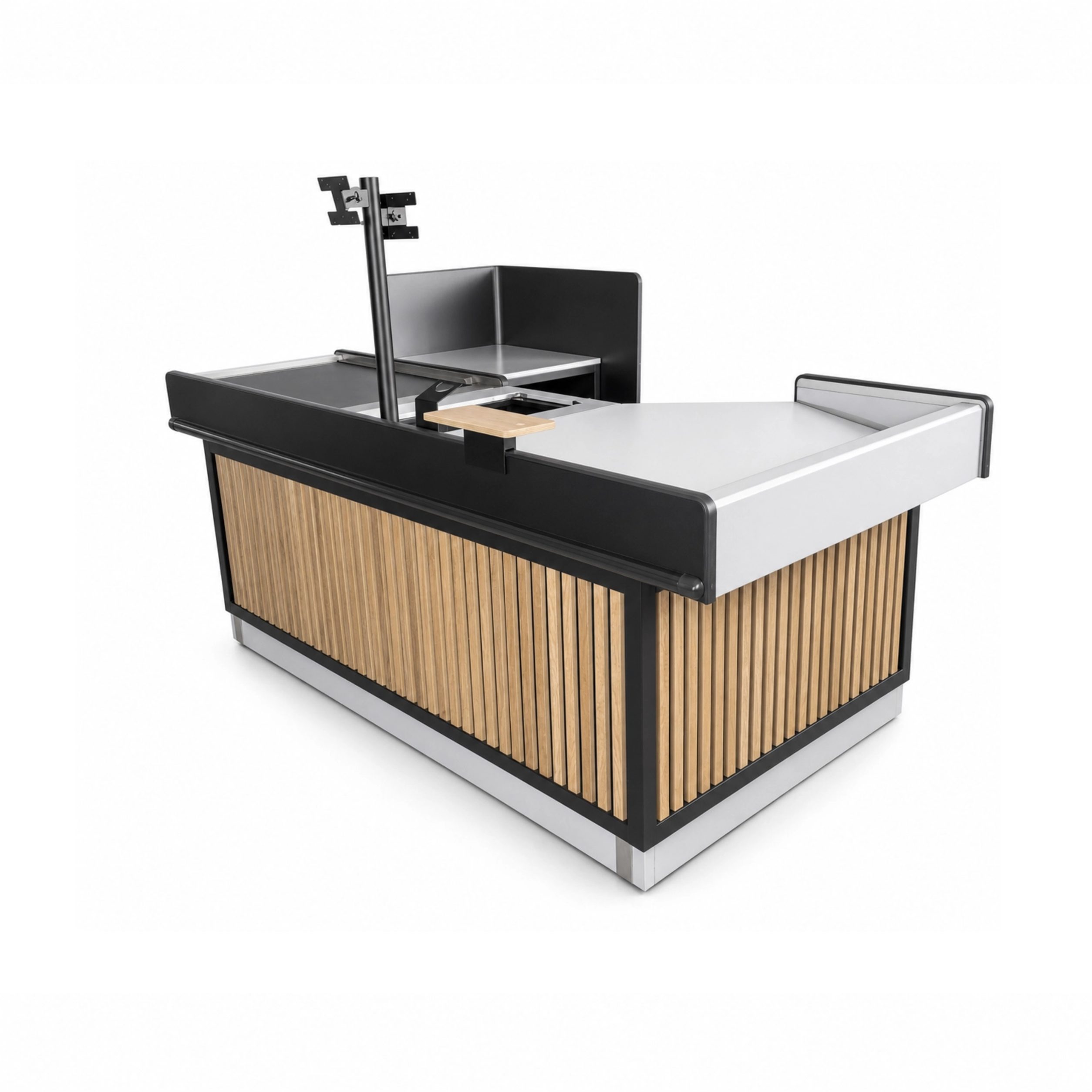
A checkout lane is welded, coated and fitted out as one piece, so it is crated whole with padding on the steel. Nothing waits to be assembled at the store beyond levelling it into the lane, and the crate is the counter plus a margin.
Baskets stack, which makes them the densest thing we ship. A column of nested baskets is close to solid plastic, so the freight cost per basket is a fraction of anything else in this catalogue — which is why baskets are almost always added to a container that is going anyway rather than shipped on their own. We do not publish litre capacities for this range. The figures circulating for it came from an old third-party listing rather than from our own production records, and they are being confirmed with the factory first.
A trolley bay is part of the front of store, and what it stands next to decides how well it works.
The lane length has to leave room for a loaded trolley to turn out of it, which is a dimension worth checking before either is ordered.
See checkout countersAisle width is set by two loaded trolleys passing, so the shelving depth and the trolley size are one decision rather than two.
See shelving baysA promotion square at an aisle head is the first thing a trolley has to get past, and the clearance between them is worth drawing.
See retail display tablesHow many of each a store needs is a floor area question rather than a product question, and it is answered store by store on the equipment lists by store size.
Send a plan or a photograph of the run you need and we will price it against your opening date.
Tell us the store size and the finish you need; our engineers reply with a counted list.
The ones that come up on nearly every enquiry for this category.
Because it reads well against produce and does not clash with fresh packaging. It is a genuine pattern rather than a coincidence, and it holds up under the cool lighting fresh departments use.
If your shoppers do a weekly shop, yes — a shallow basket sends them back to the front for a second trolley. If they top up, the standard build is better and takes less bay space.
It is matched to your RAL or PANTONE reference. Moulded plastic and printed ink never match exactly, and we will tell you honestly how close a given reference gets.
Yes — the rear is profiled for it. That is important, because the store type wanting deep trolleys is usually the one with the most of them.